

How to Live with Hope in Transition and Change
Hope in transition starts here. Learn biblical habits for trusting God during change and staying grounded in faith when life feels overwhelming.
Hope in transition isn’t just possible—it’s essential.
When life changes fast—through grief, job loss, caregiving, or unexpected shifts—it’s easy to feel unsteady. But what if these very moments are where God wants to meet you? In this episode of Habits of Hope, we talk with author and speaker Peg Arnold about trusting God during change and learning to stay grounded in faith through small, steady habits.
Transitions can be exhausting. When your life feels like it’s spinning from one thing to the next—loss, distraction, pressure, or change—it’s easy to lose your footing. But what if the very place that feels most uncertain is where God is most present?

In our recent soul care series, we talked about building habits that sustain your heart. Today’s conversation brings that to life.
In this powerful episode, speaker, author, and devotional writer Peg Arnold shares about living with hope in seasons of grief, job loss, identity shift, and spiritual depletion—and how God met her in the middle of it all. You’ll hear practical encouragement, spiritual wisdom, and personal stories that reveal how hope can grow even when life feels messy, chaotic, and unpredictable.
Trusting God During Change: When Grief and Stress Collide
Just as Peg and her family were preparing to celebrate a season of milestones—her daughter’s college graduation and her son’s high school graduation—grief and loss showed up uninvited.
Her father, a longtime heart patient, had to cancel his trip for medical reasons. A week later, Peg’s husband received a call that his father had died suddenly of a heart attack. Then came a third call: he was being let go from his job, effective immediately.
“We were grieving, in shock, and trying to hold everything together,” Peg recalls. “I was planning a graduation while my husband flew across the country for his father’s funeral, and I just remember thinking—Lord, how much more?”

Finding Hope in Transition: How God Met Peg in Her Breaking Point
But in the middle of all that pain, Peg was surprised by a moment of joy.
Standing in the kitchen with her husband, she started singing:
“Bend me, break me—any way You want to, Lord. As long as You love me, it’s all right.”
“I don’t even know why it came out,” she said. “But it turned into a little dance in the kitchen. And in that moment, I felt it—God was still with us. That small burst of joy wasn’t from me—it was from Him.”
That moment in Peg’s kitchen didn’t change her circumstances—but it shifted her heart. It reminded her (and reminds us) that even in the stress of transition, God is present. He doesn’t wait for things to calm down to offer peace or hope. He meets us right where life feels the most uncertain.
From that season of upheaval, Peg gained powerful insight into how to walk through change without losing your footing. Here are the key truths and habits she shared to help you stay hopeful when everything feels like too much.
Habit of Hope
Make space for God’s strength by caring for your mind, body, and soul—even in small ways—when life feels uncertain.
In the stress of change, your needs matter.
Tending to your mental, physical, and spiritual health is not selfish—it’s how you stay connected to the God who carries you.
How to Stay Grounded in Faith Through Life’s Hardest Seasons
1. Understand God often works through distractions.
Distractions aren’t always interruptions—they can be invitations.
Peg shares a story about forgetting her phone while returning a rental car. The delay led her to a coffee line conversation that formed a lasting ministry connection. What felt like a mistake turned out to be a divine appointment.
Sometimes the detour is the direction—and God is waiting to meet you there.
Distractions can also protect us from something we can’t see or slow us down long enough to hear what we’ve been ignoring. When we stop labeling every interruption as bad, we begin to recognize the gentle fingerprints of God woven into ordinary moments.
2. Hold onto hope in transitions.
Change has a way of shaking everything that feels stable.
Peg describes a deeply painful season filled with overlapping losses: the sudden death of a family member, the loss of her husband’s job, and a series of emotional blows that made it feel like life had come undone. And yet, through every layer of transition, she experienced God’s faithfulness in surprising and personal ways.
“There’s always another challenge God is placing before us. It’s rarely just one storm—we walk through many.”
This episode reminds us that transitions don’t just rearrange our circumstances—they often confront our identity. Peg shares how God gently repurposed her calling after retirement, reminding her that her worth wasn’t in a title or a role, but in who she was in Christ.
3. Don’t overlook taking care of yourself.
To stay grounded in times of change, Peg encourages us to care for our whole selves. Here’s the simple framework she uses:
- Spiritual – Stay in the Word. The Bible is a vital resource for trusting God during change and transitions. Make time to nourish your soul and spirit.
- Mental – Take every thought captive. Transitions often bring uncertainty and spiraling thoughts. Ask God to help reframe your perspective with truth to turn your thoughts to hope.
- Social – Let others help. Don’t isolate. Even receiving a meal or a card can be a way God ministers through community.
- Physical – Pay attention to your body. Rest. Nourish yourself. Go for a walk. These physical habits help stabilize us when everything else feels shaky.

4. Turn Bible verses into prayers.
Peg shared how personalizing Scripture became a lifeline for her when traditional spiritual routines felt out of reach. Here are a few of the verses she turned into prayer—and how you can use them too:
- Psalm 23:1–3
“The Lord is my shepherd… He restores my soul.”
→ Prayer: Lord, You are my Shepherd. Restore my soul today. Lead me in Your peace even when I don’t know the path forward. - Proverbs 3:5–6
“Trust in the Lord with all your heart and lean not on your own understanding…”
→ Prayer: God, help me trust You fully and not rely on what I see or feel. I believe You are making a way even when I can’t see it. - Joshua 1:9
“Be strong and courageous… for the Lord your God will be with you wherever you go.”
→ Prayer: Lord, I feel weak—but You promise to be with me. Give me strength and courage for what’s ahead. - Matthew 11:28–29
“Come to me, all you who are weary and burdened, and I will give you rest.”
→ Prayer: Jesus, I’m tired and stretched thin. I come to You. Teach me how to rest in You today.
These verses aren’t formulas—they’re invitations to bring your real thoughts, emotions, and needs to God, even when you’re distracted, grieving, or unsure.
4. Create space in your day—and your heart—for margin.
Peg uses a powerful illustration of a domino chain to show how our lack of margin affects everything else in our lives.
When we stack our schedules with no room to breathe, even a small interruption can cause an emotional collapse. But if we build in space—margin for rest, flexibility, prayer, and reflection—our hearts become less reactive and more rooted in peace.
When we live life without margin, even the smallest interruption can feel like a collapse.
Margin allows us to respond with grace instead of react with panic. It gives us room to notice God’s presence, receive help, and make intentional choices. It’s one of the most overlooked tools of spiritual stability.

5. Pause before reacting—and choose a Spirit-led response.
Stress activates our brain’s fight, flight, freeze, or frustration response. Peg explains how easy it is to operate from that place—especially when we feel out of control or overwhelmed. But the habit of hope is learning to shift from reacting to responding.
That shift begins with a pause.
“Stop. Breathe. Pray one verse. Let that become the reset moment.”
Peg encourages us to ask: Is this the most important thing right now? Is this urgent or simply loud?
This small habit helps us invite the Holy Spirit into our next decision, conversation, or reaction—and keeps us grounded in faith rather than consumed by urgency.
Quotes to Remember:
“Distractions aren’t always disruptions—they can be divine appointments.”
“Sometimes He has to strip us down to rebuild us up. And that stripping down isn’t pleasant, but there’s purpose in it.”
“You may feel like your normal will never return—but God is still present in the new place you’re walking into.”
“When we live life without margin, even the smallest interruption can feel like a collapse.”
You don’t have to do everything at once. Choose one simple way to care for yourself today—mentally, physically, or spiritually—and invite God into that space.
What is one verse, habit, or relationship that God might be using to steady you in this season of change?
Want More on Soul Care and Spiritual Strength?
Before today’s episode, we shared a two-part series on soul care—what it is, why it matters, and how to make it part of your daily life. If you’re navigating a hard season, these episodes offer even more biblical wisdom and practical encouragement:
- 🎧 Why Soul Care Isn’t Selfish: How to Care for Your Soul Every Day
Discover why tending to your soul isn’t a luxury—it’s essential for spiritual strength. - 🎧Seven Ways to Make Time for Soul Care (Even When You’re Too Busy)
Learn how to recognize when your soul needs care—and what to do about it.
- Together with Peg’s story, these episodes form a powerful foundation for finding steady hope in any season.
- Download the free companion Soul Care Guide with 14 practices from the series to attend to your soul care today.

About Peg Arnold
 Peg Arnold is a speaker, author, and founder of Wonder Woman Ministries, known for bringing biblical truth to life through drama, storytelling, and devotional writing. With a background in education and counseling, Peg has a passion for encouraging women to embrace their God-given worth—right in the middle of life’s mess.
She’s the author of Devotions for the Distracted Heart and Making Your Message Memorable, a creative resource filled with over 90 ideas to help speakers and teachers use visual aids to bring biblical messages to life. Through her writing and speaking, Peg equips women to reconnect with God’s presence through scripture, humor, and hope—especially in seasons of change. (These are affiliate links at no cost to you).
📍Connect with Peg:
🌐 Website: PegArnold.org
📹 YouTube: Peg Arnold & Wonder Woman Ministries
📱 Instagram: @arnoldpeg

Seven Ways to Make Time for Soul Care (Even When You’re Too Busy)
Make time for soul care with 7 simple, life-giving practices to renew your soul—even when you feel too busy, depleted, or disconnected from God.
How do you make time for soul care when life is already too full?
You start small—by noticing what your soul really needs and building gentle, life-giving rhythms that reconnect you with God throughout your day.
If your heart feels a little worn down or your inner world has been running on low lately, you’re not alone—and you’re in the right place.
Soul Care Recap From Last Week
In last week’s post, we explored the foundation of soul care—why it’s not selfish, how it’s rooted in God’s design, and why receiving His love is the first and most life-giving step. (If you missed it, you can read that post here.)
But let’s be honest—receiving is just the beginning.
You can believe God loves you and still feel emotionally depleted. You can be faithful and still feel dry inside. You can be doing “all the right things” and still wonder why you feel disconnected, anxious, or worn down before your day even begins.
Can you relate?
If your soul feels stretched, crowded, or tangled up in too many thoughts, responsibilities, or emotions—you’re not alone. I’ve been there. And that’s exactly why we’re continuing this conversation. Don’t miss the free download of all the soul care practices from both posts + journal prompts to experience the vitality regular soul care will bring to your life. {Download here.}
Making Time for the Soul Care You Need
Today, we’re talking about how to create a rhythm of soul care—practices that help you live from a nourished soul, not just recover after burnout. Think of this as your invitation to take a deep breath, pause for a moment, and gently ask:
What does my soul need right now?
This week, we’re picking up where we left off with seven simple ways to make space for spiritual renewal—even when your life feels too busy. These aren’t formulas. They’re invitations.
Prefer to watch? Enjoy the YouTube video of this content.
How to Make Time for Soul Care (Even When You’re Too Busy)
Making time to attend to your soul matters–because you matter.
Don’t live on autopilot. When we’re weary or spiritually depleted, it’s easy to drift without realizing it. Soul care begins with awareness—choosing to stop and notice what’s happening in your inner world. What are you carrying right now? How connected do you feel to God? Set aside time to reflect and ask God to show you what your soul needs today.
1. Daily Soul Care: Tend the Weeds (Release Lies and Worry)
*Weeds don’t always show up all at once—but they slowly choke out peace.*
Like a garden overrun with weeds, our souls can get crowded with false beliefs, worry, perfectionism, or too many commitments. These things may seem small at first, but they eventually choke out joy and peace. One way to begin is to notice the messages you’re believing about yourself and ask God to show you what needs to go. Write it down. Replace it with truth. Let go of the lies, one by one.
2. Create Margin to Make Time for Soul Care
*Margin is where soul care grows—space to breathe, reflect, and reconnect with God.*
Creating margin isn’t just about good time management—it’s about spiritual strategy. Sometimes we pack our lives so full, we can’t even breathe between appointments. Ask God to help you audit your schedule. What needs to stay? What can shift or wait? Give yourself permission to build in buffer space between activities so you’re not running on empty.
3. Daily Soul Care Practices to Nourish Your Soul
A soul doesn’t thrive on once-a-week spiritual snacks. It needs daily nourishment. And no, it doesn’t have to be long or complicated. Try starting your morning with one verse, one prayer, or even a moment of stillness. Carry that verse with you. Let it soak in throughout the day. This isn’t about checking a box—it’s about staying connected to God in the middle of real life.
4. Soul Care for Busy Women: Embrace Sabbath Rest
Rest isn’t a reward for getting everything done—it’s a rhythm designed by God. Whether it’s honoring a Sabbath, taking a slow walk, or turning off your screens for a while, rest helps your soul reset. hoose a day or half-day to step away from
productivity, quiet the noise, and enjoy God’s presence. Plan something refreshing: a walk, worship, or even a nap.
Sabbath reminds your soul it’s safe to stop. And let’s be honest—your body and mind need it too. True soul rest comes when we trust God enough to stop striving.
5. Make Time for Joy: Life-Giving Variety for Your Soul
When life is full of stress, repetition, and mental demands, your soul needs variety. Do something creative. Laugh. Journal. Get outside. Try something new. We’re not meant to function on one emotional frequency all the time. A little variety is deeply restorative.
6. Nourish Your Soul Outside: Make Time for Nature
Nature has a quiet way of grounding us. Even if you’re not the outdoorsy type, step outside for just a few minutes a day. Take deep breaths. Notice something beautiful. Feel the breeze or sunshine. These little shifts bring life back to your soul in subtle but powerful ways.
7.Cultivate Meaningful Relationships
Your soul isn’t meant to grow in isolation. God uses relationships to strengthen, heal, and encourage us. Reach out to someone this week—send a text, pray together, share a moment of honesty. These small connections nurture hope and help us remember we’re not alone.
Sometimes soul care looks like a deep conversation, a shared prayer, or even a good laugh with a friend. Don’t underestimate how life-giving it is to be seen, heard, and loved by others. Reach out. Make space for the people who help you feel whole.
Why Making Time for Soul Care Changes Everything
Friend, I hope you’re breathing a little deeper now. Not because your to-do list is finished or your world suddenly feels easier, but because you’ve remembered something vital: your soul matters.
These rhythms aren’t one more thing to add to your plate—they’re the quiet spaces where your faith comes alive again. Where you stop just surviving and begin to feel nourished, steady, and rooted in Christ.
So don’t try to do all seven practices at once. Just pick one. Try it for a few days. Then come back and choose another. Let this be a gentle journey of returning to the One who refreshes your soul.
Ready to Make Time for Soul Care and Start Daily Practices?
If you’re looking for a simple and beautiful way to keep these soul care practices close at hand, download your free copy of *Soul Care Made Simple: 14 Practices to Nourish Your Soul.*
This guide gives you space to reflect, practical steps to take, and Scripture to anchor your heart. You’ll also find journaling prompts and printable pages to help you take your first steps in a way that’s gentle and doable.
👇 Click below to grab your copy and begin a rhythm of soul care that lasts:
[Download Soul Care Made Simple]
Recent Podcast Episodes
32.How to Cultivate Prayer Habits for Deeper Focus and Clarity
33. Eight Easy Tips to Focus in Prayer that Make a Difference
34.How to Find Real Hope in Jesus When You Feel Far From God (Interview with Tarra Green)
35.Why Soul Care Isn’t Selfish: How to Care for Your Soul Every Day
Related Posts on Soul Care
Does Your Soul Talk Strengthen Your Faith?
10 Bible Verses for a Healthy Soul
How to Care for Your Soul: Best Tips from 13 Christian Bloggers
Is Your Soul Out of Sync?
Why Soul Care Isn’t Selfish: How to Care for Your Soul Every Day

Why Soul Care Isn’t Selfish: How to Care for Your Soul Every Day
Soul care isn’t selfish—it helps you avoid burnout, renew emotional health, and stay spiritually strong by reconnecting with God every day.
On your hardest days—when you’re tired, overwhelmed, and your prayers feel hollow—where do you turn for hope?
You might be showing up, giving, and serving, but inside, your soul feels stretched thin. Maybe your patience is running low, or your faith feels distant. You love God, but lately, it seems like you’re surviving more than living.
If this resonates with you, you’re not alone.
Why Soul Care is Important
Today we’re talking about biblical soul care—what it is, why it matters, and how you can begin caring for your soul in everyday life. This often-overlooked spiritual practice is more than a trendy idea or a form of self-indulgence—it’s a vital part of living a steady, hope-filled life in Christ. Don’t miss the full conversation—find spiritual rest and lasting renewal today. Listen in to get the most from the episode.
“We give, we serve, and we show up for everyone around us, but sometimes deep inside, it feels like our souls are running on fumes.” – Ginger
Habit of Hope: Make soul care a regular rhythm in your life—because a well-attended soul is a hopeful soul.
Deuteronomy 4:9: Watch Over Your Soul Diligently
“Only be careful for yourself and watch over your soul diligently so that you do not forget the things which your eyes have seen and they do not depart from your heart all the days of your life.” – Deuteronomy 4:9 (NASB)
In this verse, Moses speaks to the Israelites before they enter the Promised Land. He urges them to remember God’s faithfulness and remain grounded in His truth. The phrase “watch over your soul diligently” is both a caution and an invitation. Spiritual drift doesn’t always look dramatic—it’s subtle, slow, and often unnoticed until we’re running on empty.
“Remembering God’s faithfulness renews our hope. When we remember what God has done in the past, it energizes us and reminds us that we can trust Him with what’s happening now.” – Ginger
Warning Signs Your Soul Needs Attention
Soul neglect rarely happens all at once—it sneaks in gradually. This is why we need to watch over our soul diligently. One day you realize you’re not just tired; you’re spiritually worn out. In the episode, we talked about the subtle ways your soul can signal it’s time to slow down and reconnect with God.
When your soul is depleted, you may notice:
Overwhelming exhaustion even after rest – You’ve taken a break, but you’re still tired in a way that sleep can’t fix.
Feeling distant from God – You still believe, but your connection feels flat or rushed, like going through a spiritual drive-thru.
Increased irritability or anxiety – Your emotional reserves are low, and small things set you off.
Lack of joy or perspective – You’re fixated on what’s going wrong and can’t see the blessings or beauty in your life.
Relying on surface fixes – You reach for distraction or comfort (like sugar or Netflix) rather than turning to God.
Spiritual numbness – Prayer feels hollow. You’re still doing the outward things, but your soul feels disconnected.
We may not realize how much we’ve been running on empty until something forces us to stop. These symptoms are your soul’s way of waving a red flag, reminding you that hope, peace, and spiritual strength can only be sustained when you tend your inner life.
As Larissa shared, “It really hit me today—the Lord was doing a lot of downloads before we recorded this episode. I don’t make enough time when I’ve had to stop one thing to do another. It’s a good reminder: no one else is going to do soul care for me.”
When you recognize the signs, you don’t have to push through or pretend. You can pause, realign, and begin again—with grace.
Soul Care Truths That Will Change the Way You Live
Consider the following reasons to embrace the importance of soul care by making it a regular practice in your life.
1. Soul care is essential, not optional
Without consistent care for your soul, spiritual depletion is inevitable. You may be doing all the right things—serving, showing up, keeping up—but inside, your soul feels stretched thin. You’re giving and showing up for everyone around you, but deep down, it feels like your soul is running on fumes. That inner weariness is a signal: it’s time to tend your soul.
True soul strength doesn’t come from doing more—it flows from quietness, rest, and trust in God.
“In repentance and rest is your salvation, in quietness and trust is your strength.” (Isaiah 30:15)
2. Soul care goes deeper than self-care
Self-care often focuses on the surface—relaxation, comfort, physical rest. These are helpful, but soul care reaches the spiritual and emotional core of who we are. Soul care is really about attending to the deepest parts of us. It’s not just about feeling good in the moment—it’s about restoring strength from the inside out by reconnecting with God.
“Above all else, guard your heart, for everything you do flows from it.” (Proverbs 4:23)
4. You can’t live on five-minute faith
Quick quiet times may offer short-term relief, but they aren’t enough to sustain your soul through long seasons of spiritual demand or emotional strain. If you only ever spend time with the Lord in five-minute increments, you won’t have the same soul-nourishing experience you would in those longer, slower moments of connection. We need rhythms that give God more than our leftovers.
“Remain in me, as I also remain in you.” (John 15:4)
5. Jesus modeled intentional soul care
Even in seasons of great ministry and need, Jesus stepped away to pray, reflect, and rest. He would rise early, go to the mountainside, and sometimes spend the entire night in prayer. If Jesus prioritized caring for His soul, how much more do we need to make time for soul care in our own lives? It’s not selfish—it’s essential.
“But Jesus often withdrew to lonely places and prayed.” (Luke 5:16)
7. Neglecting your soul leads to burnout
When you stop paying attention to the presence and activity of God, it’s easy to shift into self-reliance. Over time, that leads to numbness, fatigue, and distance from the joy and purpose of walking closely with Him. Doing life in your own strength may work for a while, but it leaves you depleted. Soul care realigns you with truth and makes space to be filled again.
“Unless the Lord builds the house, the builders labor in vain.” (Psalm 127:1)
8. You don’t have to hit burnout to begin
Too often we wait until we’re already exhausted before we do something about it. But soul care isn’t just a rescue strategy—it’s a life rhythm that keeps us whole. You don’t have to have it all figured out. You can start now, with small steps that matter. A few intentional moments of stillness or scripture can open the door to healing and hope.
“Draw near to God, and He will draw near to you.” (James 4:8)
How to Begin Soul Care Today (Even If You’re Busy)
Here are simple soul care practices to start with today:
Check in with your soul: Pause and ask God what’s going on beneath the surface.
Create space to receive God’s love: Sit in stillness for two minutes. Breathe, pray, and open your heart to Him.
Reflect on God’s faithfulness: Write down 3 ways you’ve seen His hand in your life.
Block time for soul care: Schedule a walk, devotional, or margin moment in your planner.
Choose nourishing over numbing: Trade one surface “fix” for something that actually restores your soul.
Explore a few of these ideas to make soul care a regular practice in your life. Which one could you do today?
Your Soul Matters to God
Soul care is important. Friend, your soul isn’t just a “nice to have”—it’s a sacred part of who you are. We don’t practice soul care just for the sake of rest, but so that we can live fully present—with God, with others, and with ourselves.
Caring for your soul isn’t selfish—it’s the way you stay grounded in grace, anchored in hope, and steady in faith. Don’t wait for burnout to begin. Start today—with small steps, honest prayers, and God’s help.
He is faithful to meet you.
What My Anxiety Taught Me About the Importance of Soul Care
If this post about soul care resonated with you, I invite you to read the first chapter of my book Holy in the Moment.(affiliate link) In it, I share a vulnerable story from a season when anxiety gripped my heart and my soul felt dry and disconnected. I had to learn—moment by moment—believing God is a decision, not an emotion. If you’ve ever felt emotionally exhausted or spiritually stuck, this chapter will speak directly to you.
👉 Read the first chapter here and begin your own journey toward soul-deep renewal.
Recent Podcast Episodes
32.How to Cultivate Prayer Habits for Deeper Focus and Clarity
33. Eight Easy Tips to Focus in Prayer that Make a Difference
34.How to Find Real Hope in Jesus When You Feel Far From God (Interview with Tarra Green)
Related Posts
Does Your Soul Talk Strengthen Your Faith?
10 Bible Verses for a Healthy Soul
How to Care for Your Soul: Best Tips from 13 Christian Bloggers
Is Your Soul Out of Sync?
Hope in Jesus: How to Find Real Hope When You Feel Far from God
Feeling far from God? Discover how to find real hope in Jesus with wisdom, Scripture, and encouragement from a powerful conversation on lasting hope.
On your hardest day and in your deepest hurt, where do you turn for hope?
In a world full of quick fixes and surface solutions, it’s easy to forget that real, lasting hope isn’t something we achieve. It’s not about things working out—though we love it when they do, right?!
Recently, I had the joy of sitting down with my dear friend and mentor, Tarra Green, to talk about what it means to find real hope in Jesus, especially when God feels distant, and life feels heavy.
Whether you’re walking through discouragement, exhaustion, or spiritual dryness, this conversation is rich with grace, Scripture, and truth. Tarra reminds us of something we all need to hear:
Hope isn’t something we chase. Hope is someone we trust.
Whatever season you’re in—growth, waiting, or wrestling—Jesus is your steady, faithful hope.
Before we dive into the heart of our conversation, I want to introduce you to a woman who has had a lasting impact on my own journey.

A Mentor Who Left a Lasting Impact
Tarra and her husband co-founded Pathway to Hope, a ministry that offers counseling, jail outreach, and street ministry. With decades of experience walking alongside those who are hurting, Tarra brings candid wisdom about healing, identity, and hope in Jesus.
But for me, this conversation isn’t just professional—it’s deeply personal. Years ago, God led me to Grace Ministries, where I had the privilege of walking through both discipleship counseling and ministry training.
It was a life-changing season. Through the True Life Institute, I experienced healing from anxiety, grew in deeper freedom in Christ, and discovered a richer, clearer understanding of my identity and calling.
Tarra was one of my teachers and mentors during that time—and her influence has stayed with me ever since. Her grace-filled teaching and steady encouragement helped shape my journey in profound ways. In fact, it was at the very end of that training when I received the book contract for Holy in the Moment—a project God used to grow my heart in the very truths I had been learning to trust Christ moment by moment.
My husband and daughter have also been deeply impacted by Tarra’s counseling and the ministry of Grace Ministries. The growth we’ve experienced through their teaching has brought our family closer together, strengthening our relationships with each other and with God.
Looking back, I can see how God used Grace Ministries—and faithful mentors like Tarra—to build a foundation that would continue bearing fruit for years to come. It’s a joy to share a piece of that story with you today.
If You Only Have a Few Minutes… Start Here
If you don’t have time to listen right now, here are a few quick highlights to get you started.
But I hope you’ll come back later to experience the full conversation—there’s something powerful about hearing Tarra’s heart and wisdom in her own voice.
What Is Real Hope—and How Do We Find It?
When we focus on our stress, our failures, or our circumstances, it’s easy to feel discouraged. We can assume that if God feels distant, He must be disappointed in us. We start believing the lie that we need to work harder, do better, and somehow earn our way back to His favor.
Have you ever felt this way?
Tarra shared something so simple, yet so profound:
Hope isn’t a feeling or an outcome—it’s a person. Hope is Jesus.
We often think hope will show up when life gets easier or when problems are solved, but real hope is already ours in Him. We don’t have to chase it or earn it—we simply trust the One who lives within us.

God Wastes Nothing: Hope for Our Hard Places
“And we know that God causes all things to work together for good to those who love God, to those who are called according to His purpose”–Romans 8:28
Referring to Romans 8:28, Tarra shared how we have hope even in our the hard things that happen to us:
“All things” means He uses the evils of the world. He didn’t cause them. He’s not being mean to us, but He uses them because they’re there. God wastes nothing. He uses everything for our good. When you’re in a hopeless situation, it’s hard to see the light at the end of the tunnel when you’re in the beginning stages of it. The circumstance feels so big and so overwhelming, right? Thank goodness our feelings are not indicators of truth. Jesus is the truth.
When You’re Feeling Far from God
For the Christian, it can be easy to believe the lie that if we feel distant from God, He must have moved.
Tarra reminds us that feelings aren’t facts:
Our feelings can be strong, but they’re not always telling us the truth. The only unchanging truth is Jesus. If we base our faith on how we feel, we’ll constantly be on shaky ground. We must learn to ‘ by faith, not by feelings. That means trusting God even when it doesn’t feel good—or when we don’t feel close to Him.
God’s presence is constant—even when we don’t feel it. Tarra encourages us to walk by faith, trusting the truth of who God is rather than the ups and downs of our emotions:
“The scriptures say, ‘We walk by faith and not by sight’ (2 Corinthians 5:7). A layman way of saying that would be, ‘I don’t walk according to my feelings. I walk according to faith, in other words, trusting God.’”
How to Take the First Step Back to Hope
I asked Tarra this question, “For the listener who feels like they’ve drifted from God or taken a detour, how do they begin to move forward again?”
I loved the simplicity of her response:
Just cry out to Him. Be honest. It’s important to remember we can call upon Him at any moment. He’s literally a whisper away. If we don’t know that we have a need for Him moment by moment, we’re not going to know to reach out to Him. That’s when we find ourselves walking after the flesh, going after those things that satisfy– the desires of the flesh, like addictions and codependency. These are all the things that we used to depend on prior to our relationship becoming real with Jesus Christ.
Sometimes the most powerful prayer is the simplest: “Help, Lord.”
Hope for When You Worry God is Disappointed in You
When we’ve made mistakes or taken wrong turns in life, it’s easy look at our own limitations rather than looking to Jesus. Tarra shares that God isn’t disappointed or surprised when we struggle. He’s the God of do-overs—and He never gets tired of welcoming us back with open arms. That’s what God’s unconditional love means:
- no matter what you’ve done
- no matter what you didn’t do
- no matter what you said or didn’t say.
What a powerful aspect of hope, especially when we struggle to trust in God’s forgiveness and take Him at His word.
Why Forgiving Yourself Matters
Tarra reminds us that God has already removed our sins as far as the east is from the west (Psalm 103:12).
Forgiveness is more than just forgiving others—it’s also about receiving God’s forgiveness and learning to forgive ourselves. When we hold onto shame or self-hatred. It keeps us trapped, clinging to shame keeps us from living in the freedom Jesus won for us.
Knowing God’s Love—Not Just in Your Head
Tarra beautifully explains the difference between knowing God’s love intellectually and experiencing it personally:
We all can relate to an intellectual know. I know Jesus loves me-yeah, yeah, yeah. But do I really know it to where it changes something in me, which then changes my behavior?
Behavior isn’t changed by an act of the will. True change is changed by what I believe about myself, other people. Transformation happens when God’s love moves from our heads to our hearts—and we begin to live, love, and hope from the inside out.

Hope That Doesn’t Depend on Others to Change
Tarra shared how God taught her that her hope couldn’t be in whether someone else changed.
I’ve been married for nearly 40 years, and it hasn’t always been easy. For a long time, I didn’t set healthy boundaries. As a people-pleaser, I stayed quiet to avoid rocking the boat. But God began to show me that my hope couldn’t rest on whether someone else changed—it had to rest in Him.I can’t change another person. I’m called to stay in my own “sandbox,” let God work on me, and trust Him to do what only He can do in others.As I shift my focus back to Jesus, I find steady hope—even if nothing else changes. That’s the kind of hope that keeps growing, because it’s rooted in the One who never changes.You can’t chase two rabbits and catch one. When your eyes are on Jesus, you’re finally free to grow.
Nuggets of Hope
Enjoy a few more quick, but powerful moments from our conversation. Listen to the full interview for more on these points:
- Hope becomes most real in hopeless situations. We often encounter the depth of God’s hope when our own strength and strategies fail.
- God allows difficulty to reveal His hope. Like light is best seen in the dark, hope is best understood when we face hardship.
- Our feelings are not reliable indicators of truth. Faith must be rooted in who Christ is, not in how we feel.
- We can intellectually know God loves us, but transformation comes when we experience His love.
- The Christian life isn’t hard—it’s impossible. Only through the Holy Spirit can we live in alignment with God’s design.
- If you feel distant from God—start with “Help.” The simplest prayer is often the most powerful.
- God welcomes do-overs. He’s never disappointed because He already knows everything about us.
- We can’t change others. Our focus must be on our own heart and relationship with God.
- Stay in your own “sandbox.” When we stop trying to fix others, we make space for God to work.
- Shame and guilt lose power when we trust God’s truth over our inner critic or past mistakes.
Real Hope for Real Life: A Journey of Trusting Jesus One Moment at a Time
If today’s conversation about finding real hope in Jesus spoke to your heart, I think you’ll also love my book, Holy in the Moment: Simple Ways to Love God and Enjoy Your Life. I share this because of the impact of both the counseling and training through Grace Ministries had on the book.
In Holy in the Moment, I share my personal journey of learning to trust Jesus in the small and the hard moments—and how that trust brought real hope for overcoming anxiety, perfectionism, and insecurity. In the book, you’ll see many of the concepts in this interview through the lens of what God has taught me in my hard places.
Through personal stories, Scripture, and practical encouragement, you’ll discover how trusting Christ one moment at a time leads to deeper freedom, deep peace, and lasting joy.
👉 You can start by reading the first chapter for free.
👉 Or grab your copy today and take the next step toward hope that comes through trusting Christ.
Whether you read the book or simply take the next faithful step, remember—Hope is already closer than you think.

Living in Hope That Lasts
If you’ve been feeling far from God or are searching for hope that lasts, let this be your reminder that you are never beyond the reach of His love. Hope in Jesus is real—and it’s available to you right now.
I hope you’ll take time to listen to the full conversation or watch the video—and then share this content with someone who needs hope today. It’s a gift I believe will bless your heart as much as it blessed mine.
Friend, no matter where you find yourself today, simply trust the One who has been faithfully holding you all along.
Jesus is your hope—and He will not let you go.
What resonates with you most from this interview? Share your thoughts in the comments below.
Disclaimer: The contents of this website and Habits of Hope interview, such as text, graphics, images, and other material contained on gingerharrington.com are for informational purposes only. The Content is not intended to be a substitute for professional medical advice, diagnosis, or treatment. This post contains affiliate links at no cost to you.
Resources Mentioned
- Learn more about Tarra’s ministry Pathway to Hope.
- Learn more about Grace Ministries.
- Read the free chapter of my book that shares my story of finding hope for anxiety.
- Get your copy of Holy in the Moment: Simple Ways to Love God and Enjoy Your Life.
Recent Podcast Episodes
- 31.How to Trust God with Your Work (Even When You Don’t See Results)
- 32.How to Cultivate Prayer Habits for Deeper Focus and Clarity
- 33. Eight Easy Tips to Focus in Prayer that Make a Difference

15 Ways to Overcome Distraction to Focus Your Attention on God
Learn 15 practical ways to overcome distraction and focus your attention on God—plus listen to a podcast episode with 8 powerful prayer tips to deepen your spiritual focus.
This post originally inspired our two-part podcast mini-series on cultivating focus in prayer. For more on these practical strategies for prayer focus catch Episode32 and Episode 33 of the Habits of Hope Podcast right here in the post—or on your favorite podcast app. (The show notes for Episode 33 are at the end of this article).
In today’s digital age of distraction, it is difficult to focus our attention on God. How many times have you meant to read your Bible but responded to texts, emails, and social media instead? No judgment here. I recognize the challenge of spiritual attention when we see notifications pop up on our cell phones. Haven’t most of us adopted the habit of keeping our phones with us day and night?
Digital distractions creep into the everyday moments of life, present in most of our waking hours. Too often we rush through the day with an unsettled soul and an underlying anxiety at the condition of the world.

Technology, communication, and entertainment aren’t the only source of distractions in our lives. The pace of work and family life often squeeze out time and mental bandwidth for staying connected to God.
Sometimes, it feels like a total win to sit down and open my Bible. Maybe you can relate to the following:
Just as I begin to pray, a thought pops into my head. “Make sure you take something out of the freezer for dinner.” Hoping I remember later, I press on, trying to settle my mind and listen to God. Then a problem comes to mind, bringing with it negative thoughts and unwanted emotions… “I didn’t get that work project finished yesterday. Why am I so slow? Why can’t I get it together?”
I’m trying to focus here! I often feel like I have spiritual ADD. How about you? Do you find it a challenge to focus your attention on God?
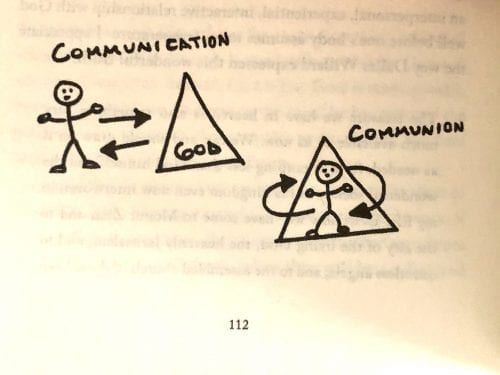
Skye Jethani shares a shift that reframes my concept of focus, attention, and prayer. He stresses the importance of “coming to prayer as communion and not just communication.” (With: Reimagining the Way You Relate to God).
Remembering the the indwelling presence of the Holy Spirit helps us focus. We live in connection with God in all that we do, not just when we pray and read our Bible. Our faith deepens as we learn to be attentive to God in all of life. We can start now to develop a deeper relationship with God.
15 Simple Ways to Overcome Distraction to Focus Your Attention on God
Consider this list of ideas to experience a deeper, more focused relationship with God. Choose a few of these to practice today.
- Silence your phone and put it out of sight.
- Take a few deep breaths, letting go of tension as you exhale. Breathe in the life of God and exhale your distracting thoughts.
- Give yourself time to transition from activity to attentiveness from doing to being present.Stillness and silence helps turn our thoughts to God. Praying this phrase from Psalm 46 is helpful: “Be still, and know that I am God” (Psalm 46:10).
- If you get distracted, just come back to focusing on God.
- Keep paper handy to note tasks that come to mind. Writing relieves you of the fear of forgetting something important
- Ask Holy Spirit to help you focus on God and block distractions from your mind.
- Read a Psalm or short devotion as helpful “warm up” for your attention. Devotions and other spiritual reading instruct, inspire, and equip us. Be sure you don’t let them replace a consistent practice of meditating on God’s Word.
- Journal thoughts and emotions on days when you feel overwhelmed with an issue. Write it out to God, getting it out of your head and onto paper. When problems are consuming, this practice can help us clear our heads. Written prayers remind us of God’s presence in the midst of challenges we face. This can be helpful before or after your time of meditative reading. Trust the Spirit to lead you as there isn’t a right or wrong order to any of this.
- Read a short passage of Scripture. Pause to listen to the thoughts and impressions the Holy Spirit brings to mind as you read and pray. You may find it helpful to read the passage a couple of times, pausing after each phrase.
- Write the Word. When a verse stands out, write the verse in a journal or notebook. Many enjoy being creative with how they write the verse, tapping into both sides of the brain. Emphasize words that resonate with larger print, color, picture, or different style (you don’t have to be a great artist). Writing slows our minds and focuses attention. Adding a creative element integrates the right and left brain. Expect the Holy Spirit to speak through insight, observation, impression, or reflection.
- Ask God, “What do you want me to know about this today?” Stay on the topic rather than wander into your prayer list of needs and concerns. (You can pray about those in a few minutes). Write thoughts, feelings, questions, or observations that come to mind. View this interchange as a relaxed conversation between trusted friends. For those who don’t like to journal, try using bullet points and short phrases instead.
- Invite the Holy Spirit to continue the conversation and help you to commune with God during your day.
- Take a pause during the day, a mental time out. Turn your attention to God with a quick prayer as you remind yourself of his presence. (The stick figure illustration above is visual reminder of God’s continual presence).
- Memorize a Bible verse on attending to God. Trust the Holy Spirit to remind you of God’s presence through the verse.
- Trust God with your spiritual attention. Ask for his help and then trust him to develop deeper attention over time. You will discover your own ways of settling your thoughts and opening your ears to God’s voice.
Get a printable version of this list of tips to focus on God in the Spiritual Growth Pack.
Try these simple ways to focus your attention on God and open your ears to God’s voice. Growing deeper with God begins with the love of God and continues with our response. We respond with a desire to hear God. Echo the words of the young Samuel, “Speak, for Your servant is listening”(1 Samuel 3:10).
Making the effort to focus our attention on God places us in a heart posture to receive all the Lord has for us today. Bring the holy into your moments with deeper spiritual attention. You can entrust your battle with distraction to God’s loving care.
Remember Moses and the burning bush? What would have happened if he had not payed attention to what God was doing?

Intention and attention go together.
Prayer, listening, and meditative Bible reading can train us to pay attention to God in all we do.
Like Moses, may God give us the “capacity to see the bush burning in the middle of our own life and having enough sense to turn aside, take off our shoes and pay attention! The burning bush was, after all, a most ordinary object that became extraordinary because it was on fire with divine activity.” (Ruth Haley Barton, Strengthening the Soul of Your Leadership).
Let’s not miss what God has for us today because we were too distracted. Deal? What helps you overcome distraction for a deeper life with God?
If you’ve benefitted from this post, please share the post on your favorite social media platform! Sign up for my newsletter for more resources to cultivate a deeper life.
Overcome distraction and focus your attention on God with the simple ideas in this post. Discover practical tips to help you develop spiritual attention. #spiritualattention #focus Share on X
More on Prayer Tips for Deeper Focus in Prayer
Want to go deeper? In this episode of the Habits of Hope Podcast, we’re sharing 8 easy, Spirit-led strategies to help you stay focused in prayer—even when your mind wanders or you feel spiritually scattered.
From deep breathing to journaling and prayer walking, these simple tools can help calm your mind and anchor your attention on God.
Show Notes: 8 Easy Tips to Focus in Prayer that Make a Big Difference
Part 2 of the Prayer Focus Series
Feeling distracted every time you try to pray? You’re not alone—and the good news is, you can train your mind and heart to focus more deeply. In this episode of Habits of Hope, we’re sharing 8 practical and powerful strategies to help you stay focused in prayer—even when your mind wanders or your day feels chaotic.
From deep breathing to journaling, movement-based prayer to Scripture meditation, you’ll discover new tools to bring your attention back to God and build a more consistent, Spirit-led prayer life. Whether you struggle with distractions, fatigue, or simply want to go deeper in your walk with God, this episode is full of helpful habits that make a real difference.
🌿 Habit of Hope: Keep on praying. Engage in a variety of prayers to cultivate a prayerful life (Ephesians 6:18).
Key Takeaways to Stay Focused in Prayer
- Why distraction in prayer is normal—and how to overcome it with grace.
- How deep breathing can center your thoughts and calm your nervous system.
- Why praying out loud can increase clarity and focus.
- The surprising benefits of writing down your prayers and using Scripture as a guide.
- How to incorporate movement, like prayer walking, into your spiritual routine.
- Creative ways to pray with a partner or spouse that build connection and consistency.
- What neuroscience and Scripture reveal about how we train our brains to focus.
- How to approach your prayer life with freedom, not perfection.
Memorable Quotes for More Focused Prayer
- “Prayer is about presence, not perfection.” – Ginger Harrington
“You may feel unfocused now, but you can grow in this area—and that gives me hope.” – Larissa Traquair
“God invites us into a praying life, not just prayer time.” – Ginger Harrington - “The goal isn’t a perfect prayer time. The goal is to engage your heart and mind in God’s presence.” – Ginger
“Writing down answered prayers always fills me with hope and inspires me to pray even more.” – Larissa Traquair
🎧 Why You’ll Love This Episode Packed with Prayer Tips
If you’ve ever found yourself drifting off during prayer, getting stuck in a swirl of thoughts, or struggling to stay engaged spiritually, this episode will meet you right where you are. With biblical encouragement, gentle humor, and science-backed tips, we’ll help you create space for focused, meaningful connection with God—without guilt or pressure.
Get Your Spiritual Growth Pack of Practical Tips
Get the 15 Tips to Focus Your Attention on God in the Spiritual Growth Pack. Get this helpful list along with some my best tips, prayers, and truths to help you thrive in your relationship with God.

More Posts on Developing Deeper Attention with God
- Do You Have Spiritual ADD?
- Discover 6 Important Truths About Listening to God
- When You Long for God to Speak to You
- 5 Simple Ways Silence can Deepen Your Faith
- 8 Powerful Ways to Connect with God when He is Silent
- Simple Ways to Meditate on God’s Word
- Be Still to Discover Your Strong
- 4 Simple Ways to Make Time for God in a Busy Life
Podcast Episodes on Prayer and Spiritual Growth
- Episode 32: How to Cultivate Prayer Habits for Deeper Focus and Clarity
- Episode 25: How to Hear God’s Voice: Simple Habits to Deepen Your Faith and Restore Hope
- Episode 5: What We’re Doing in Our Quiet Time Right Now: Daily Devotion Tips
*This post may include affiliate links at no cost to you.

How to Stay Focused in Prayer: Prayer Tips
Concentration can be hard to develop in prayer, but our relationship with God grows deeper as we learn to pray with an attentive heart. Learn how to pray with prayer tips to help you focus in prayer.
Do you struggle to stay focused during prayer? You’re not alone—and it’s one of the most common challenges in our spiritual lives. This post originally explored that struggle, and now we’re going even deeper in a new episode of the Habits of Hope Podcast. In Part 1 of our Developing Greater Focus in Prayer series, we share biblical encouragement, practical habits, and Spirit-led strategies to help you overcome distractions and grow closer to God through focused prayer. Listen below!
Maybe you’ve experienced a conversation that went something like this:
Did I tell you about what happened yesterday, I asked my teenaged daughter. Texting a friend, she replied with a nod, Hmm…did you say something?
It wasn’t a stretch to realize that I didn’t have her full attention.
Somehow I expected to hear some sort of related response as part of the conversation, but my girl moved on to talk about something completely different.
Mom, can I borrow the car tonight?
Our distracted thoughts can keep us from focusing in prayer.
Prayer is a conversation with God.
One of the most important tips to remember about focusing in prayer is that you are having a conversation with God. How often do I talk with God like my conversation with my daughter? Half listening as I flit from one concern to another? My daughter shifted straight to her request rather than joining the conversation. I find it easier to pray corral wandering thoughts when I think of prayer as a conversation rather than a monologue. Any good conversation involves both listening and speaking. This prayer tip helps me focus when I pray.

Relationship is the heart of prayer.
Prayer is a conversation that is rooted in love. Embracing the truth that God loves you can change your motivation and focus when you pray. This prayer tip helps us focus when we pray. Oswald Chambers penned these words on prayer and relationship:
“We look upon prayer simply as a means of getting things for ourselves, but the biblical purpose of prayer is that we may get to know God Himself” (My Utmost for His Highest, August 28).
Talking with someone we love is one of the deep delights in life. Approaching prayer from the foundation of our relationship with God inspires deeper attentiveness. Author Jan Johnson reminds us that “When we shift to a relational approach to life with God, prayer becomes a place of meeting God” (When the Soul Listens).
Approaching prayer from the foundation of our relationship with God inspires deeper attentiveness. #prayer Share on X
When Jesus taught His disciples to pray, He began with relationship:
“Our Father who is in heaven” (Matthew 6:9).
Particularly in prayer for the needs and challenges that weigh heavy on my heart or rise from hurt in my soul, trusting my Father infuses my thoughts.
“See how great a love the Father has bestowed on us, that we would be called children of God” (1 John 3:1).
These prayer tips impact my prayer in a profound way. More and more, the relationship of God as my good Father infuses my awareness as I pray.
Don’t worry about having the right words to pray.
As we learn how to pray, it is important to let go of any pressure to have the right words to pray. When we remember prayer is a conversation that flows from relationship, we can simply share our thoughts. When we express the thoughts, emotions, and concerns in our heart, focus is enhanced because we aren’t distracted by searching for words that sound good, important, or religious. This is particularly an issue when praying aloud in a group. I can remember being so worried about what I was going to pray that I didn’t hear much of what others prayed. How does this prayer tip set your heart at ease today?
God knows our heart and understands everything about us.
“You scrutinize my path and my lying down,
And are acquainted with all my ways.
Even before there is a word on my tongue,
Behold, Lord, You know it all.
You have encircled me behind and in front,
And placed Your hand upon me” (Psalm 139:3-5).
Since God already knows what’s on your mind, you can stop worrying about how you sound when you pray. The important thing is to pray.
And here’s one more thought that comes to mind. Because God understands you inside and out, He also understands your struggle to focus. He’s with you in it all, so when you catch your attention wandering, circle back to finish your conversation with God.

Ask the Holy Spirit to help you pray.
The very best place to start in developing greater focus in prayer is to ask for help. In fact, this is the Habit of Hope for Episode 32 on developing prayer focus and clarity. Another prayer tip is to trust the Holy Spirit to help, guide, and teach you more about prayer. Again, I’ll refer to the disciples asking Jesus, “Teach us to pray.” Jesus responded with instruction and parables to help them come to a deeper understanding of prayer. Clearly, Jesus was glad to help them learn to pray (Luke 11:1-11).
One of the blessed roles of the Spirit is to be our helper (John 14:25-27). God understands that we often do not know how to pray as we should. Our struggles with focus relate to this challenge. The Spirit can guide the content of our prayers, as well as assist with motivation and concentration. At times, the Spirit even prays for us: “Now in the same way the Spirit also helps our weakness; for we do not know what to pray for as we should, but the Spirit Himself intercedes for us with groanings too deep for words” (Romans 8:26).
When we struggle with focus, how often do we skip the simple step of asking the Spirit for help?
Begin with worship music.
We often think of prayer in terms of words. Language is primarily a function of the left side of the brain. Music has the power to incorporate both sides of the brain which can help with focus, creativity, and processing. Make a play list of favorite worship songs that inspire praise, prayer, and worship. When emotions weigh heavy, music has a way of touching our emotions which can help us move beyond distraction to the deep concerns of our heart. In the comments, share your favorite worship songs. I’d love to add more great songs to my playlist on Spotify.
Pray God’s Word.
Specific Scriptures can give our prayer a focal point. When it is hard to settle our thoughts, praying God’s Word brings clarity to prayer. It can also give us language to pray when words aren’t coming easily.
- Praying a verse provides a starting point in our conversation with God.
- God’s Word is like rails, keeping the train of our thoughts on track.
- Biblical passages can provide content, ideas, patterns to inspire prayer.
When it is hard to settle our thoughts, praying God's Word brings clarity to prayer. #prayerfocus Share on X
Pray out loud.
Another simple way to focus in prayer is to pray aloud. Praying aloud keeps us physically engaged. It also involves the auditory system, the mind, and the heart which increases concentration. In addition, verbal prayer is helpful when we feel sleepy. Time alone in the car is a great time to pray aloud. It is much easier to overcome distraction when we can hear ourselves pray.
Get moving.
When prayer feels like a battle with the noise in your head, try taking a prayer walk. Rhythmic physical movement like walking or running can aid attention. One of the many benefits of physical exercise is the increase of brain chemicals that impact focus and concentration.
Walking, running, and swimming are all great options for adding prayer to your movement. Even housecleaning or gardening can be good times to combine movement with focused prayer.
Biblical meditation deepens prayer.
Meditating on God’s Word increases focus in prayer. We can learn so much about how to pray when we reflect on Scripture.
Prayer and Bible reading are two primary ways we experience a deepening relationship with God. A. W. Tozer wrote about the importance of deep focus on God:
“For it is not mere words that nourish the soul, but God Himself, and unless and until the hearers find God in personal experience they are not the better for having heard the truth. The Bible is not an end in itself, but a means to bring men to an intimate and satisfying knowledge of God, that they may delight in His Presence, may taste and know the inner sweetness of the very God Himself in the core and center of their hearts.”
If we do all the talking when we pray, we will miss what God has to say. Prayerful Bible reading slows us down to receive and reflect on God’s Words to our hearts. Meditation helps us concentrate on the listening side of prayer.
Focus by staying on the same subject with God.
Hearing from God through the Holy Spirit begins to engage our minds, drawing our attention to particular concepts.
Open to what the Holy Spirit has to say, we slow down and let the words sink in. Once we pick up on what God draws our attention to, we can choose to continue the conversation.
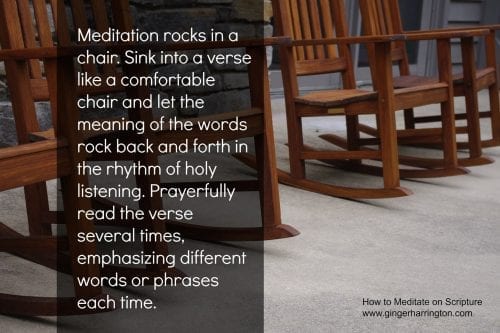
When we read Scripture and pray, we need to learn to stay on the same subject with God—to respond to what He has said, rather than changing the subject and praying about something else—stay on topic so you can hear all that God has to say.
This morning I am reading John 16:13-14:
But when He, the Spirit of truth, comes, He will guide you into all the truth; for He will not speak on His own initiative, but whatever He hears, He will speak; and He will disclose to you what is to come. He will glorify Me, for He will take of Mine and will disclose it to you.
What do I too often do?
Great verse, Lord. Thanks for guiding me…
And then I whip out my laundry list of prayer requests. While God invites us to share our concerns, prayer is much broader and deeper than seeking solutions for problems or provision for needs.
God is gracious when we gloss over truths He brings to our attention…but consider what we miss by not staying on topic with what God is bringing to our attention? When we struggle to focus in prayer, God’s Words go in one ear and right out the other with barely a stop in the grey matter between.
Meditating on Scripture, focusing in prayer, and listening to God are intrinsically linked. As we listen more fully to what God reveals, we continue the conversation with responsive prayer.
Write it down.
When attention wanders, try writing down your prayer or insights revealed through your meditation on God’s Word. Sometimes I write my prayers in my journal.
- Writing helps develop thoughts, keeping distracting thoughts at bay.
- Write the verse that stands out to you.
- Write down key thoughts from your meditation.
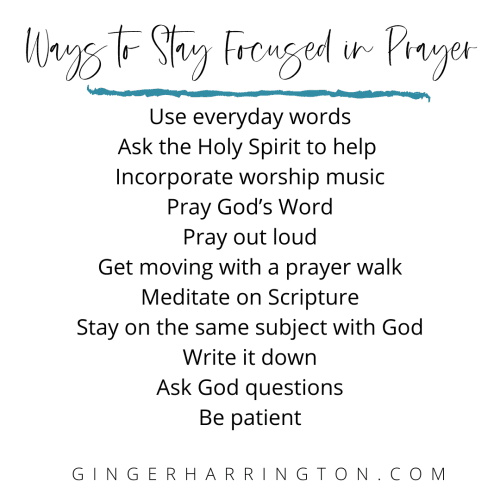
Ask God questions.
Prayerful conversation with God continues when we bring our questions to God. Here are few questions that have been helpful for me:
- What do want me to know about this?
- Will you help me to understand on a deeper level?
- What in my life most needs this truth right now?
As you can see, learning to focus in prayer is a process that takes time and practice. The very best way to develop concentration in prayer is to pray. Be patient with yourself in the process and realize that some days will be better than others. I hope these prayer tips and truths will help learn how to pray with less distraction and a more meaningful time in prayer.
Show Notes:How to Cultivate Prayer Habits for Deeper Focus and Clarity
Ever sit down to pray and find yourself thinking about your to-do list, yesterday’s conversation, or what’s for dinner? You’re not alone. In this first episode of our two-part series on developing greater focus in prayer, we’re diving deep into why we struggle with distraction and how the Holy Spirit can help us stay present with God. You’ll walk away with practical strategies, biblical encouragement, and new habits that help you turn down the noise and tune your heart to the One who listens.
Habit of Hope: Depend on the Holy Spirit to help you pray with greater focus.
Key Takeaways:
- Why distraction in prayer is normal—and how to stop letting it derail your time with God
- The role of the Holy Spirit in helping us stay present and centered
- Simple, grace-filled habits to refocus your mind when it wanders
- How to recognize and redirect internal or external distractions
- Encouragement for anyone who feels defeated or guilty about their prayer life
Prayer: Holy Spirit, I invite You into the time of prayer. Help me to stay present and focused on God. Lead my thoughts and words according to Your will.
Memorable Quotes:
“If we only prayed when we felt focused, we’d rarely pray at all.”
“It’s so common to get distracted. You are not the only one.”
“We’re talking about a grace-filled approach to prayer, not a guilt-driven one.”
“The Holy Spirit helps us in our weakness—even our distractedness.”
Why You’ll Love This Episode:
This episode re-centers your heart on the truth: prayer isn’t about performance, it’s about presence. You’ll walk away reminded that the Holy Spirit is already helping you—even when you don’t know what to say. You’ll learn simple tools to refocus your mind, deepen your connection with God, and create prayer rhythms that work in real life.
Share your thoughts in the comments below. For more tips on prayer, check out the prayer chapter in my book, Holy in the Moment.
Related Blog Posts on Spiritual Concentration
- Simple Ways to Meditate on God’s Word
- 15 Simple Ways to Overcome Distraction to Focus Your Attention on God (with printable)
- Do You Have Spiritual ADD?
- Simple Ways Silence Can Deepen Your Faith
- Discover Six Important Truths About Listening to God
- From Frantic to Settled: Inner Room Living in a Busy Life
Recent Podcast Episodes
- 29. Commit Your Work to God: How to Align Your Work to God’s Purpose
- 30.How to Find Hope When It Feels Too Late: A Conversation with Rebecca George
- 31.How to Trust God with Your Work (Even When You Don’t See Results)

*This post contains affiliate links at no cost to you that help support the cost of this website.


How to Build the Habit of Trusting God with Our Work
What if the greatest obstacle in your work isn’t your skill or effort, but your ability to trust God with the outcome? So often, we strive to succeed, pouring our hearts into our work, yet struggle with fear of failure, comparison, and the need for control.
But what if there’s a better way? A way that not only honors God in your work, but also brings peace, purpose, and perseverance to all kinds of work—whether it’s your job, ministry, home life, or creative calling.
In this post, we’re diving into five powerful habits that can transform how you approach your work by trusting God with your work more deeply. These habits—overcoming fear of failure, refusing to compare yourself with others, celebrating others’ success, trusting in God’s timing, and staying the course—are not just strategies but life-changing perspectives rooted in faith.
This is the third in a series on self -worth and work. In our previous episodes, we explored the importance of grounding our identity in Christ working from our worth, not for our worth. Next, we had a conversation on the habit of committing our work to God. If you missed any of these episodes, be sure to catch them as we’ve covered a lot of ground on this topic.
🎁 Download your free copy of 15 Habits of Hope for Work featuring the best tips from the full series so you can keep growing with grace, not grind. https://gingerharrington.myflodesk.com/habits-of-work
Habit of Hope: Trust God with your work.
Galatians 6:9 challenges us to persevere when it seems like things aren’t working out, trusting God to bring fruit and growth from our work in His timing:
“Let us not lose heart in doing good, for in due time we will reap if we do not grow weary. So then, while we have opportunity, let us do good to all people, and especially to those who are of the household of faith.“
God has used this passage to cheer me on when I get discouraged in my work. There are days when I need that reminder to keep going, to persevere in doing good, even when the results aren’t immediate.
It’s also a reminder that in God’s perfect timing, we will see the fruit of our work if we don’t give up. The truth is, if you give up, you won’t discover what God wants to do through your work.
1. Overcome the Fear of Failure in Your Work
Fear of failure is a common challenge that often shows up in our efforts, whether at work, in ministry, or in our personal lives. It’s particularly tough for those of us who struggle with perfectionism and the desire to get everything right.
I know there’s been so many times where I’ve struggled with self -doubt, feeling inadequate or unqualified, especially when I step into a new level or take on a big task.
“God has not given us a spirit of fear or timidity, but of power, love, and self-discipline.” (2 Timothy 1:7)
Recognizing when fear is influencing your actions is the first step. It’s easy to let fear creep into your motivation, leading to stress and self-doubt. Instead, focus on what God has given you—His power, love, and a sound mind.
When you feel fear rising, take it to God in prayer and ask Him to replace that fear with His peace.
Fear can impact our work in so many ways, whether it makes us afraid to try something new, to move to another level or add a new skill, or even pivot in our work and do something different that we haven’t done before.
Have you let fear of failure hold you back in your work or ministry? What steps can you take to release those fears to God?
2.Refuse to Compare Your Path with Others’ God-Given Work
Comparison is a trap that leads to envy, low self-esteem, and a scarcity mindset. In today’s social media-driven world, it’s easy to see someone else’s success and feel like we’re falling short.
We see some one’s highlight reel, a moment of success, but not the entire process. We don’t see all the work, learning, mistakes, and challenges of their journey.
John Acuff said something that comes to mind when I start comparing myself to others: “Never compare your beginning with someone else’s middle.”
This quote has been a game-changer for many who struggle with comparison—including me. In reality, comparison distorts our perception of ourselves and others.
Instead of focusing on what others are doing, concentrate on your own journey and the unique path God has for you. Remember, your work is valuable because it’s yours, not because it measures up to someone else’s.
Sometimes we need to remind ourselves that God did not create us to operate in fear, and that includes our work. Even if we are called to the same work, we’re both going to approach it differently. We each have different experiences, strengths, personality and perspectives. So the work is going to be different. We need both. We need the AND not the OR, when it comes to the work we contribute.
Are there areas of life where you find yourself comparing to others? How can you shift your focus back to your unique journey?
3. Celebrate the Success of Others Without Losing Focus on Your Calling
“Celebrate others’ success—it doesn’t diminish your own.
We can’t stop comparison thoughts from coming to mind, but we can choose how we respond. Celebrating others’ success can be challenging, especially if you feel like their success highlights your own perceived failures. However, choosing to rejoice in others’ achievements shifts your focus from self to others.
This habit not only builds community but also fosters a sense of unity—and it’s a lot more fun. Don’t we want others to celebrate with us when we have a win or when we have a success or our work is going well?
When you pray for others and genuinely celebrate their victories, you reinforce the truth that there’s enough of God’s goodness to go around. Your success isn’t diminished by someone else’s—it’s a part of the larger story God is writing for His kingdom.
Pray for Others: Start by praying for others’ success and asking God to bless their work. This shifts your focus from comparison to genuine support.
Choose Celebration Over Competition. Stay humble and see others’ victories as part of God’s work. Make it a point to acknowledge and celebrate the successes of your friends, colleagues, or peers.
How do you feel when someone else succeeds? What can you do to genuinely celebrate their victory?
4. Trust in God’s Timing in Your Work and Calling
Patience is often tested when progress in our work or spiritual growth seems slow. It’s easy to become frustrated or discouraged when things don’t happen on our timeline.
Remember Galatians 6:9, which encourages us not to grow weary in doing good, for at the proper time we will reap a harvest if we do not give up. “Due time” or Kairos time has to do with God’s timing, not ours.
There is a season, a right time for things to come to maturity, and that includes our work. Consider the life cycle of a seed—they don’t grow overnight. It takes time, and no matter who much we want the harness, we can’t bypass the process.
God’s timing is perfect. He’s never late, even when we’re in a hurry.
I’ve come to understand that trusting God’s timing means believing that He is working behind the scenes, even when I can’t see immediate results.
It’s about understanding that the process is just as important as the outcome.
Where in your life do you struggle to trust God’s timing? What might God be teaching you in the waiting?
5. Stay the Course When You Feel Discouraged in Your Work
Finally, perseverance is key, especially when you don’t see immediate results. It’s tempting to give up when things get tough, but true success often comes just after the moment you’re tempted to quit.
“Don’t give up. Success comes to those who stay the course.”
Thomas Edison famously said, “I have not failed. I’ve just found 10,000 ways that won’t work.” This perspective is crucial for anyone striving to achieve something meaningful.
We can’t succeed if we give up, right? When we are discouraged or tempted to give up, our emotions are vulnerable. Maybe we’ve experienced failure. At times, we’ve experienced other people surpassing us or getting opportunities that we didn’t get. Maybe we’ve actually messed up.
If we don’t stay the course, we can’t move forward. God wants to work in and through each one of us, and that includes work that we do and the calling that He’s given to us.
Break Down Big Tasks: When you’re feeling overwhelmed, break your tasks into smaller, manageable steps. This will help you stay focused and make consistent progress.
View Setbacks as an Opportunity: How we think about setbacks makes a difference. Remember each one is can be an opportunity to learn, grow, and trust God more deeply.
Keep Going: Commit to staying the course, even when it’s hard. Trust that God is using your efforts to develop your character and deepen your faith.
If you’ve been tempted to give up, is God calling you refocus and stay the course?
Conclusion
Trusting God with your work is not a one-time decision; it’s a daily habit that requires intentionality and faith. By overcoming fear, refusing to compare yourself with others, celebrating their successes, trusting God’s timing, and staying the course, you can experience a deeper sense of purpose and peace in your work.
As you go about your work this week, choose one of these habits to focus on. Start small, and ask God to help you grow in trust and dependence on Him. Leave a comment and let us know which step could help you today.
If this post resonated with you, listen to our full podcast episode where we dive deeper into these habits and offer more practical tips for integrating faith into your daily work. Don’t forget to share this with a friend who might need encouragement in their work journey!
Want Help Trusting God with Your Work?
Download the guide for this series: 15 Habits of Hope for Your Work. You’ll get 15 simple, Scripture-rooted habits to help you live from your worth, not for it.
For more on this topic, check out Chapter 12: “Moments to Work” in Holy in the Moment—a book that invites you to experience God’s grace and presence in the small, everyday choices of life.
In the Moments to Work chapter, you’ll discover how God is present in your effort, not just the outcome. Learn how to live intentionally, respond to His nudges in your workday, and trust Him with every moment.
Related Episodes
28. Redefining Success: Trusting God with Our Work
Feeling like your worth is tied to your productivity? In this episode, we explore the struggle of work-driven self-worth and perfectionism through the lens of Colossians 3:23-24.
29. Commit Your Work to God: How to Align Your Work to God’s Purpose
May the favor of the Lord establish the work of our hands.” What does this mean for your daily work? Join us as we dive into Psalm 90:17 and how to commit your work to God, set boundaries that protect your peace, and build confidence rooted in faith–not performance. Part 2 of The Worth & Work Series.
30.How to Find Hope When It Feels Too Late: A Conversation with Rebecca George
Feeling behind or stuck in the waiting? In this encouraging interview, Rebecca George shares biblical truth, personal stories, and practical hope to remind you—it’s not too late for what God has planned.

Finding Hope When It Feels Too Late: A Chat with Rebecca George
Author Rebecca George shares biblical encouragement for seasons of waiting, reminding us: you’re not too late for God’s purpose, joy, or redemption. A conversation of hope with Rebecca George *This post contains affiliate links at no cost to...

Work & Worth: How to Do Your Best Work with Faith and Confidence
Do you struggle to separate your self-worth from your work? Discover how to commit your work to God, set boundaries that protect your peace, and build confidence rooted in faith—not performance.
Have you ever felt like your work defines your worth?
Whether you’re managing a career, a household, or a ministry, it’s easy to let performance determine your value. In a culture that equates success with achievement, how do we work faithfully without tying our identity to outcomes?
In this post, we’ll explore how to commit your work to God and develop faith and confidence in your work—without letting performance define your identity. Through prayer, healthy boundaries, and contentment, you’ll learn to do your best work while finding your worth apart from your work. Whether you lead a team, run a home, or pursue a creative calling, these habits will help you work from a place of peace, not pressure.
This post is part of our Work & Worth series on the Habits of Hope Podcast, where we unpack Psalm 90:17 and learn to trust God with our work, build healthy rhythms, and find purpose without burnout.
Habit of Hope: Commit your work to God
Psalm 90:17
“May the favor of the Lord our God rest on us; establish the work of our hands for us—yes, establish the work of our hands.” (NIV)“And may the Lord our God show us His approval and make our efforts successful. Yes, make our efforts successful!” (NLT)
This beautiful verse reminds us that God’s favor and presence are essential to meaningful work. Whether results are immediate or not, we can ask God to establish—not just bless—the work of our hands. Establish means to make firm, secure, and lasting.
The NIV emphasizes God’s favor and stability. The NLT highlights approval and success. Together, they remind us that God values both our process and our results.
Favor carries the idea of beauty, kindness, and delight. God doesn’t just use our work—He delights in the dreams He’s placed in our hearts. When we pursue those dreams in dependence on Him, it becomes less about performance and more about partnership with our Creator.
This verse can also shape our prayers—not as a way to earn success, but to invite His presence into our work.
1. Commit Your Work to God in Prayer
Prayer is more than a formality—it’s how we invite God into our workday. It reorients our hearts and reminds us that our work is a spiritual practice.
“Sometimes I get so pressured by what I need to do that I forget to pray. But when I take time to invite God into my work, I remember that I’m not doing it alone.”
Whether it’s a short prayer on your commute or a quiet moment at your desk, prayer centers your heart in God’s presence and purpose.
Try praying this before you begin your work:
“Lord, give me Your energy, Your love for others, and Your wisdom.”
“Help me enjoy the work You’ve given me today.”
“Establish the work of my hands and let it bear fruit for Your glory.”
4 Ways to Pray for Your Work:
His favor – spiritual covering of grace and blessing
His presence – to remain aware of Him throughout the day
His guidance – for direction and clarity
His empowerment – for strength and joy
“Even bullet prayers make a difference,” Larissa shared. “I just want to glorify the Lord and ask for much fruit—for His glory and for those He’s called me to serve.”
Reflection: Have you invited God into your work today—or are you carrying it all on your own?
2. Set Boundaries with Your Work
One of the most spiritual things we can do is protect our work-life balance.
God modeled this in Genesis 1. After each day, He paused and called it good. On the sixth day, He said it was very good—then He rested.
“When I wrote Holy in the Moment, I worked long hours under a tight deadline. I was exhausted, and it affected my health. I’ve since learned the value of setting better boundaries—most of the time.”
Here are some practices to help:
Work Boundaries That Build Peace:
Define a consistent end time to your workday
Avoid working into the night or during Sabbath
Reflect daily on what went well and where you saw God at work
Leave work—mentally and emotionally—when it’s time to rest
Boundaries aren’t just about time—they honor God’s rhythm of work and rest. We are stewards of our energy. Without boundaries, we lose rest, relationships, and joy.
“Sometimes, especially for teachers, writers, and pastors, it feels like work is never done. I’m learning to stop, appreciate the progress, and thank God at the end of each day.”
Reflection: What boundary could help protect your well-being or relationships in this season?
3. Build with What God Provides
One of the most freeing habits is to stop striving for more and start using what God has already placed in your hands.
“I felt like I was doing too much and none of it well. God began teaching me to slow down and make the most of what He’d already provided.”
Sometimes, instead of chasing the next big thing, God invites us to go deeper. Contentment doesn’t mean complacency—it means trusting God with the process.
“I remind myself, I get to do this. Gratitude leads to contentment, and contentment brings peace. God has called me, and He’s provided.”
Whether you’re leading a team or managing your home, being faithful with what you already have is a powerful act of trust.
7 Ways to Build with What God Provides:
Practice gratitude over hustle
Choose contentment over comparison
Stay present instead of pressured
Focus on growth over perfection
Ask God for your next right step—and do that well
Revisit unused opportunities
Create margin to reflect and listen before acting
Reflection: What’s one resource or opportunity you’ve been overlooking?
What This Can Mean for Your Work
True success isn’t measured by stats, income, or applause. In God’s eyes, success is measured by faithfulness.
When you:
Commit your work to God in prayer
Set intentional boundaries
Build with what God provides
…you’ll experience peace and purpose that come from confidence rooted in Christ—not performance.
“Your worth is found in Christ, not in your work.”
Some days, results are slow or unseen—but God still delights in your faithfulness. He’s with you in the process, and He’s using your work even when you can’t see it.
This Week’s Action Steps
Choose one of the three habits (prayer, boundaries, or contentment)
Ask God to help you put it into practice this week
Reflect at the end of each day: What went well? Where did I see God show up?
Keep the Conversation Going
If this message encouraged you:
Share it with a friend or co-worker
Subscribe to the podcast so you never miss an episode
Leave a review and let us know which habit helped you most
Until next time—work well, friend, and enjoy the process. God is in it with you.
Want help trusting God with your work?
Download the guide for this series: 15 Habits of Hope for Your Work. You’ll get 15 simple, Scripture-rooted habits to help you live from your worth, not for it.
For more on this topic, check out Chapter 12: “Moments to Work” in Holy in the Moment—a book that invites you to experience God’s grace and presence in the small, everyday choices of life.
In the Moments to Work chapter, you’ll discover how God is present in your effort, not just the outcome. Learn how to live intentionally, respond to His nudges in your workday, and trust Him with every moment.
Recent Episodes
26.Are You Willing to Step Out of Your Comfort Zone for Growth?
Explore practical steps to deepen your trust in God, find joy in discomfort, and grow spiritually through trials that require you to step out of your comfort zone.
27.Marnie Swedberg: Turn Your Hardships Into Faith & Hope
Marnie Swedberg shares her incredible journey of faith through hurricanes, personal losses, and triumphs. Tune in to learn how to build habits of hope, depend on Christ daily, and transform challenges into opportunities for growth.
28. Redefining Success: Trusting God with Our Work
Feeling like your worth is tied to your productivity? In this episode, we explore the struggle of work-driven self-worth and perfectionism through the lens of Colossians 3:23-24. Discover how embracing your identity in Christ can free you from the pressure to perform. Part 1 of The Worth & Work Series.