
Learn how to scripture journal using a simple rhythm for everyday quiet time. Write Scripture, meditate, and respond to God—without pressure or perfection.
Have you ever opened your Bible, read a few verses, and then wondered, What do I do now?
That moment—when you want to meet with God, but your mind is racing and you’re not sure how to stay with the text—is more common than we admit. And it isn’t failure. It’s an invitation.
Scripture journaling is a simple way to slow down with God’s Word—by writing it, meditating on it, and responding to God in prayerful conversation.
It’s not a method to master or a system to follow. It’s a gentle rhythm that helps turn Bible reading into a real relationship.
What follows is a simple, approachable practice you can return to again and again—one that meets you where you are, no matter how much time you have or how long you’ve been walking with the Lord.
What We’ll Explore in This Post
- Why scripture journaling is about relationship, not performance
- A simple three-part rhythm you can use anytime
- How writing Scripture helps you slow down and listen
- What biblical meditation actually looks like
- Practical ways to respond to God—without pressure
- How to carry Scripture into your day
- Gentle permission for real-life, imperfect quiet times
What Is Scripture Journaling—and What Is It Not?
Scripture journaling isn’t about filling pages or doing something impressive—although those things may happen.
It isn’t about getting it “right” or producing something meaningful to look at later.
Instead, scripture journaling helps us stay with the text—long enough to notice, listen, and remain present with God rather than rushing on. Writing, spacing words out on the page, or even lingering over a single phrase can become simple ways of giving Scripture our full attention.
We often approach Scripture for information—and that matters. But in our day-to-day devotional life, Scripture is also meant to be read for relationship, not just knowledge. God’s Word isn’t only something we study; it’s something we engage.
Scripture journaling helps turn Bible reading into a conversation, not a task.
Why Is Scripture Journaling About Relationship, Not Performance?
It’s easy to become task-oriented in our spiritual lives.
Read. Pray. Journal. Check the box.
But spiritual disciplines aren’t about doing for doing’s sake. They’re about what God does through them—how they create room for connection, attentiveness, and response.
Rather than measuring output, scripture journaling invites us to:
- Connect with God
- Receive from Him
- Respond honestly
- Allow the Holy Spirit to teach, guide, and comfort
This practice isn’t about producing something polished or proving our devotion.
God is not grading your journal.
He’s listening to your heart.
When this practice becomes part of your life, it becomes a habit of hope—a way of returning to God when life feels rushed or loud.

What Is the Simple Scripture Journaling Rhythm?
This rhythm is intentionally simple and repeatable:
Write Scripture.
Meditate on it.
Respond to God.
That’s it.
Scripture journaling isn’t about doing more.
It’s about slowing down enough to listen and respond.
How Do You Start by Writing Scripture?
Writing Scripture helps us stay with the text instead of rushing past it. Many of us want to read thoughtfully, but time pressure, distraction, or a busy mind can make it tempting to move too quickly. Writing gives us a way to pause and engage more fully.
You don’t have to write an entire chapter. Ask the Lord to show you one thing to pause on—a verse, a phrase, or even a single word. That small act of attention creates a place to begin listening.
Writing slows us down. It engages our attention in a different way and helps the words of Scripture settle more deeply. When we take the time to write, we often notice things we might otherwise skim past.
Often God speaks not through something new, but through something we finally notice.
Practical Ways to Write Scripture
- Write the verse by hand—slowly, without rushing
- Read the verse aloud, emphasizing a different word each time
- Use visual cues—circling, underlining, spacing, or emphasis—to notice what stands out
These simple, tactile practices help us engage Scripture with both mind and body. This isn’t about reverence through rigidity or doing it the “right” way. God created us differently, and engaging Scripture in personal, attentive ways can be a meaningful gift
What Does Biblical Meditation Really Mean?
Biblical meditation is not about emptying your mind or trying to silence your thoughts.
It’s about gently focusing your attention on God’s Word—allowing Scripture to linger long enough to reflect on its meaning and notice what God may be highlighting.
Rather than analyzing everything or trying to uncover a perfect insight, biblical meditation invites us to stay with the text and listen. It creates space to pay attention—to what stands out, what stirs, and what invites a response.
At the same time, biblical meditation isn’t about making Scripture revolve around us. God’s Word has meaning and authority on its own. We aren’t reading to make the passage say whatever we want it to say. Instead, we come with openness—trusting that the Holy Spirit is active as we read and reflect.
As you meditate, you might ask simple, grounded questions:
- What word or phrase is standing out to me today?
- Why might this matter right now?
- What does this reveal about God—His character, His heart, His ways?
- What is being stirred in me—comfort, resistance, hope, conviction?
These questions aren’t meant to force meaning or produce quick answers. They help us remain attentive—listening for how God may be instructing, preparing, or inviting us to respond through His Word.

Biblical meditation is about staying open. Staying curious. Staying present.
Sometimes God uses Scripture to prepare us for something ahead. Other times, He uses it to speak into something we’re already walking through. This isn’t about centering ourselves—it’s about engaging with a living God who meets us through His Word.
When Scripture speaks directly into something we’re walking through, it builds our faith—because we begin to recognize that this isn’t a coincidence, but an invitation to trust God’s nearness and care.
Hope grows when Scripture moves beyond information and becomes a place of faithful, grounded conversation with God in real life.
How Do You Respond to God Through Scripture Journaling?
Relationships grow through communication—not one-way listening.
When we respond to God, we close the loop and turn Scripture into conversation rather than something we simply read and move on from.
Responding doesn’t have to look one particular way. It can take many forms, depending on the day, the season, and what God is doing in your heart.
Response might look like:
- Silent reflection—simply sitting with God and letting the words sink in
- Praise or gratitude for what you’ve noticed in Scripture
- Honest prayer, including questions, struggle, or need
- Writing thoughts, observations, or short bullet points
- Asking God how He wants you to apply what you’ve read right now
If you don’t love journaling, bullet points are enough.
If you feel stuck, simply writing the verse and stopping is enough.
There have been seasons in my own life where my journal looked very different than it had in years past. As I reviewed it, I noticed that many days—maybe even most days—I had only written a Scripture verse and little else. At first, I found myself quietly grading that. Was I slacking? Was I not paying attention? Was God not speaking as much this year?
Instead of letting those questions turn into assumptions, I brought them to the Lord. I asked Him to show me what He was doing rather than jumping to conclusions about what I was doing wrong. What He showed me was both simple and freeing.
It had been a year filled with travel, activity, and much more doing than sitting. And rather than asking me to write more, God was inviting me to listen more—to give space for prayer, presence, and quiet attentiveness in ways that didn’t always show up on the page.
That moment reminded me of something important: the amount you write is not a measure of God’s nearness or your faithfulness. God is always speaking, and when we bring our questions and concerns to Him, we can trust Him to lead us in what we need most in each season.
Some days response is full.
Some days it’s quiet.
All of it counts.
Responding to God through Scripture journaling isn’t about producing something meaningful—it’s about remaining connected, attentive, and open to a living conversation with Him.
What If Scripture Journaling Feels Messy or Inconsistent?
Here’s some permission you might need:
- Some days are a full page
- Some days are one sentence
- Some days are silence
This isn’t about perfection—it’s about faithfulness.
Messy journals are allowed. Honest prayers are welcome.
God meets us right where we are.
And sometimes, silence itself is part of listening.
Continue the Conversation
Scripture journaling doesn’t end when you close your Bible or your journal. One of the most meaningful parts of this practice is allowing what God highlighted to travel with you into the rest of your day.
Often, as we write, meditate, and respond, one word, phrase, or theme rises to the surface. That’s not something to rush past. Holding onto that one thing helps keep the conversation open and invites God’s Word to continue shaping us beyond our quiet time.
One helpful practice is intentionally choosing one word or theme God highlighted and finding a simple way to remember it.
Ways to help yourself remember:
- Write a word or short phrase at the top of your journal page
- Use a sticky note or index card
- Place it somewhere you’ll naturally see it—your planner, to-do list, or workspace
This isn’t about testing your memory or trying harder to be “spiritual.” Remembering is about attentiveness. When we pause later in the day and recall what God impressed on us, it reopens the conversation. The Spirit may prompt us to pray again, reflect, or ask for help applying what we noticed earlier.
Sometimes it’s as simple as remembering a word during a conversation, a decision, or a moment of stress and quietly saying, Lord, help me live this out right now.
It’s hard to live out what we don’t remember—but when Scripture stays with us, it begins to shape how we love, how we respond, and how we pray. Carrying God’s Word with us helps move it from the page into our everyday lives, where faith is actually lived.
FAQ: Scripture Journaling
What if I don’t know what to write when scripture journaling?
Start by writing the verse. That alone is enough. You can also write one observation or ask God a simple question.
Is scripture journaling the same as Bible study?
No. Bible study focuses on understanding Scripture deeply. Scripture journaling focuses on relationship—listening and responding.
How long should scripture journaling take?
There’s no set time. Some days it’s minutes. Some days it’s longer. Faithfulness matters more than length.
Do I need to journal every day for it to count?
No. Scripture journaling isn’t about consistency as perfection—it’s about returning.
Try Scripture Journaling This Week
Scripture journaling isn’t about becoming better at quiet time.
It’s about becoming more attentive to the God who is already present.
When we slow down with God’s Word—when we write it, meditate on it, and respond—we’re building a rhythm of hope.
Listen to Episode 69, How to Scripture Journal, and download the simple one-page printable to help you begin. Don’t aim for perfect—just come back to the habit.
Scripture journaling doesn’t deepen when we rush ahead—it deepens when we stay long enough to listen.
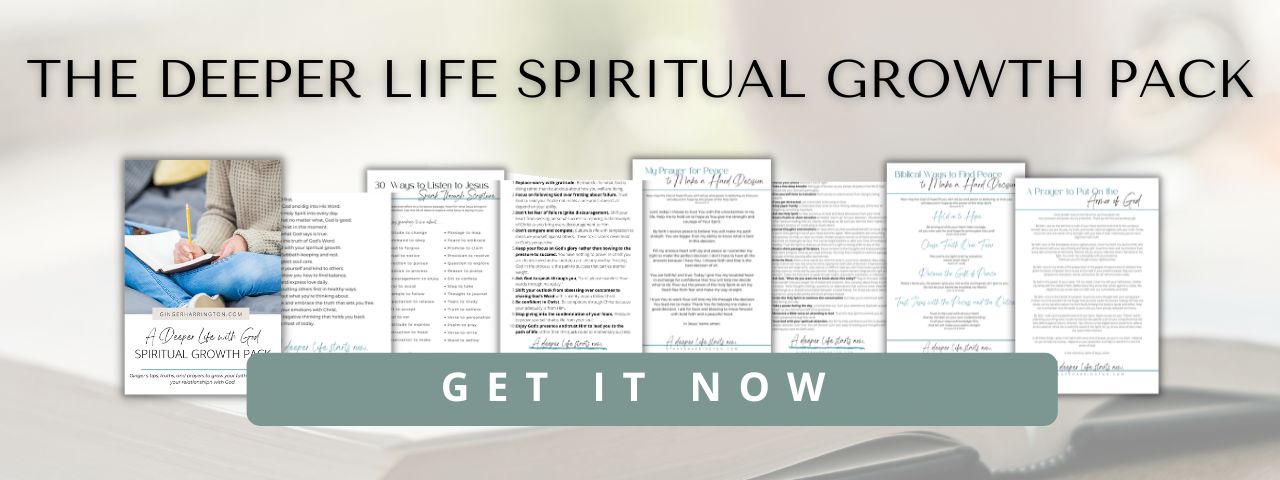
The Spiritual Growth Pack: Simple Tools to Deepen Your Relationship with God
Tip sheets, prayers, and practical truths to help you listen, focus, pray, and grow in your walk with God—one small step at a time.
Download the Spiritual Growth Pack and begin strengthening your faith today.
Related Posts for Your Time with God
-
- When You Long for God to Speak to You
- Simple Ways to Meditate on God’s Word
- 8 Powerful Ways to Connect with God When He Is Silent
- Ignite Your Faith with Simple Truths for Listening to God
- Do You Struggle with Listening to God?
- Moments to Pray, Listen, and Think Bring Us Closer to God
- 15 Simple Ways to Overcome Distraction to Focus Your Attention on God (with printable)
- 10 Benefits of Reviewing What We Learn from God
- Simple Ways Silence Can Deepen Your Faith
- Discover Six Important Truths About Listening to God
About Ginger Harrington
 Ginger Harrington is an author, speaker, and host of the Habits of Hope Podcast, where she helps women cultivate daily rhythms that strengthen faith and deepen trust in God. With over 15 years of experience in Christian blogging, teaching, and women’s ministry, Ginger combines biblical insight with practical application to help readers grow spiritually in real-life seasons.
She is the author of Holy in the Moment and the creator of numerous devotional resources, guided journals, and spiritual growth tools designed to help women engage Scripture thoughtfully and live it faithfully. Through her writing, speaking, and podcasting, Ginger equips women to build habits of hope rooted in God’s Word.
 So glad you're here. I help busy women—gals like you— build healthy habits for living well with biblical wisdom and practical steps to deepen your faith, increase your hope, and thrive in your purpose.