

How to Find God’s Peace That Guards Your Heart: A Study of Philippians 4:7
Discover how the peace of God that surpasses understanding can guard your heart and mind in Christ Jesus. Learn practical ways to pray, surrender, and live protected by His peace every day.
Have you ever prayed your heart out and still felt anxious?
You did everything right—brought your worry to God, prayed for help, even said thank you in faith—and yet your mind still races and your heart feels raw.
If that sounds familiar, Philippians 4:7 offers hope that doesn’t depend on feelings or outcomes.
This post is part three of the Steady Heart Series, a journey through Philippians 4 discovering how faith steadies our emotions and anchors our peace in God’s presence.
The peace of God that surpasses understanding is more than relief from anxiety—it’s a protective presence that guards your heart and mind. In this study, we’ll unpack what that means and how to live in it one choice at a time.
“And the peace of God, which surpasses all understanding, will guard your hearts and your minds in Christ Jesus.” — Philippians 4:7
What does Philippians 4:7 really mean?
Paul wrote these words from a prison cell. Despite his circumstances, his letter radiates joy, steadiness, and deep peace.
In context, verse 7 follows the command in verse 6:
“Do not be anxious about anything, but in everything by prayer and supplication with thanksgiving let your requests be made known to God.”
In Philippians 4:6, Paul shows us how to shift from anxiety to peace through prayer and thanksgiving. Peace is not random—it’s the result of prayerful trust.
When we resist anxiety, pray about everything, and thank God in advance, peace follows like a faithful guard taking his post.
Peace isn’t the absence of problems—it’s the presence of God protecting your inner life.

Why does Paul say peace will “guard” your heart and mind?
The Greek word phroureō means “to stand guard, to protect by a military sentinel.”
For those of us who’ve lived military life, the imagery is vivid: a soldier on duty, alert, unwavering. That’s how God’s peace works—it’s active, not passive.
Peace is not weak or sentimental. It’s strong, steadfast, and protective.
It shields your emotions (“heart”) and your thoughts (“mind”) when worry wants to take over.
What kind of peace is Paul describing?
This peace is not fragile or fleeting. It’s not a momentary calm that fades when life feels uncertain.
It’s the steady, unshakable presence of God guarding your inner life like a soldier on duty—alert, protective, and faithful.
As a Marine spouse, the word guard catches my attention. I’ve watched my husband and countless others stand post, shoulder the weight of vigilance, and protect what matters most.
There’s discipline, strength, and endurance in that image. So when Paul says God’s peace will guard your heart and mind, —it’s a picture of active defense.
God’s peace doesn’t just soothe you; it stands watch over you.
Paul isn’t describing a surface-level calm or a temporary relief. He’s pointing to a supernatural peace that holds firm under pressure. It’s not dependent on circumstances or explanations—it’s anchored in the very presence of Christ.
This peace doesn’t need everything to make sense first. It doesn’t wait for answers or resolution. It simply rests in knowing that the Lord is near (Philippians 4:5). It simply rests in knowing that the Lord is near (Philippians 4:5), a truth that helps us choose joy even in hard times.
When Paul says that this peace surpasses all understanding, I think he means it doesn’t play by our rules—it’s not limited to what we can explain or see.
God’s peace is strong enough to steady us in uncertainty, kind enough to meet us in weakness, and powerful enough to quiet the noise inside us.
When we let it guard our hearts, it takes the pressure off having to fix or control everything ourselves. Peace doesn’t erase the problem—it changes how we live through it.
Habit of Hope
This promise isn’t meant to stay theoretical—it’s something we can practice in real time. Here’s today’s Habit of Hope to help you apply it when worry starts to rise.
Steady your heart by receiving God’s peace. When anxiety rises, whisper this prayer: “I believe Your peace is here, Lord. Guard my heart with Your peace.”
Peace isn’t passive—it’s a gift you receive and a presence you rely on.
How is God’s peace different from human peace?
Human peace depends on control—on fixing, solving, or understanding.
But God’s peace surpasses understanding. It’s supernatural, not logical.
It shows up before resolution, not after it.
Co-host Larissa shared a story from her time ministering in a women’s correctional facility on Oahu—a place that made no sense for her to serve, yet God called her there. Despite weekly obstacles and spiritual warfare, she experienced deep, protective peace. It didn’t add up, but it held her steady.
- When have you felt God’s peace even though your situation didn’t change?
- How does trusting His presence free you from needing all the answers?
Why Do We Struggle to Trust God’s Kind of Peace?
If we’re honest, most of us equate peace with control.
We want the ability to fix things, stop the pain, or at least understand why something happened. Our human version of peace is tied to certainty—knowing how things will turn out. But that’s not the kind of peace Philippians 4:7 describes.
When we can’t change what happened, we often look for explanations to make sense of it all.
We think, “If I can just understand this, I’ll finally feel peaceful.” But God’s peace doesn’t hinge on explanations—it rests in relationship.
In my human understanding, I equate peace with having the situation solved. But God’s peace is different—it shows up in the middle of the stress and trusts Him anyway.
God’s peace doesn’t come from control—it comes from surrender.
It’s His presence in us, with us, and around us. It’s the assurance that even when we can’t see or explain what He’s doing, we can trust His character.
He is who He says He is, and He will do what He says He will do.
And that’s what makes it so powerful.
- What situations tempt you to seek control instead of trusting God?
- How might surrender open the door for peace to guard your heart?
A Real-Life Lesson from Philippians 4:6–7
Some mornings, peace feels like a distant friend.
Today was one of those mornings.
I woke up feeling heavy—discouraged, weighed down by things that hadn’t gone the way I hoped. I tried to process it with the Lord, to sort through what I was feeling and why.
But instead of feeling lighter, I just dug myself a little deeper into discouragement. My thoughts circled, my emotions tangled, and I finally said, “Lord, why is this happening? I’m trying to work through it with You.”
That’s when He gently brought Philippians 4:6–7 to mind:
“Do not be anxious about anything, but in everything by prayer and supplication with thanksgiving let your requests be made known to God. And the peace of God, which surpasses all understanding, will guard your hearts and your minds in Christ Jesus.”
I realized I had been trying to fix my feelings instead of praying through them.
So right there, I decided to do exactly what the verse says:
- I prayed about it instead of wallowing in it.
- I started thanking Him for small blessings in the middle of the discouragement.
- I chose to trust that He was at work, even if I couldn’t see how.
- And I made a conscious choice to receive His peace—not earn it, not force it, just receive it.
It wasn’t instant peace.
There was no sudden rush of relief, no emotional switch that flipped everything to calm. But as I went about my day, something began to shift. The heaviness didn’t vanish all at once—it lifted gradually, like fog thinning as the sun rises.
Nothing about my circumstances changed.
But my perspective did.
That’s the beauty of Philippians 4:7—it’s peace that guards rather than peace that fixes. It settles our hearts even when nothing around us has settled yet.
And that’s what I want to remind you (and myself):
- Peace often takes time to take hold.
- It’s not always an immediate calm—it’s a process of trust.
- This isn’t a one-time, “wow, I experienced God’s peace once” kind of story.
It’s a pattern we can return to again and again. - We want to experience God’s peace not just once, but in every stressful situation, every anxious morning, every heavy day.
- That’s why we always have to keep verse 7 connected to verse 6—because the peace that guards comes after the prayer that surrenders.
So when peace feels far away, remember: you don’t have to create it. You simply practice the process—pray, thank, trust, and receive.
And even if it takes a little time, that quiet steadiness will come because peace is a process as much as a promise.
When you resist worry, pray with gratitude, and release control, you make space for peace to do its protective work.
A Simple Checklist for a Peace Reset:
- Have I paused to resist worry?
- Have I prayed about this, not just complained?
- Have I thanked God for being near?
If not, start there. The promise follows the process.
How can Christians experience this peace in daily stress?
This peace isn’t produced by discipline or mindset hacks—it’s the fruit of surrender and relationship.
Galatians 5:22 reminds us that peace is a fruit of the Spirit, not a product of understanding. We don’t create it; we receive it as we yield to the Holy Spirit working in us.
Practice these simple peace rhythms:
The beauty of God’s peace is that it’s both a promise and a practice. We can’t manufacture it, but we can make space for it. These simple peace rhythms help us do just that—turning truth into daily habit.
- Pray before you react.
Whisper, “Jesus, let Your peace stand guard over my thoughts right now.” Learning to filter your thoughts through the truth of Philippians 4:8–9 is another practical way to protect your mind when worry takes over. - Speak peace by faith.
Say aloud, “I trust God’s peace is guarding me in this moment.” - Personalize Philippians 4:7.
Write or pray it in your own words. Example:
“God’s peace frees me from oppressive thoughts and protects my heart and mind as I walk with Christ.” - Memorize Philippians 4:6–7.
Let the Holy Spirit bring it to mind when anxiety flares. - Visualize Jesus standing guard.
Picture Him calm and steady at the door of your heart, protecting what you cannot control.
Which one of these peace rhythms do you sense God inviting you to practice today?
Remember, learning to live in peace is a journey—it grows one choice, one prayer, one moment of surrender at a time. Friend, you don’t have to have everything figured out to live with a steady heart. Let God’s peace do what only He can—guard your heart, calm your mind, and remind you that He’s near.
FAQ
What does Philippians 4:7 mean by “peace guarding your heart”?
It means God’s presence acts as a spiritual protector over your emotions and thoughts—keeping fear and chaos from ruling your inner life.
How can I experience peace that surpasses understanding?
Through prayer, gratitude, and surrender. When you shift from control to trust, you receive peace as a gift of the Holy Spirit.
Why does peace sometimes fade after prayer?
Because our minds wander back to worry. Keep re-centering through thanksgiving and truth—peace grows through practice, not perfection.
The Steady Heart Series
-
- Part 1:How to Choose Joy in Hard Times: A Study of Philippians 4:4-5
- Part 2: How to Shift from Anxiety to Peace: A Study of Philippians 4:6
- Part 3: How to Find God’s Peace That Guards Your Heart: A Study of Philippians 4:7
- Part 4: How to Filter Your Thoughts and Find Peace: A Study of Philippians 4:8-9
About Ginger Harrington
Ginger Harrington is an author, speaker, and founder of the Habits of Hope Podcast and The Deeper Life Collection.
A military wife and mom, she writes about spiritual growth and emotional well-being at GingerHarrington.com, helping women cultivate hope and a deeper life with Christ for heart and home.
This post is for encouragement and inspirational purposes only. It reflects biblical insights and personal experiences related to faith and anxiety. It is not intended to diagnose, treat, or replace professional medical or mental health care. If you are struggling with anxiety or other mental health concerns, please seek support from a qualified counselor, physician, or mental health professional.

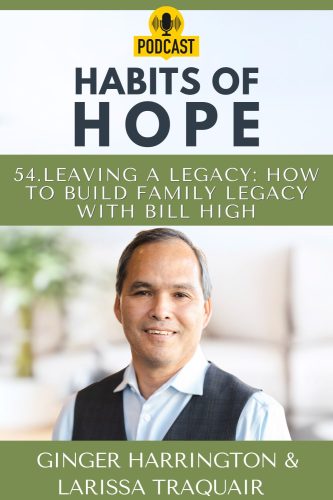
Leaving a Legacy: How to Build Family Legacy with Bill High
What if legacy isn’t just what you leave behind, but what you set in motion today?
That’s the question Bill High, co-author of The Legacy Life with David Green (founder of Hobby Lobby), challenges us to consider. In this interview for the Habits of Hope Podcast, Bill shares wisdom drawn from his own broken beginnings, his decades of work with families, and his deep belief that legacy is about passing down faith, values, and stories that last for generations.
Bill has helped families give away billions through philanthropy, but his passion goes deeper than finances. He believes legacy is something every person creates — no matter your background or wealth.
Bill High on Leaving a Family Legacy
Bill is the CEO of Legacy Stone, a ministry equipping families to build multi-generational legacies. After more than a decade of practicing law, he shifted his career toward philanthropy, helping establish a donor-advised foundation and facilitating over $5 billion in family giving. Through his work, he helps families define their vision, values, and practices so they can live with intention today and impact future generations.
He’s also the co-author of The Legacy Life with David Green, offering deep wisdom on living generously, sharing stories, and creating rhythms that shape hope for generations to come.
Legacy Shaped by Loss and Humble Beginnings
Larissa: Bill, you often share that you grew up in a broken home and lost your dad at a young age. How has that shaped your understanding of legacy, hope, and family?
Bill: “The short story is that I grew up…my dad was the oldest of eight, living in a three-room log cabin in the Missouri Ozarks. They had a lot more kids than room in the house. They were very poor, a bit backwards.
He joined the service, went over to Japan, met my mom, and brought her back. Together they had six kids. We were a welfare family growing up — very poor. I don’t remember living in a house with a working toilet until I was 16. We were the family Salvation Army brought gifts to.
The net effect is we didn’t grow up in a family of faith. My dad died when I was 12. But a couple years earlier, a family down the street gave us a children’s Bible storybook. That’s how I came to faith — through the story of the Bible.
At school, a teacher gave us an assignment to keep a journal for 30 days. I just kept going. I’ve been journaling for 50 years now. One of my earliest entries was, ‘I’d love to have a great family and be part of a great family.’ That wound — losing my father — led to a passion for family. I’ve been on that journey ever since.”
“Wherever your deepest wound is, that’s where the flower grows.” — Bill High
Journaling, Gratitude, and Habits of Hope
Larissa: That’s powerful, Bill. And thank you for bringing up journaling. Not many men talk about journaling, but it’s such a tool for listening to God.
Bill: “Yeah, I’d say journaling is cheaper than therapy.”
Ginger: Bill, beyond journaling, is there another specific rhythm or spiritual practice you lean on when life feels uncertain?
Bill: “The biggest practice is gratitude. I start every day with, ‘Lord, I’m most grateful. It’s a brand new day, and I have new opportunity.’
Sometimes I’ll go deeper. A friend once encouraged me to write down ten things I’m most grateful for. I don’t do it every day, but recounting what God has done changes your outlook.
Gratitude is one of the simplest ways to remember that every day is a gift. Even the little things — when you stop to notice them — show you God’s presence.”
“Gratitude is one of the simplest and most powerful habits you can practice every single day.” — Bill High
Redefining Legacy: Not Just Wealth
Larissa: You say legacy isn’t just for the wealthy or well-known. How do you define legacy in a way that’s accessible for everyday families?
Bill: “Everybody has a legacy. Legacies aren’t neutral — they’re either good or bad.
2 Corinthians 5:10 says we will all stand before the judgment seat of Christ and be held accountable for the things we’ve done, whether good or bad. That means all of us.
Most people think legacy is what you leave behind. The problem with that definition is it sounds optional, like you can ignore it. But legacy is what you set in motion.
Someday Jesus will ask, ‘What did I put in your hand, and how did you do with it?’ That’s legacy. It’s not just inheritance — it’s purpose.”
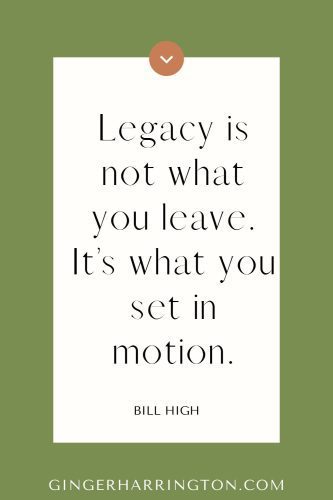
“Legacy is not what you leave — it’s what you set in motion.” — Bill High
Stories and Values: The First Steps to Family Legacy
Ginger: What does it look like, practically, when we pass down the kind of legacy that matters to God?
Bill: “The first thing is stories. What are the ten stories you most want to pass down?
These might be stories of hope, loss, salvation, or answered prayer. The Bible models this — think about the Passover. It begins with the youngest child asking, ‘Why is this night different from all the others?’
The second thing is values. Write down your five family values. The Ten Commandments are a set of values — love God, love people. Values are protective and attractive. When people see you live by them, they may not understand at first, but they’ll notice you live differently.”
“Every family should define their ten stories and five values. Those two things shape legacy.” — Bill High
Multi-Generational Faith and Christian Legacy
Ginger: In The Legacy Life, you and David Green talk about living with a multi-generational perspective. What practices can families begin today?
Bill: “Start with a biblical worldview. God designed family to be multi-generational. Psalm 78:5–7 says fathers tell their children, who tell their children, the children yet unborn, even to the next generation. That’s five generations.
When we adopt that worldview, everything shifts. We recognize the responsibility to pass on values and faith.
From there, add celebrations. The Jewish people had seven times a year when they remembered and reflected on God’s work. Families today can do the same — not just at Christmas or Thanksgiving, but intentional times to pause, rest, and say, ‘Here’s what God has done in our family.’”
“A biblical worldview of family is multi-generational. We pass on values, faith, and stories to those yet unborn.” — Bill High
God’s Redemption is Hope for Broken Family Legacy
Ginger: For families who feel behind, overwhelmed, or broken, where can they start small?
Bill: “We wrote a chapter on broken legacy because it’s so common. So many stories in the Bible start badly — but God shows up.
Take David and Bathsheba: an adulterous affair, conspiracy for murder. Yet God brought Solomon, who built the temple.
God always has the long view. Matthew 1 traces 42 generations from Abraham to Christ. Our job is to remember God redeems broken stories.
“Here’s the hope: God is in the business of redeeming broken legacies.” — Bill High
Generosity as a Family Legacy
Larissa: You say generosity is integral to legacy. Why is generosity such a powerful part of legacy?
Bill: “Western culture is hyper-individualistic. It’s about me, my money, my time. Biblically, family is a team.
Generosity is a learned art. It’s not natural. But when you raise generous kids and grandkids, you can almost guarantee success inside the family.
With our kids, we practiced random generosity. For example, we’d give them $100 at Thanksgiving and challenge them to give it away before Christmas, then share their stories.
One time, my son in college needed cold medicine, but instead he gave the money to people at a coffee shop because he felt God’s nudge. How do you argue with that?
My other son once said, ‘Dad, I’d be saving more for retirement if I wasn’t giving so much.’ That’s when you know generosity has taken root — when your children see something bigger than themselves.”
“Generosity is caught, not just taught.” — Bill High
Writing The Legacy Life with David Green
Larissa: You co-wrote this book with David Green. What was that like, and how did his leadership at Hobby Lobby shape the message?
Bill: “I’ve had the privilege of working with David Green and his family for more than 20 years. The heart of their story is simple: they want to listen to God, hear from Him, and obey — even if it doesn’t make sense.
Hobby Lobby is a company that shouldn’t work by conventional standards. They close on Sundays. They close early each day. They pay the highest minimum wage in their industry. And they give away half their profits. By the world’s wisdom, that’s not a recipe for success. But it works — because they’re willing to follow God’s ways and trust Him with the results.
One of their family values is adventure. Adventure doesn’t mean vacation or thrills. It means a dangerous and uncertain undertaking. And that’s exactly what the life of faith often feels like — stepping into the unknown and obeying, even when it’s risky.
This book actually comes out of the last one we wrote together, Leadership Not by the Book. One of the chapters in that book was called Build for 150 Years. Most businesses are built to sell, retire, or cash out. But David believes in building for 150 years.
After that book, people started asking us, ‘How do I do that? How do I build for 150 years?’ And that’s what led to The Legacy Life.
The principle applies to families just as much as to businesses. Most people think about raising kids until graduation, then they’re done. But biblically, family is multi-generational. Psalm 78 talks about passing faith from fathers to children, to children yet unborn, and to generations to come. That’s 150 years.
So the question is — what are you doing today to build into your children, your grandchildren, even your great-grandchildren? That’s the kind of vision we need for family legacy.”
“Most businesses are built to sell or retire. God calls families to build for 150 years.” — Bill High
The Family Legacy Quiz & Devotional
Ginger: Bill, on your website you have a Legacy Quiz. How does that help families?
Bill:“The Ministry of Legacy Stone has come out of all the work we’ve done with families over the years. What we’ve seen is that every family needs two things: an assessment and a roadmap.
The assessment is simple: How are we doing? Life goes by so fast. You get married, you have kids, and before you know it, you’re at graduation. Without stopping to reflect, you can miss the opportunity to build culture with intention. The quiz helps families take that pause and really evaluate where they are.
The second thing is the roadmap. Families need a clear plan — rhythms, practices, and seasons that shape their culture. We call this a culture map. The families who take time to create one have a much greater chance of being successful, not only now, but for generations to come.”
Ginger: And you also have a devotional releasing alongside The Legacy Life.
Bill:“Yes. When we wrote our last book, people asked, ‘Could you give us a study guide?’ We hadn’t planned for one, but this time we wanted to be ready.
The devotional is a 90-day, scripture-focused guide that pairs with the book but can also stand on its own. It’s designed for groups — couples, men, women, or small groups — who want to work through these ideas together.
Each day walks you into the Scriptures around legacy and helps you ask practical questions: What are our values? What stories do we want to pass down? Where do we need to repair broken places? It’s not just theory — it’s a tool to help families take action.”
“Families need an assessment and a roadmap. The quiz helps you see where you are, and the devotional gives you steps to live it out.” — Bill High
The One Thing Bill Wants Families to Know
Larissa: If you could leave families with one message, what would it be?
Bill: “We are living in the greatest time in history — resources, technology, and people are converging. God wants to use families to complete the Great Commission.
Our lives are living letters to generations we’ll never see. When we get to heaven, we’ll see the ripple effect of our faithfulness. That’s legacy.”
“Our lives are living letters to generations we’ll never see.” — Bill High
Closing Thoughts on Leaving a Legacy
Bill High reminds us that legacy isn’t someday. It’s every choice we make, every story we tell, every value we live, and every act of generosity we model. Legacy is living with eternal purpose now — and trusting God to multiply the impact for generations to come.
Legacy doesn’t belong to the wealthy or the famous. It belongs to anyone who is willing to live with intention, practice gratitude, cultivate generosity, and anchor family life in faith. It’s the everyday decisions that shape tomorrow’s impact.
“Legacy isn’t someday — it’s something you live right now.”
“That’s the call — to live today in a way that echoes into eternity and leaves a legacy of hope.
Resources & Links for Building Family Legacy
Bill High’s new book, The Legacy Life (co-authored with David Green), releases October 14. This powerful resource unpacks how to build faith, values, and generosity into your family legacy — with practical steps and real-life examples.
- The Legacy Life by Bill High & David Green
- 90-Day Legacy Devotional
- Bill’s Website
- Legacy Family Assessment Quiz
- Legacy Stone Website
- Habits of Hope Podcast Episode with Bill High
Don’t wait to build your legacy — begin today. Share a story, speak a value, or practice generosity. Every choice plants a seed of faith and every seed of faith grows hope for generations to come.
*This post contains affiliate links at no cost to you.

How to Shift from Anxiety to Peace: A Study of Philippians 4:6–7
Discover how Philippians 4:6–7 offers God’s strategy for anxiety. Learn how prayer with thanksgiving shifts worry into peace that guards your heart and mind.
We’ve all had those moments when anxiety presses in. Your heart races, your jaw tightens, and your mind spins in a dozen directions. You replay conversations, anticipate the worst, or feel overwhelmed by all that isn’t done.
What if the very pressures that unsettle us became the place where God steadies us?
That’s exactly what the apostle Paul writes about in Philippians 4:6–7:
“Be anxious for nothing, but in everything by prayer and supplication with thanksgiving let your requests be made known to God. And the peace of God, which surpasses all comprehension, will guard your hearts and your minds in Christ Jesus.”
This passage isn’t just good advice. It’s a spiritual strategy for shifting from anxiety to peace. Welcome to the second part of The Steady Heart Series based on Philippians 4:1-9. Last week we kicked of the series with a study on Philippians 4:4-5: How to Choose Joy in Hard Times.
In this article, we’ll walk through Paul’s teaching in Philippians 4:6–7 and discover how prayer with thanksgiving helps us shift from anxiety to peace. You’ll learn:
What Philippians 4:6 really means about anxiety (be anxious for nothing explained)
How prayer interrupts the anxiety spiral
The difference between prayer and supplication — and why both matter
Why thanksgiving is the hinge that opens the door to peace
How gratitude transforms anxious thoughts
The surprising connection between neuroscience and Scripture
Practical ways to turn worry into prayer in daily life
The kind of peace God promises to guard your heart and mind
Along the way, you’ll find sticky statements to remember, reflective questions to consider, and practical steps to put this into action.
What Does Philippians 4:6 Say About Anxiety?
Paul’s words may sound impossible: “Be anxious for nothing.” On a hard day, it can feel like he’s asking the impossible. But the original language helps us see the meaning. The Greek word for anxious means “to be pulled apart” or “to be mentally distracted.” That’s exactly what anxiety does — it scatters our focus and steals our peace.
Paul isn’t commanding us never to feel anxious. He’s inviting us to respond differently. Instead of letting worry take over, we are to bring everything to God in prayer, shaped by thanksgiving.
Anxiety divides your thoughts, but prayer aligns them with God.
When you feel anxious, what usually pulls your thoughts apart — and what might it look like to let prayer bring them back together?
How Prayer Interrupts the Anxiety Spiral
Anxiety thrives when we stay in reaction mode. Our minds jump to “what if” scenarios, our bodies tense, and we make decisions we later regret. Prayer changes the dynamic. It slows us down, creates space, and reminds us that God is near.
Think of it like a treadmill. When anxiety ramps up, it’s like being dragged along at a speed you can’t handle. Prayer is the pause button. You’re still in the gym, but the machine stops pulling you faster than you can go.
Pressure demands a reaction, but prayer creates space.
What Does Supplication Mean in Philippians 4:6?
Paul doesn’t just say “pray.” He uses two words: prayer and supplication. Prayer is our ongoing conversation with God. Supplication is different — it’s when we cry out with deep need, whether for ourselves or for others.
It’s not a word we use often. I’ve never asked a friend, “How’s your supplication going?” But the concept matters. Supplication is what Jesus prayed in Gethsemane — honest, dependent, desperate prayer.
Supplication is simply asking big when life feels heavy.
Why Thanksgiving Is Essential in Prayer
It’s easy to overlook thanksgiving in this verse, but it’s not optional. Gratitude reframes the whole moment. Instead of being trapped in fear, thanksgiving shifts our attention to what God has already done and who He is.
Gratitude doesn’t always come naturally. You may not feel thankful in the middle of stress. But gratitude is a choice, not an emotion. Feelings don’t get to boss us around.
Thanksgiving isn’t a postscript; it’s the hinge that turns anxiety into peace.
What is one thing you could thank God for in the middle of your stress today?
Can Gratitude Really Shift Anxiety?
When we’re anxious, our thoughts zoom in on everything uncertain. Gratitude zooms out and widens our view to see what is still true. Choosing thanksgiving in prayer anchors us in God’s goodness.
You may have heard the phrase, “Gratitude is a choice.” It’s true. We can practice thanksgiving even when we don’t feel it. And over time, gratitude builds resilience.
Gratitude is a pathway from worry to peace.
The Science Behind Prayer and Anxiety
I love how science echoes what God has already told us. When we’re anxious, the amygdala — the brain’s fear center — lights up. But when we pray with thanksgiving, the prefrontal cortex — the reasoning, calming part of the brain — is activated. Studies show this practice lowers cortisol, strengthens emotional resilience, and increases well-being.
Neuroscientist Dr. Caroline Leaf explains in Switch On Your Brain that gratitude and intentional thought patterns can literally rewire neural pathways, calming anxiety and strengthening healthier responses over time. Her research highlights how renewing the mind through practices like prayer and thanksgiving creates measurable changes in the brain.
God’s wisdom in Scripture is confirmed by how He designed our brains.
Romans 12:2 reminds us to renew our minds. Neuroscience shows that gratitude and prayer literally rewire thought patterns, making peace more accessible. Philippians 4:8–9 takes this one step further, showing us how to filter our thoughts and intentionally focus our minds on what is true.
Practical Ways to Turn Worry into Prayer
So how do we live this out? Here are simple practices that make prayer and thanksgiving part of daily life:
Create a pause prayer. Whisper: “Lord, I give this to You. Thank You that You’re here.”
Use triggers as prompts. Let rising stress be the reminder to stop and pray.
Visual cues. A sticky note on your mirror, a bracelet on your wrist, or a lock screen on your phone can nudge you toward prayer.
Journaling. Write one thing you’re thankful for at the start of your quiet time.
Pray in the moment. Don’t wait. If someone shares a need, stop and pray right then.
Practice when life is calm, so prayer comes naturally when the storm hits.
What Kind of Peace Does God Promise?
Paul describes peace that “guards your heart and mind in Christ Jesus.” This isn’t just a fleeting calm. It’s protective, like a guard standing watch over your emotions and thoughts.
Sometimes peace comes immediately, like a rush of quiet confidence. Other times it comes gradually, as you keep praying and thanking. Both are real.
Peace doesn’t mean you’re certain—it means you’re surrendered.
When have you experienced God’s peace guarding your heart, even if your circumstances didn’t change?
A Personal Example
This prayer strategy wasn’t something I picked up from a book—it was insight the Lord gave me as I meditated on Philippians 4:6–7. I began to realize that prayer and thanksgiving together form a powerful hinge that shifts the heart from anxiety to peace.
Not long after, I faced a worry of my own. I had just started working with a new literary agent, and doubt whispered, “You’re not ready. You can’t do this.” That familiar pressure of anxiety crept in.
But God brought this passage to mind, and I decided to put it into practice on the spot. I prayed about my fear, and then—almost experimentally—I began to thank Him. I thanked Him for the opportunity, for His presence in the process, and for the ways He had been faithful in the past.
The situation didn’t change, but something in me did. My focus shifted, and peace settled in where anxiety had been.
That’s the power of Philippians 4:6–7: turning worry into prayer with thanksgiving opens the door to God’s peace.
One Step You Can Take This Week
Don’t try to master this all at once. Start small:
Write your pause prayer.
Choose two things you’re grateful for before the day begins.
Ask yourself: “What’s one pressure I don’t need to carry alone today?”
Hope doesn’t begin when anxiety disappears. It begins when you choose to pray with gratitude in the middle of it.
FAQ: Philippians 4:6–7 on Anxiety and Prayer
Q: Does “be anxious for nothing” mean I should never feel anxious?
No. Paul isn’t saying you’ll never experience anxious thoughts or feelings. The Greek word means “to be pulled apart or distracted.” His point is that when anxiety comes, we can respond differently—through prayer with thanksgiving, trusting God to guard our hearts.
Q: What’s the difference between prayer and supplication?
Prayer is our ongoing conversation with God about everything. Supplication is a deeper cry of dependence when we or someone we love has a specific need. Both are important, and Philippians 4:6 shows how they work together.
Q: Why is thanksgiving such a big deal in prayer?
Thanksgiving reframes prayer. It shifts focus from fear and “what if” thinking to God’s faithfulness and goodness. Gratitude is the hinge that opens the way from worry into peace.
Q: Does God always take anxiety away immediately when we pray?
Not always. Sometimes His peace comes quickly; other times it unfolds gradually as we keep praying and thanking Him. Either way, God promises His peace will guard our hearts and minds.
Be Anxious for Nothing: God’s Promise of Peace
Friend, if you feel anxious, it doesn’t mean you’re weak. It doesn’t mean you lack faith. It means you’re human. But God meets you right where you are — with His strength, presence, and peace.
Whisper a prayer. Say, “Thank You, Lord, for being here.”
Peace is not about controlling the outcome. It’s about surrendering to the One who guards your heart and mind.
Mentioned in this post:
Switch on Your Brain by Dr. Caroline Leaf
*This post contains affiliate links at no cost to you.
The Steady Heart Series
Part 1:How to Choose Joy in Hard Times: A Study of Philippians 4:4-5
Part 2: How to Shift from Anxiety to Peace: A Study of Philippians 4:6
Part 3: How to Find God’s Peace That Guards Your Heart: A Study of Philippians 4:7
Part 4: How to Filter Your Thoughts and Find Peace: A Study of Philippians 4:8-9
Related Content
10 Habits of Peace: A Complete Guide to Experiencing God’s Peace
Why Positive Thinking is Good for a Healthy Body, Soul, and Spirit
Why You Should Stop Discounting Your Anxiety
Are Your Feelings Defining Your Faith
10 Free Resources for an Emotionally Health You
20 Toxic Ways of Thinking That Will Poison Your Life
3 Reasons Why You Should Let Go of Negative Thinking
Strategies and Scriptures to Combat Negative Thinking: With Free E-book
This post is for encouragement and inspirational purposes only. It reflects biblical insights and personal experiences related to faith and anxiety. It is not intended to diagnose, treat, or replace professional medical or mental health care. If you are struggling with anxiety or other mental health concerns, please seek support from a qualified counselor, physician, or mental health professional.
Ginger Harrington is the author of Holy in the Moment: Simple Ways to Love God and Enjoy Your Life, and host of the Habits of Hope Podcast. With warmth and practical wisdom, she encourages women to cultivate hope and a deeper life in Christ for heart and home. Through writing, speaking, and resources like the Steady Heart Series, Ginger helps readers discover rhythms of faith that steady the soul in anxious times.
How to Choose Joy in Hard Times: A Study of Philippians 4:4–5
Discover how to choose joy in hard times with Philippians 4:4–5. Learn the difference between joy and happiness, and practical ways to rejoice even when life is challenging.
What if joy isn’t something you have to chase? What if it’s something you choose—even when life feels overwhelming?
That’s the question at the heart of this first message in our Steady Heart Series on Philippians 4.
“Rejoice in the Lord always. I will say it again: Rejoice. Let your gentle spirit be known to all. The Lord is near.” — Philippians 4:4–5
Paul’s command to rejoice sounds simple until life is anything but joyful. Yet he insists this practice is possible because the Lord is near.
In this post, we’ll explore biblical joy vs. happiness. In reality, choosing joy is a spiritual decision, and it can become a habit that steadies your heart in every season. You’ll discover:
Why the context of Philippians 4 makes Paul’s words so powerful
What it means to anchor your joy in who God is, not what is happening
How biblical joy is different from happiness—and why it’s not “toxic positivity”
Real-life examples of learning to rejoice in hard seasons
Practical ways to practice joy as a habit, not a mood
If you’ve ever struggled to feel joy when circumstances are heavy, this passage offers both a challenge and a promise: Joy doesn’t come from pretending everything is fine—it comes from remembering that the Lord is near.
Why is the Context of Joy in Philippians 4 so Powerful?
Before we get to Paul’s command to rejoice, it helps to notice the setting. Philippians 4 isn’t written in isolation—it’s a continuation of everything Paul has been teaching throughout the letter. He begins this chapter with words of affection: “My beloved brethren, whom I long to see, my joy and crown… stand firm in the Lord.”
This isn’t cold instruction. It’s family language. Paul is reminding us that joy is nurtured inside a relationship with God and His people.
It’s also crucial to remember where Paul was writing from. These aren’t the words of a man lounging in comfort. They are the words of a prisoner in a Roman cell. And yet, it is from this place of hardship that Paul insists: “Rejoice in the Lord always.”
That’s what makes this passage so powerful. Joy here isn’t dependent on ease or convenience. It’s not the result of happy circumstances. It’s the fruit of knowing Christ’s presence—especially in our hard times.
Why Does Paul Command, “Rejoice in the Lord Always”?
When Paul writes “Rejoice in the Lord always. I will say it again: Rejoice,” he isn’t offering a suggestion or a motivational slogan. The language is a command, an imperative. Rejoicing isn’t optional for the believer—it’s central to the Christian life.
That can feel overwhelming. How can you rejoice when your heart is anxious or your circumstances are painful?
It helps to notice what Paul doesn’t say. He doesn’t tell us to rejoice in our circumstances or because everything feels good. He points us to a Person: “Rejoice in the Lord.”
The word rejoice in Greek carries the sense of being calmly glad, thriving, even being well. It’s not a passive feeling that drifts in on good days; it’s an intentional practice. Joy, in Scripture, is a verb before it is an emotion.
Charles Spurgeon once observed how extraordinary it is that God commands us to be happy in Him. Most of us have heard teachers or parents say, “Be quiet” or “Get your work done.” Rarely do we hear anyone insist, “Be joyful today.” Yet that is exactly what Paul does here. And he repeats it for emphasis: “I’ll say it again: Rejoice.”
How Does “The Lord Is Near” Change Everything?
Tucked right after Paul’s command to rejoice is a phrase that explains why joy is possible: “The Lord is near.” Those four words are the anchor for everything that follows in Philippians 4.
When life feels overwhelming, it’s easy to believe joy is out of reach. But Paul reminds us that joy doesn’t come from improved circumstances—it comes from the unchanging nearness of Christ. Nearness is the reason we can rejoice, the reason we can shift from anxiety to peace through prayer, and the reason peace can guard our hearts.
Feelings come and go—sometimes God may not feel close. Yet the reality of His presence is not dictated by our emotions. Scripture assures us that He is at hand, always with His people. Learning to rejoice, then, means reminding ourselves of what is true, even when it doesn’t feel true.
Rejoicing isn’t pretending everything is fine. It’s practicing the presence of a near God. That nearness changes everything.
What’s the Difference Between Biblical Joy and Happiness?
It’s easy to confuse joy with happiness, but Paul’s frequent reference to joy throughout the book of Philippians point us to something deeper than emotion.
Happiness depends on circumstances. It rises and falls with outcomes—a good day at work, a kind word from a friend, or an accomplishment you’ve been waiting for. Happiness is wonderful, but it’s fleeting—here one moment and gone the next.
Joy, however, is an intentional choice rooted in faith. We rejoice not because everything feels good, but because the Lord is present. Joy can coexist with tears, grief, or uncertainty, because it rests on who God is rather than what is happening.
This distinction matters. When life is painful, the call to rejoice is a sacred invitation to place your confidence in the One who is present with you through every circumstance.
Isn’t Choosing Joy Just “Toxic Positivity”?
At first glance, “Rejoice in the Lord always” can sound like Paul is telling us to ignore reality and paste on a smile. In today’s terms, that’s what many call toxic positivity—the idea that every situation should be met with a shallow optimism that dismisses pain.
As my co-host Larissa shared, phrases like “everything happens for a reason” or “just stay positive” can feel like nails on a chalkboard to someone who is grieving. They minimize suffering rather than offering comfort.
But Paul isn’t writing from comfort; he’s writing from a prison cell. His call to rejoice doesn’t gloss over hardship—he’s living it. What makes his words so powerful is that they point beyond circumstances to Christ Himself.
Toxic positivity says: “Just look on the bright side.”
Biblical joy says: “The Lord is near, and His presence is enough—even here.”
Joy doesn’t silence grief. It allows us to be honest about pain while holding fast to God’s nearness. It’s faith that God is with you, even when life hurts.
How Can You Practice Joy as a Habit, Not a Mood?
Joy isn’t automatic. Left to ourselves, most of us drift toward worry, frustration, or discouragement. That’s why Paul repeats the command to rejoice—it’s something we learn to practice until it becomes a steady rhythm of faith.
Think of joy as a spiritual muscle. Strength grows through repetition at the gym, and joy grows in the same way. Each choice to rejoice adds up, shaping our perspective and training our hearts to notice God’s presence.
9 Simple Ways to Practice Choosing Joy
1) Pray the small prayer God loves to answer
“Lord, help me choose joy—for the next five minutes.” Nearness means help is present.
2) Begin your day declaring a Bible verse
In a podcast, John Ortberg shared how he often begins the day declaring Psalm 118:24:
“This is the day the Lord has made; I will rejoice and be glad in it.” John’s simple idea has inspired me to frequently begin my day with this simple habit. It is a way of choosing joy, gratitude, and gladness in God as we start the day.
3) Set an alarm with worship
Larissa sets her alarm to a variety of worship songs that inspire joy so the cue stays fresh.
4) Start a Joy List on your phone
Title it with truth, e.g., “God’s goodness and mercy follow me” (Psalm 23:6). Add small examples of grace through the day.
5) Practice the “I get to” reframing
Larissa: “I get to wrangle a stubborn bulldog.”
Ginger: “I get to work out.” After watching my sister lose mobility to ALS, movement feels like a privilege, not a punishment.
6) Keep a single-word reminder in your journal
Larissa writes JOY as a faith statement, not a feeling.
7) Use joy verses to steady your thoughts
Psalm 16:11: “You will show me the way of life, granting me the joy of Your presence…”
John 15:11: “I have told you this so that My joy may be in you and that your joy may be complete.”
Philippians 4:8–9 also gives us a practical filter for redirecting our thoughts toward what is true and worthy of our attention.
8) Engage your body
Step outside into light. Breathe slowly. Put on a worship playlist and sing along.
9) Ask this question each morning
“Lord, what could rejoicing look like today?” Then keep your eyes and ear open throughout the day.
Real joy often starts small—but each small choice strengthens your heart to rejoice again.
Which one of these ideas resonates with you most today? Which could open the door to more joy in your life?
Choosing Joy Today
Rejoicing doesn’t always come naturally—especially in seasons of loss, stress, or fear. But Philippians 4:4–5 reminds us that joy is not out of reach. It is a command rooted in the unshakable truth that the Lord is near.
Joy doesn’t erase pain or pressure, but it reframes them in light of God’s presence. Whether through prayer, Scripture, music, journaling, or simple reframing—each choice to rejoice opens the door for His strength to steady your heart.
So when life feels heavy, whisper to yourself: Rejoice anyway. Not because everything is okay, but because God is still good and Jesus is near. Joy doesn’t change your circumstances, but it changes you.
FAQ
What’s the difference between happiness and joy?
Happiness rises and falls with circumstances; joy is rooted in Christ and available by the Spirit, even on hard days.
Is this “toxic positivity”?
No. Biblical joy never dismisses pain. It names pain honestly and remembers God’s presence in it.
How do I start if I feel numb?
Borrow words. Pray scripture, play a song, or write JOY as a one-word prayer. Ask: “Lord, help me choose joy—for five minutes.”
Author Bio
Ginger Harrington is the author of Holy in the Moment: Simple Ways to Love God and Enjoy Your Life, and host of the Habits of Hope Podcast. With warmth and practical wisdom, she encourages women to cultivate hope and a deeper life in Christ for heart and home. Through writing, speaking, and resources like the Steady Heart Series, Ginger helps readers discover rhythms of faith that steady the soul in anxious times.
The Steady Heart Series
Part 1:How to Choose Joy in Hard Times: A Study of Philippians 4:4-5
Part 2: How to Shift from Anxiety to Peace: A Study of Philippians 4:6
Part 3: How to Find God’s Peace That Guards Your Heart: A Study of Philippians 4:7
Part 4: How to Filter Your Thoughts and Find Peace: A Study of Philippians 4:8-9
Recent Content
Celebrating One Year of Habits of Hope Podcast
The Episode You Loved the Most: Noticing God’s Faithfulness Every Day
How to Find Hope and Purpose in the Empty Nest with Kate Battistelli
10 Habits of Peace: A Complete Guide to Experiencing God’s Peace
Celebrating One Year of Habits of Hope Podcast
One year. 52 episodes. 10,000 downloads.
Countless stories, prayers, and conversations about hope—and we’re just getting started. Today the Habits of Hope Podcast turns one, and we can’t wait to celebrate this milestone with you.
Our Beginning: Why We Started
Long before microphones and show notes, there was ministry, friendship, and a shared conviction that hope is meant to be practiced—not just admired from a distance.
Larissa and I met years ago in Okinawa, Japan, where we were both serving in leadership, ministering to military families through Bible study and women’s ministry. We quickly discovered a shared love for God’s Word—and for making the journey engaging and memorable.
During those special Okinawa days, so much of ministry with Larissa was filled with laughter, creativity, and joy. We didn’t realize it at the time, but those years were preparing us for something deeper God would do later.

Over the years, life brought seasons neither of us expected—seasons of profound grief and stretching faith. Larissa walked through the long valley of her husband Bill’s terminal cancer journey, and I walked through my sister’s ALS diagnosis and the sacred, heartbreaking journey of being with her until the Lord called her home.
Those years changed me. They reshaped my faith, deepened my dependence on God, and stirred a longing to share the kinds of hope-filled practices that had carried me through the hardest places.
Out of that came the vision for the Habits of Hope Podcast. I felt God calling me to create a space where we could talk honestly about faith—the simple, practical habits that steady us when life is tender, busy, or hard.
After years of dreaming together about “someday doing something like this,” I invited Larissa to join me as co-host. Her warmth, her gift of encouragement, and her own story of cultivating gratitude through hard seasons make her the perfect partner in bringing these conversations to life.
“We’re not a ‘grief podcast,’ but we are honest about the hard—and about the God who meets us there with daily mercies.”
God’s Faithfulness in Year One
This year stretched us in all the good ways—learning tech, finding our rhythm, and trusting God for words on days when words felt scarce. Again and again, we watched Him provide: the right scripture, the right story, the right guest, the right encouragement for someone listening while hiking, washing dishes, or driving across town.
Hitting 10,000 downloads at our first birthday feels like a little kiss from the Lord—not because numbers prove anything, but because they quietly whisper, “Keep going. I’m using this.”
For me, podcasting has become a sweet spot where years of speaking meets writing in a deeply personal way. It feels like God has been shaping me for this all along. I’m often reminded of Olympic runner Eric Liddell’s words: “God made me fast. And when I run, I feel His pleasure.”
That’s what this space feels like for me—not pride, but purpose. When I sit down to share these conversations about hope, I sense God’s pleasure and His presence. It’s a gift to serve Him in this way, and I’m so grateful for the opportunity to do it right here, right now.
A Special Sneak Peek + Birthday Giveaway!
We couldn’t celebrate one year of the Habits of Hope Podcast without celebrating YOU — the incredible community walking this journey with us!
Behind the scenes, I’ve been quietly working on some exciting new projects — and as part of today’s celebration, you get an exclusive first look at a few of the designs we’ve been creating–our very first merch!
Here’s what we’re giving away:
-
3 winners get to choose their favorite T-shirt or mug design from these exclusive sneak peeks — before they’re available anywhere else.
-
2 winners will receive a signed copy of my book, Holy in the Moment.

How to Enter the Giveaway
Step 1 — Join the Celebration List ✅ (Required)
Sign up with the form below to be officially entered into the giveaway and get sneak peeks of the designs + future encouragement.
Step 2 — Leave a Comment ✅ (Required)
After signing up, leave a comment on this post sharing your favorite episode, something you’ve learned, or a way God has encouraged you through the podcast. And don’t forget to vote on which T-shirt or mug design you’d pick if you win!
Step 3 — Bonus Entry! (Optional)
Share this giveaway or your favorite episode on Instagram or Facebook and tag me @gingerharrington for an extra chance to win.
Important Note: At this time, prizes can only be shipped within the continental U.S. Due to high international shipping costs, we’re unable to mail giveaway items outside the U.S.—but we’re so grateful to our listeners around the world for celebrating with us!
Giveaway closes Thursday, September 25 at 11:59 PM EST.
Winners will be contacted by email and announced in an upcoming blog post. Merchandise winners will get to chose their favorite design for either a mug or a T-shirt!
Listener Favorites from Year One
We’ve had so many rich conversations this year, and while we couldn’t list them all, here are just a few episodes listeners loved most: (Apple Links)
-
🎧 How to Ignite Hope by Noticing God’s Faithfulness Every Day (Episode 3)
-
🎧 How to Hear God’s Voice: Simple Habits to Deepen Your Faith (Episode 25)
-
🎧 What We’re Doing in Our Quiet Time Right Now: Daily Devotion Tips (Episode 5)
- 🎧 Introducing Habits of Hope: Discover the Power of Hope in Your Life (Episode 1)
-
🎧 Making Big Decisions with Faith (Episode 10)
Want more? You can explore all 50 episodes here on the podcast page here on my website.
A Word of Hope (From Our Hearts to Yours)
 From Larissa:
God just keeps showing up—in the big things and the small ones, on the days when I feel steady and on the days when I’m tearful in the hallway five minutes before we hit “record.” Grief still sneaks up on me sometimes, even years after losing Bill. You can’t schedule grief, and you certainly can’t tell it, “Hey, I’ve got a podcast in five minutes, so mascara, stay put!” But even there—even in the tears and interruptions—God meets me.
I see now how He’s been preparing me for this season for a long time. From my early broadcasting days towalking through heartbreak, God has been shaping me, sustaining me, and teaching me to keep showing up even when it’s hard. Through this podcast, He’s given us words when we didn’t have them, grace when we stumbled through, and hope when we’ve needed it most.
Looking back over this past year, I can trace His fingerprints everywhere. He has been faithful in the past. He is faithful today. And He will be faithful tomorrow. That truth gives me courage to keep showing up here with you—and I pray it gives you courage to keep holding on, too.
From Ginger:
This past year has been so tender and beautiful for me because I became Gigi—twice! Two of my three kids welcomed little ones this year, and holding those babies has been such a powerful reminder that God’s faithfulness stretches across generations.
In the transcript, you shared:
“When I think about part of the roots of this podcast coming from walking through such hard seasons—navigating grief, loss, and transition—seeing this new generation come forward has been such a picture of God’s goodness. His faithfulness doesn’t end with us; it continues beyond us.”

God really does bring us from seasons of mourning into seasons of joy—in His timing. That doesn’t mean the hard things disappear, but it does mean His mercies are fresh and new every morning. Watching this next generation grow has been a living reminder that even in the hardest seasons, God is still writing stories of hope.
So if you’re struggling to see hope right now, hold on. Keep turning your heart toward Him. He hasn’t moved. He hasn’t changed. He is still good, and He is still faithful—right here, right now, and for the generations yet to come.
This past year has been full of God’s fingerprints—in the stories we’ve shared, the tears we’ve cried, the laughs we’ve laughed, and in you. You’ve been part of this journey in ways we couldn’t have imagined. Every time you’ve listened, shared an episode, sent us a note, or left a review, you’ve reminded us why this podcast matters.
Thank you for letting us walk alongside you. Thank you for welcoming us into your kitchens, your cars, your workouts, and your quiet moments. You are part of this story God is writing, and we’re so grateful for you. We’re praying that the same God who has met us here will meet you right where you are—with strength, with peace, and with a fresh reminder that you are never without hope.

The Best Birthday Gift You Can Give
If this podcast has encouraged you, one of the best gifts you can give us is to follow the podcast and leave a review wherever you listen.
When you take a moment to leave a few words, it means more than you know. In the episode, we shared how much these messages and reviews lift us — they truly keep us going on the hard days. Your words are a gift to us, and they help others discover hope, too.
Thank You for Being Here
As we celebrate this milestone, we’re deeply grateful — for God’s faithfulness, for every story He’s writing, and for you.
This past year has been full of God’s fingerprints — in the stories we’ve shared, the tears we’ve cried, the laughs we’ve laughed, and in you, our listeners.
“He who began a good work in you will carry it on to completion until the day of Christ Jesus.” — Philippians 1:6
Here’s to another year of walking in hope, growing in faith, and living out the habits that keep us anchored to God’s goodness. . .
because hope is our best habit.
Enter the Birthday Giveaway

The Episode You Loved the Most: Noticing God’s Faithfulness Every Day
(Encore Replay from the Habits of Hope Podcast)
One year ago, we launched the Habits of Hope Podcast with a simple vision:to create a place where faith and everyday life meet — where we can explore habits of hope that help us stay grounded when life gets messy, busy, and uncertain.
This week, we’re going back to the beginning with a special encore replay of our third episode: “The Habit of Noticing God’s Faithfulness Every Day.”
It’s the conversation that quickly became the listener favorite of our first year — and it still resonates just as deeply today. You’ll notice the sound and editing are very different (this one was actually recorded on Instagram Live after a few tech hiccups!) — but the heart of the message hasn’t changed. If you listen or watch the episode, you’ll see how far we’ve come this year. What a joyful journey it has been!
What We’ll Cover in This Post
Why noticing God’s faithfulness matters for your hope
Practical ways to see God’s hand in your everyday life
A deeper look at Lamentations 3:23–24 and God’s unchanging character
A simple daily prayer to open your heart to God’s presence
How gratitude strengthens trust and confidence in God
Why Does Noticing God’s Faithfulness Matter?
Life can feel messy, overwhelming, and unpredictable. In the middle of the noise and busyness, it’s easy to miss the quiet, steady ways God is at work around us. But here’s the truth: God is always faithful — even when we don’t see it or feel it.
The key is learning to notice His faithfulness — in the small things, in the everyday moments, and even in the unexpected.
This post explores why noticing God’s faithfulness matters, what Scripture teaches us about His character, and practical ways to build this life-giving habit.
What Does Lamentations 3:23–24 Teach Us About God’s Faithfulness?
“The Lord’s loving-kindnesses indeed never cease, for His compassions never fail.They are new every morning; great is Your faithfulness.” — Lamentations 3:23–24
These verses reveal two powerful truths about God:
1. His Mercies Are New Every Morning
Every day begins with a fresh invitation to see God’s love and compassion at work. It’s not based on our performance or perfection — it’s rooted in His character.
2. His Loving-Kindness Never Fails
God’s kindness, compassion, and mercy are unceasing. On the days when we struggle, when we feel forgotten, or when we doubt His goodness, His faithfulness remains steady and unchanging.
But seeing this requires intentionality:
“His mercies are new every morning, but our attitude, watchfulness, and intentionality can be new every morning too.”
Why Does Noticing God’s Faithfulness Matter?
Sometimes we expect God’s presence to feel big and obvious — but many times, His faithfulness shows up quietly in our everyday lives. If we aren’t looking for it, we can miss it.
“It’s not a question of whether God will be faithful today — it’s about whether we’ll notice it.”
When we practice the habit of noticing God’s faithfulness:
Our hope deepens
Our confidence in His character grows
Our hearts stay steady even when circumstances don’t
This isn’t about positive thinking — it’s about aligning our perspective with God’s unchanging promises and trusting His presence, even when life feels uncertain.
🌿 Habit of Hope
When you make a daily practice of noticing God’s faithfulness, your hope grows stronger for the things you can’t yet see.
How Can I Build a Habit of Noticing God’s Faithfulness?
Noticing God’s faithfulness isn’t something that happens automatically. It’s a rhythm we cultivate — a posture of heart that takes time and practice.
Here are four simple ways to begin:
1. Start the Day with an Expectant Prayer
Ask God to open your eyes:
“Lord, show me Your faithfulness today. Help me see what You’re doing around me.”
That single prayer can shift your perspective from anxious striving to attentive receiving.
2. Become a “Noticer”
As Larissa shared:
“I often pray to be a noticer — to wake up and ask God to show me where He’s working.”
God is always moving, but if we’re distracted, we’ll miss it. Becoming a “noticer” means slowing down, paying attention, and choosing to see the fingerprints of God in the ordinary.
3. Practice Gratitude Before You See the Answer
Gratitude strengthens hope. It invites us to trust God’s faithfulness before the breakthrough comes.
“We often express gratitude after God shows up, but we can also thank Him in advance — even before we see the answer.”
Start small:
Thank God for His mercies as you begin your day.
Look back on past situations where He’s provided.
Let those reminders fuel confidence for today.
Why Does Gratitude Strengthen Our Hope?
Gratitude trains our hearts to pay attention to God’s goodness. As Larissa shared in the episode, practicing gratitude helped her trust God through unpredictable seasons as a military spouse:
“Looking back at God’s faithfulness gives me confidence for the future — even when the circumstances don’t look the way I expected.”
Gratitude helps us shift from focusing on what’s missing to seeing what God is already doing.
4. Reflect with the Daily Examen
An ancient Christian practice, the Daily Examen is a prayerful way to end the day by reflecting on where you noticed God’s presence — and where you might have missed Him.
Ask yourself:
Where did I see God today?
Where did I sense His faithfulness?
Where am I still longing to see Him work?
This simple rhythm develops spiritual attentiveness and helps you train your heart to notice God’s work.
How Does God Show His Faithfulness Through People?
Sometimes God’s faithfulness shows up through the actions of others. In seasons of need, He often provides encouragement, prayer, and tangible support through His people.
Romans 12 paints a beautiful picture of this:
“Love one another with brotherly affection. Outdo one another in showing honor… Rejoice in hope, be patient in tribulation, be constant in prayer. Contribute to the needs of the saints and seek to show hospitality.” — Romans 12:10–13
God’s presence often looks like a friend who shows up at just the right time, a mentor who speaks truth when you’re discouraged, or a community that prays for you when you feel weak.
When we notice God’s faithfulness, we start to see it not only in Scripture but in the ordinary kindness of His people.
Key Quotes from the Episode
“It’s not a question of whether God will be faithful today — it’s about whether we’ll notice it.” — Ginger
“I often pray to be a noticer — to wake up and ask God to show me where He’s working.” — Larissa
“The Holy Spirit plants the desire to notice God’s faithfulness in our hearts. We’re not doing this alone.” — Ginger
““Active faith means trusting God’s character, even when you can’t yet see what He’s doing.” — Larissa
Gratitude opens our eyes to God’s goodness and trains us to pay attention.” — Ginger
Sometimes it doesn’t feel like God is showing up in the chaos, but His faithfulness is steady even when our emotions aren’t.” — Ginger
Looking Ahead: Our First Birthday 🎉
Next week, we’ll celebrate the Habits of Hope Podcast’s first birthday! We’ll share stories, your favorite moments, and a few surprises as we reflect on all God has done in this first year.
And here’s the exciting part — we’re getting so close to hitting 10,000 downloads before the birthday episode drops!
Here’s how you can help us get there:1️⃣ Listen to your favorite episode — or try a new one.2️⃣ Share that episode with a friend, small group, or on social media.3️⃣ Invite others to subscribe so they don’t miss next week’s celebration.
Final Thoughts
This encore episode takes us back to the very beginning — but it also reminds us of something timeless: God’s faithfulness never changes.
Whether you’ve been here since the start or just found the podcast, thank you for being part of this journey. Together, we’re creating rhythms of hope and celebrating God’s goodness, one episode at a time.
How to Find Hope and Purpose in the Empty Nest with Kate Battistelli
When the last child leaves home, it can feel like the whole rhythm of your life changes overnight. The house is quieter. The calendar emptier. And deep down, you may be asking: Who am I now? What’s next?
If you’ve been feeling the ache of this transition, you’re not alone. In this episode of the Habits of Hope Podcast, I sat down with Kate Battistelli—author of The After Party of the Empty Nest—to talk about navigating these changes with hope, faith, and renewed purpose. Kate’s story is honest, encouraging, and deeply rooted in trusting God through seasons of uncertainty.
A Season of Change and New Beginnings
“When the last child leaves home, it can feel like a door slamming shut,” Kate says. “You look around and think, Wait a minute, what just happened? The house is so quiet, your routines are gone, and you suddenly wonder, Who am I without being Mom 24/7? But here’s the good news: this isn’t the end. It’s just moving into a new room. God has a whole new chapter waiting—one full of joy, purpose, and adventure.”
For Kate, this transition began when her daughter, Francesca Battistelli—now a Grammy-winning Christian artist—moved to Nashville to pursue her music career.
Ginger: “Kate, was there a moment when your perspective shifted from feeling the loss to anticipating what’s next?”
Kate:
“At first, I was heartbroken. Francesca and I were so close, and suddenly the house was silent. I spent a couple of years really grieving, and I didn’t know what to do with my time. When she moved, it hit me like a ton of bricks. I didn’t know what to do with myself or my time. But God started nudging me to get out of my own head and serve others. I began volunteering with a single moms’ ministry, and that changed everything. I made new friends, I was helping people, and it opened my heart to the idea that there’s more for me in this season. That was the beginning of rediscovering my purpose.”
God’s Calling Often Looks Like a 90-Degree Turn
Kate describes what happened next as one of several “90-degree turns” in her life—moments when God completely redirected her path:
“I never set out to be an author. I had no desire to write books, speak, or podcast. But God had other plans. After giving a talk at a homeschool event, I went home and prayed, and I felt Him whisper: ‘Those are book chapters.’ I thought, Lord, I can’t write a book! I didn’t even graduate college. But He kept nudging me, step by step.”
Her first book, Growing Great Kids, came out of that experience. Later, she wrote The God Dare, which explores how God calls us to bold steps of obedience—often into things far beyond our comfort zone.
“I call them ‘God dares,’” Kate explains. “It’s when God drops something in your spirit that feels crazy and impossible. You think, Lord, there’s no way I can do that. But if He’s calling you, He will equip you. And when you say yes, you begin to experience a life you couldn’t have planned if you tried.”
Finding Purpose in Today’s World
Ginger: “Kate, so many women today feel disoriented—not just by the empty nest, but by everything happening in the world. How do we find God’s purpose right now?”
Kate:
“I honestly believe we’re living in pivotal times. Look around—our culture is shifting so quickly. It feels like we’re in the end times, and I think that’s why this matters so much. We don’t have time to waste. Every one of us has a part to play in God’s Kingdom. You’re not here by accident. If He’s given you another 30 or 40 years, ask Him: ‘Lord, what do You want me to do with this time?’ There is always a next thing, always a way to make an eternal impact.”
Identity Beyond Motherhood
One of the deepest struggles women face in this season is identity.
Ginger: “What would you say to the mom who feels lost when her role as ‘Mom’ changes?”
Kate:
“I’ve been there. For years, being Francesca’s mom was central to my identity. But God began to show me that motherhood was a calling—but not my only one. He calls us daughters. He calls us beloved. He gives us names we don’t even know yet. The empty nest is an opportunity to rediscover who He says you are and what He’s created you to do in this next chapter.”
Kate explains that the “after party” mindset begins when you stop seeing the empty nest as an ending and start embracing it as an invitation:
“The after party is a celebration—a time to look back on the years of raising your kids and say, ‘We did it!’But it’s also about what’s next. God has more for you than just what you’ve already done.”
Three Types of Empty Nest Moms
One of Kate’s most relatable insights comes from her description of three types of moms navigating this transition:
The Swallow Mom — ready to fly into the next thing without looking back.
The Mourning Dove Mom — deeply grieves the loss and struggles to move forward.
The Robin Mom — wants to embrace the future but still feels tender and unsure.
Kate:
“I was definitely a Robin Mom. I was anxious to discover what was next, but at the same time, my heart was still healing. And that’s okay. There’s no one ‘right’ way to do this. God meets you wherever you are and walks you forward one step at a time.”
The Rise of Gray Divorce and Why Marriage Matters
As we talked, Kate brought up a trend she’s deeply concerned about: the rise of gray divorce—divorce among couples in their 40s, 50s, and beyond.
“It’s heartbreaking,” Kate says. “So many couples pour everything into raising their kids, but when the nest is empty, they look at each other and realize, ‘I don’t even know you anymore.’ Divorce rates are climbing in this stage, and it’s devastating families. That’s why we need to be intentional now.”
Kate encourages couples to:
Invest in your marriage now, before the nest is empty.
Schedule date nights, even if they’re simple and free.
Talk openly about what life will look like when the kids are gone.
Seek counseling or mentorship if there are unresolved tensions.
“Your husband was there before the kids came,” Kate says gently. “He’ll be there after. This is the time to reconnect, to dream together, and to build a strong foundation for the years ahead.”
Practical Ways to Step Into What’s Next
Ginger: “For the mom sitting in the quiet tonight, what’s one thing she can do this week to begin moving forward?”
Kate:
“Start where you are. Volunteer, take a class, join a Bible study, or revisit a passion you set aside years ago. It doesn’t have to be big. Just start moving in the direction of life-giving things.”
Kate also recommends:
Pressing into prayer. “Ask God what’s next. He’ll show you.”
Mentoring younger women. “The Titus 2 woman is missing in many churches today. Younger moms desperately need us to share our wisdom and our stories.”
Embracing community. “Don’t isolate yourself. Find people who will encourage you and walk alongside you.”
Faith That Anchors You Through Change
When anxiety and uncertainty creep in, Kate leans on Scripture for strength:
Psalm 16:5-6
“Lord, You are the portion of my inheritance and my cup; You maintain my lot. The boundary lines have fallen for me in pleasant places; surely I have a delightful inheritance.”
Philippians 4:6
“Be anxious for nothing, but in everything, by prayer and petition, with thanksgiving, present your requests to God.”
“I repeated those verses constantly,” Kate says. “They reminded me that God has already marked out my future, and I don’t have to figure it all out. I just need to trust Him and take the next step.”
Finding Hope and God’s Purpose in Your Empty Nest Season
The empty nest can feel like loss—but Kate wants moms to know it’s also a divine invitation:
“Don’t get stuck in sadness. God has so much more for you—more joy, more calling, more impact. The best may still be ahead. Trust Him with your story and step into the purpose He’s prepared for you.”
“The empty nest isn’t the end—it’s an invitation,” Kate says. “This is your time to rediscover the passions God placed inside you and step into your next calling. Don’t let fear or regret hold you back. God has more for you than you can imagine.”
About Kate Battistelli
Kate Battistelli is an author, speaker, and former Broadway performer passionate about helping women discover God’s calling in every season of life. She is the author of The After Party of the Empty Nest and The God Dare, where she encourages women to embrace bold steps of faith and trust God’s plan for their lives.
Kate is also the proud mom of Grammy Award–winning artist Francesca Battistelli and loves mentoring moms navigating empty nest transitions and discovering their purpose after parenting.
Resources & Links
Kate Battistelli’s Website: https://katebattistelli.com
Book: The After Party of the Empty Nest
Devotional Companion: The After Party Devotional Companion
Podcast Episode: Listen to the full conversation on the Habits of Hope Podcast
*This post contains affiliate links at no cost to you.
Related Content on Parenting
How to Live with Hope in Transition and Change
Mom, It’s Okay to Cry When You Leave Your Child at College
14 Things I’d Say to My Younger Self About Being a Mom
Powerful Truth Gives Direction For Our Children
Letting Them Go: Faith Prayers For Our Children

10 Habits of Peace: A Complete Guide to Experiencing God’s Peace
Habits of Peace full series: Do you ever catch yourself saying, “I just need some peace”? Whether you’re juggling errands, deadlines, family demands or an anxious heart, calm can feel like a distant dream. The Peace Series was born out of that ache and offers simple habits designed to help you pause, breathe and reconnect with God’s steady peace—habits that work any time of year.
Habits of Peace Series Overview
That’s why we created the Habits of Peace Series. These short, practical teachings are designed to help you press pause and reconnect with God’s steady presence. Originally shared as a summer series, the truth is—these habits aren’t just for one season. You can return to them anytime you need a spiritual reset, whether it’s January or July.
Each episode focuses on a simple, biblical habit to steady your heart and renew your mind. Because peace doesn’t come from perfect circumstances—it comes from the presence of Christ.
Less pressure. More peace.
One habit at a time.
Right where you are.
How to Use This Series for a Group or Personal Growth
The Habits of Peace series isn’t just for listening—it’s for practicing. You can use these episodes on your own for journaling and reflection, or walk through them with a small group, Bible study, or even a friend over coffee. Read the article, listen to the podcast, or watch the video. You’ll find all three options when you visit the Read More link for each episode.
To make it simple, we’ve included three reflection questions with each episode. These can be:
-
Journal prompts to help you process personally.
-
Discussion starters for a small group or book club setting.
-
Prayer guides to bring what you’ve learned back to God in conversation.
Choose the approach that fits your season best. The value isn’t in how much you do, but in creating space for God’s peace to take root in your everyday life.
Habits of Peace by Episode
1. Need More Peace? A Simple Habit to Notice When Peace Is Missing
Verse: John 14:27 – “Peace I leave with you; my peace I give you. I do not give to you as the world gives.”
Habit of Hope: Ask, “Where is peace missing in my heart today?” and invite Jesus to fill that space.
Summary: In this first episode of the Habits of Peace series, Ginger encourages listeners to pause and identify areas where peace feels absent—not to feel discouraged, but to begin a deeper conversation with God. She explores the biblical meaning of peace as wholeness and presence, not the absence of stress. Rather than striving for perfect circumstances, we’re invited to receive Christ’s peace as a steady gift. This episode offers a simple but powerful daily practice: pause, notice, and receive peace. Click here read full article.
- Where in your life are you most aware that peace is missing right now?
- What’s the difference between creating peace and receiving it?
- How might pausing to ask Jesus for peace shift your mindset today?
2. How to Pursue Peace God’s Way: A Simple Habit to Calm Your Soul
Verse: Psalm 34:14 – “Turn from evil and do good; seek peace and pursue it.”
Habit of Hope: Make peace a pursuit—take one small step toward peace today.
Summary:
This episode reminds us that peace isn’t something we stumble into—it’s something we actively seek. Ginger reflects on Psalm 34:14 to show that pursuing peace is part of godly living, even when life is noisy or uncertain. Rather than waiting for circumstances to quiet down, we can choose to move toward peace in small, intentional ways. Whether it’s pausing to pray, responding gently, or setting a boundary, the episode encourages listeners to ask, “What’s one thing I can do today to pursue peace God’s way?” Click here read full article.
- What’s one area of your life where you need to actively pursue peace?
- How does the idea of “pursuing peace” change how you view spiritual growth?
- What’s a small step you can take today to move toward peace intentionally?
3. Peace Is a Person: How to Embrace Calm in the Presence of Christ
Verse: Isaiah 9:6 – “And he will be called… Prince of Peace.”
Habit of Hope: Whisper the name of Jesus when anxiety rises—remind your heart who He is.
Summary:
This episode centers on the truth that peace isn’t found in a feeling—it’s found in a Person. Larissa draws from Isaiah’s prophecy to remind us that Jesus is our peace, not just our peace-giver. When anxiety, stress, or fear creep in, we often search for solutions, but what we truly need is connection. The episode invites us to anchor our hearts in the presence of Christ by simply whispering His name. That gentle act becomes a powerful habit—redirecting our focus from fear to faith. Click here read full article.
- What does it mean to you personally that Jesus is your peace?
- In moments of stress or anxiety, how do you typically respond?
- What might happen if your first response was to whisper His name?
4.How to Find Perfect Peace When You’re Feeling Stressed
Verse: Isaiah 26:3 – “You will keep in perfect peace those whose minds are steadfast, because they trust in you.”
Habit of Hope: Anchor your mind in God’s truth—recognize when peace is slipping, and refocus on trust.
Summary:
Stress has a way of stealing our focus and flooding our thoughts with fear. In this episode, Ginger shares how perfect peace is possible—even in pressure—when our minds are grounded in trust. Drawing from Isaiah 26:3, she explains that peace isn’t a one-time event; it’s a mindset cultivated through spiritual attention. You’ll learn to identify your “peace cues”—those mental, emotional, or physical signals that reveal unrest—and practice the 3Rs: Recognize, Reflect, and Refocus. It’s a deeply practical episode for those craving peace in the middle of real-life stress. Click here read full article.
- What are your “peace cues”—the signs that you’re slipping into stress or unrest?
- How does Isaiah 26:3 reshape your understanding of perfect peace?
- Which of the 3Rs (Recognize, Reflect, Refocus) do you most need right now?
5.One Peaceful Habit to Respond with Grace When You’re Angry
Verse: Proverbs 15:1 – “A gentle answer turns away wrath, but a harsh word stirs up anger.”
Habit of Hope: Pause before reacting—breathe, pray, and let peace lead your response.
Summary:
Anger often catches us off guard, rising fast and loud before we even realize it. This episode offers one powerful habit to help de-escalate tension in the heat of the moment: pause. Larissa shares how that sacred second of stillness can help us respond rather than react. Rooted in Proverbs 15:1, this practice of pausing—taking a breath, praying quickly, and inviting God into the moment—allows peace to take the lead. This episode is especially helpful for those who long to stay grounded in grace when emotions run high. Click here read full article.
- What situations tend to trigger anger or frustration in you?
- How could pausing before reacting change the tone of a recent conversation?
- What would it look like to let peace—not emotion—lead your response?
6. How to Let Go of Control and Let Peace Rule Your Heart
Verse: Colossians 3:15 – “Let the peace of Christ rule in your hearts, since as members of one body you were called to peace.”
Habit of Hope: Let Christ lead—release control and invite His peace to take the lead in your thoughts and choices.
Summary:
When life feels uncertain, our instinct is often to hold on tighter—to manage, fix, or force outcomes. In this episode, Ginger gently challenges that urge and offers a better way: surrender. Through Colossians 3:15, she shares what it means to let the peace of Christ rule—not as a fleeting feeling but as a governing presence in our lives. You’ll be encouraged to identify areas where control is getting in the way and consider what it looks like to let peace lead instead. It’s a freeing invitation to shift from pressure to peace, guided by God’s steady hand..Click here read full article
- Where are you holding on tightly in your life right now?
- What does it mean to let the peace of Christ “rule” your heart?
- How can you practice surrendering control in small, everyday moments?
7. Peacemaker or Peacekeeper? How Jesus Calls Us to Respond to Conflict
Verse: Matthew 5:9 – “Blessed are the peacemakers, for they will be called children of God.”
Habit of Hope: Reach out with courage—step toward others with grace rather than away in fear.
Summary:
It’s easy to confuse peacekeeping with peacemaking, but they’re not the same. In this episode, Larissa unpacks the difference—showing how peacekeeping often avoids conflict to keep the surface calm, while peacemaking bravely engages in love, truth, and reconciliation. Drawing from Matthew 5:9, she explores what it means to follow Jesus into hard conversations, uncomfortable moments, and the messy work of building peace that lasts. You’ll be encouraged to examine where fear or avoidance may be holding you back and to trust Christ as the source of both peace and courage. Click here read full article.
- When faced with conflict, do you tend to avoid or engage?
- What’s the difference between keeping peace and making peace?
- Where is God inviting you to step forward as a peacemaker?
8. Why Do I Keep Losing My Peace—Even When I’m Trying to Trust God?
Verse: Romans 8:6 – “The mind governed by the flesh is death, but the mind governed by the Spirit is life and peace.”
Habit of Hope: Reset your mindset—recognize when you’re slipping into self-reliance and return to Spirit-led peace.
Summary:
Even when we’re trying to trust God, peace can feel elusive. In this episode, Ginger explores the subtle shift from Spirit-led living to self-managed striving—the quiet drift that pulls us out of peace and into pressure. Rooted in Romans 8:6, she unpacks the difference between flesh-thinking and Spirit-thinking and how easily we fall into cycles of control, overthinking, and stress. You’ll be encouraged to pay attention to your mental patterns, practice surrender, and allow the Spirit to lead you back to the calm your heart truly needs. Click here read full article.
- What mindset shifts you from peace to pressure?
- How do you recognize when you’re slipping into self-reliance?
- What would it look like to reset your mind today under the Spirit’s guidance?
9.How to Feed Your Soul and Grow Lasting Peace
Verse: Galatians 5:22 – “But the fruit of the Spirit is love, joy, peace…”
Habit of Hope: Cultivate peace like fruit—nourish your spirit daily rather than feeding your stress.
Summary:
In this episode, Larissa Traquair reminds us that peace isn’t just a concept—it’s a fruit that grows. Building on the theme of soul care, she explores how the spiritual fruit of peace develops not through striving but through daily nourishment. Using practical wisdom and a personal story of grief and loneliness, Larissa shares how God met her with peace in unexpected ways. You’ll be encouraged to pay attention to what you’re feeding your soul—because the Spirit produces peace in hearts that are rooted, watered, and willing. Click here read full article.
- What are you feeding your soul with most often—peace or pressure?
- How does the fruit of the Spirit grow in your life when you feel spiritually nourished?
- What habit could help you regularly cultivate a peace-filled soul?
10.Living in the Overflow: How to Experience God’s Peace Every Day
Verse: Romans 15:13 – “May the God of hope fill you with all joy and peace as you trust in him, so that you may overflow with hope by the power of the Holy Spirit.”
Habit of Hope: Live in the overflow, not in overload.
Summary:
In this final episode of the Habits of Peace Series, Ginger offers a powerful reminder that peace is not meant to be rationed for just hard moments—it’s meant to be lived in, every day. Anchored in Romans 15:13, this episode shifts the focus from managing stress to embracing abundance. Ginger shares how trusting God deeply allows His peace and joy to fill us and overflow into our relationships, our responses, and our rhythms. You’ll be encouraged to stop chasing peace and start living from the fullness already available in Christ. Click here read full article.
- What does it mean to live from overflow instead of survival mode?
- In what areas of your life would you like to see peace overflow into others?
- How does trusting God more deeply open your heart to joy and peace?
Keep Practicing Peace—You’ve Got This 💛
If you’ve made it through this series, take a moment to celebrate! You’ve taken intentional steps to let God’s peace move deeper into your everyday life. These habits may seem simple, but that’s the beauty of them. Peace doesn’t require perfection or performance—it grows in quiet, daily rhythms of trust, surrender, and spiritual attention.
Whether you listened to all the episodes or just a few, the invitation remains: keep practicing. Keep pausing. Keep returning. Because peace isn’t something you chase. It’s something you carry when your heart is rooted in Christ.
You can do this. You really can.
God’s peace is already yours—it just needs room to overflow.
Share Your Feedback
Which episode spoke to you the most?
Was there a habit you tried this week that made a difference?
Take a moment to jot it down, pray through it, or talk it over with a friend.
💛 And if someone you know is longing for peace right now—maybe overwhelmed, hurting, or just soul-weary—would you share this series with them? A simple text or post could be the reminder they need today.
Your Turn ⬇️
💬 Leave a comment below sharing your favorite takeaway or habit.
⭐ And if this series encouraged you, would you take 30 seconds to leave a review on your favorite podcast platform? Your words help others find this message—and they deeply encourage me, too.
Keep Growing in Peace
If this series has encouraged you, I’d love to give you a free resource to help you keep practicing peace in everyday life.
🌿 Soul Care Made Simple is a simple guide I created to help you care for your soul with biblical rhythms that refresh your heart. It’s not just about peace in hard moments—it’s about living rooted in God’s presence every day.
Go Deeper Beyond the Series
Writing Holy in the Moment was one of the most vulnerable things I’ve ever done—sharing my own struggles, doubts, and the quiet ways God has met me with peace in ordinary, imperfect days. If this Habits of Peace series encouraged you, I think you’ll find the book a gentle companion for the deeper places of your heart.
Peace doesn’t grow from having it all together—it grows from small, daily choices to trust God right where we are. That’s what I share in these pages: honest stories, Scripture, and simple practices to help you experience God’s peace in the middle of real life.

Ginger Harrington is the author of Holy in the Moment, host of the Habits of Hope Podcast, and founder of The Deeper Life Collection. With warmth and wisdom, she helps women cultivate spiritual habits that lead to deeper peace, purpose, and joy in everyday life. Find encouragement, free resources, and biblical truth at gingerharrington.com.
© 2025 Ginger Harrington. All rights reserved.
This post and series content were created and written by Ginger Harrington, author, blogger, and host of the Habits of Hope Podcast.
Many thanks to my co-host, Larissa Traquair (Gr8tful Chick), for presenting part of the episodes and sharing her wisdom, encouragement, and heart for peace.
Live in the Overflow: How to Experience God’s Peace Every Day
What Does It Mean to “Live in the Overflow” of God’s Peace?
To live in the overflow means your heart is so rooted in God’s presence that His peace continually fills and steadies you—shaping how you think, how you respond, and how you carry life’s responsibilities. It’s not a fragile feeling you have to chase, but a steady reality that flows from Him into every part of your life.
Have you ever noticed how easy it is to slip into stress without even realizing it? You’re managing all the things—meeting deadlines, keeping up with relationships, juggling responsibilities—but underneath it all, peace feels just out of reach.
Here’s What You’ll Find in This Post
What Romans 15:13 teaches about being filled—not striving—to overflow
Why peace slips away when we try to create it ourselves
How to receive the overflow of God’s peace in everyday moments
A short prayer and practical habits to help you live from overflow
Quotes and truths you can carry with you through the day
I want to be honest—this one comes from a place I know all too well.
How Can You Experience God’s Peace When Life Feels Overwhelming?
Have you ever noticed how stress can sneak in without warning? You’re meeting deadlines, keeping up with relationships, juggling responsibilities—but underneath it all, peace feels just out of reach.
I’ve had seasons like this where I looked calm on the outside, but inside I was unraveling—spiritually dry, mentally exhausted, emotionally frayed.
That’s when I came across a quote that felt like someone had been in my head:
“Lord, I crawled across the barrenness to you with my empty cup, uncertain and asking for any small drop of refreshment. If only I had known you better, I’d have come running with a bucket.” —Nancy Spiegelberg
That image—coming to God with an empty cup, unsure if I could even ask for peace—hit me hard. I realized I’d been trying to hold everything together, forgetting that peace isn’t something I create. It’s something God gives.
Peace isn’t something you squeeze into your schedule—it’s the place you live from.
And His heart? It’s not to give us just enough to get by, but to overflow our lives with peace and hope by the power of the Holy Spirit.
What Does Romans 15:13 Teach Us About Living in God’s Peace Every Day?
Romans 15:13 meaning becomes clear when we realize that lasting peace doesn’t come from our own effort—it flows from trusting the God of hope, who fills us with joy and peace through the power of the Holy Spirit.
This verse has anchored my heart in seasons when I’ve been tempted to run on empty.
“May the God of hope fill you with all joy and peace as you trust in Him, so that you may overflow with hope by the power of the Holy Spirit.” —Romans 15:13 (NIV)
It begins with who God is—the God of hope. His very nature is a steady, soul-deep anchor. When we come to Him, we’re not met with shame or barely enough to get by—we’re met with the One who longs to fill us completely.
Then Paul adds, “as you trust in Him.” Trust is the posture that makes room for peace. It’s not about better circumstances or perfect performance—it’s choosing to lean into God’s heart one moment at a time.
I’ve often treated peace and hope like goals I had to achieve—things I’d reach if I prayed hard enough, worked smart enough, or stayed calm enough. But Romans 15:13 doesn’t say earn it. It says be filled.
God’s peace isn’t reserved for the day life gets easier—it’s offered in the middle of the mess. He’s not withholding peace until we prove ourselves. He’s ready right now to fill us with joy and peace as we trust in Him.
Overflow happens when you trust God to meet the need before you see the answer.
What Does It Look Like to Live in the Overflow of God’s Peace?
Living in the overflow means receiving more than just enough peace to get by—it’s experiencing God’s abundance so fully that it spills into your thoughts, words, and actions.
One of my favorite pictures of this comes from a Jewish Sabbath tradition. At the end of Sabbath, a cup of wine is poured—not just to the brim—but until it overflows onto the saucer beneath it. The spill isn’t an accident—it’s intentional. It’s a visual reminder of God’s blessing, abundance, and “more than enough” nature.
That’s what Paul is describing when he prays that we would overflow with hope by the power of the Holy Spirit. We don’t serve a God of “just enough.” We serve the God of overflow—who fills us, not because we’ve earned it, but because it’s who He is.
When we live in the overflow of His peace, we stop relying on pressure and performance, and start living from His presence and power.
How Does God’s Peace Transform Your Mind, Body, and Soul?
God’s peace isn’t just a spiritual idea—it’s meant to reach into every part of your life, steadying how you think, how you feel, and how you live. This is the heart of how to experience God’s peace when life is overwhelming—letting it reshape you from the inside out.
In your mind: Peace brings clarity, slows racing thoughts, and shifts your inner dialogue from “I have to fix this” to “God is with me in this.” It untangles anxiety and reminds you that you’re not alone in what you face.
In your body: Peace helps you notice when you’ve been tense, braced, or burned out. It invites you to pause, breathe, and return to the Source—not to escape your life, but to re-enter it with a full heart. Even something as simple as stepping outside for fresh air can be a way to let God refill you.
In your soul: Peace builds trust—not in your own ability to hold it all together, but in the Holy Spirit’s power to fill you. This is where overflowing with hope by the power of the Holy Spirit becomes a lived reality, not just a phrase from Scripture.
These are just a few examples of how living in the overflow of God’s peace can be truly transformative—touching your thoughts, renewing your strength, and deepening your trust in Him.
Which part of your life right now—your mind, your body, or your soul—most needs you to slow down, make space, and let God fill you before you pour out again?
How Can You Live From Overflow Instead of Overload?
One of the most life-changing rhythms you can adopt is learning to live from the overflow of God’s presence, not the overload of life’s demands.
When you start full—spiritually, mentally, and emotionally—you have something to pour out without running dry. Here are four practical ways to do that:
Start full.
Before the demands of the day start pulling you in every direction, pray Romans 15:13 aloud. Sit in stillness for a few minutes and ask God to fill you with His peace before you start pouring out to others.
Check your peace level.
At least once during the day, pause and ask yourself: Am I acting from overflow or reacting from overload? If you’re tense, rushing, or short-fused, stop and reset. You can always begin again.
Protect your margins.
Guard your time and energy like the valuable gifts they are. If your schedule has no white space, your peace will be hard to find. Margin creates space for overflow—and space to hear from God, who empowers you to overflow with hope by the power of the Holy Spirit.
Speak from overflow.
Instead of saying, “I can’t do this,” try: “God is filling me with peace and hope. I don’t have to carry this alone.” The words you speak shape the atmosphere of your heart.
Living this way isn’t about doing more—it’s about carrying your life differently, letting peace set the pace instead of pressure. This is how living in the overflow of God’s peace becomes your normal rhythm, not just an occasional experience.
Affirmations to Apply the Meaning of Romans 15:13
When life feels overwhelming, speaking God’s truth aloud can help re-center your heart and mind. Romans 15:13 is a powerful verse to turn into affirmations you can carry with you through the day.
Here are three to begin with:
God is the source of my hope. I don’t have to create it—I receive it from Him.
As I trust in God, He is filling me with peace and joy right now.
By the power of the Holy Spirit, my life is overflowing with hope.
You can speak these truths to yourself as a declaration or turn them into short, simple prayers.
Which one do you need to hold onto most today—and how might repeating it change the way you walk through the rest of your day?
A Prayer for Living in the Overflow
God of hope, I come to You with open hands and a tired heart.
Thank You for being the One who fills—not just a little, but fully.
Fill me now with Your peace.
Fill the anxious places in my mind.
Fill the weary places in my body.
Fill the dry, distracted corners of my soul.
I trust You, Lord—even in the waiting, even when I don’t feel strong.
Help me stop striving and start receiving.
Let Your Spirit do the filling. Let Your peace do the leading.
And when this day pulls at me and life feels too loud—remind me:
I don’t have to live from overload.
You’ve called me to live from overflow.
So today, I receive this blessing by faith:
May the God of hope fill me with all joy and peace as I trust in Him,
so that I may overflow with hope by the power of the Holy Spirit.
In Jesus’ name, Amen.
Keep Living in the Overflow—Even When Life Feels Overwhelming
Friend, you were never meant to run on empty. You were created to live from the overflow of God’s presence—every breath, every moment, every season.
Peace isn’t just for the quiet times or the easy days. It’s for the middle of your messy, beautiful, unpredictable life. And it’s available right now, right where you are.
Catch the Full Habits of Peace Series
Series Summary:10 Habits of Peace: A Complete Guide to Experiencing God’s Peace (Episode Summaries + Links)
Habits of Peace Episodes
40.Need a Little Peace? A Simple Habit to Notice When Peace is Missing
41.How to Pursue Peace God’s Way: A Simple Habit to Calm Your Soul
42.Peace is a Person: How to Embrace Calm in the Presence of Christ
43.How to Find Perfect Peace When You Feel Stressed (Isaiah 26:3)
44.One Peaceful Habit to Respond with Grace When You’re Angry
45.How to Let Go of Control and Let Peace Rule in Your Heart
46.Peacemaker vs Peacekeeper? How Jesus Calls Us to Respond to Conflict
47.Why Do I Keep Losing My Peace-Even When I’m Trying to Trust God?
48.How to Feed Your Soul and Grow Lasting Peace (Galatians 5:22)
49. Live in the Overflow: How to Experience God’s Peace Every Day (Romans 15:13)