

When You Catch Yourself Seeking Worth in Your Work
Grounding our identity in Christ is the key to overcoming the frequent temptation to seek worth in our work. In this updated post, we are exploring how to find our worth in Christ and not just in what we do. Our work has value, but our worth? That’s rooted in who we are in Christ, not in our achievements or failures. This blog post is the inspiration for a podcast series on worth and work. Listen to the first episode: Redefining Success: Trusting God with Our Work and Our Worth.
Click here to read the transcript of Episode 28.
This is an updated post that I wrote a year after my first book released. This post continues to draw search traffic, which tells me I am not alone in this struggle with self-work, identity, and work. Over the years, God and I have had many moments of soul searching and re-aligning my heart when I catch myself seeking my worth in my work.
I have come to understand that revisiting our deeper struggles with the Lord—continuing to allow the Holy Spirit to do the live-long work of transformation is discipleship of the heart.

Are You Looking for Your Worth in Your Work?
Today is time for a little soul talk.
- Have you ever felt like you haven’t earned the right to say “No”?
- Have you felt like you must get further, be better, move faster. . . before you can give yourself time to breathe?
- Maybe you’ve felt the pressure to prove yourself through your work.
Insecurity opens the door to pressures our souls were never meant to carry: the weight of our own performance. The “can’t-say-no” pressure to perform is an old habit I thought I’d left behind. Reflecting on lessons of the past few years, I finally understood something important. Something my soul needed to see.
Though I’ve been writing and speaking for years, I’m fairly new to this author and editor life. Working in the publishing industry is a larger arena where the pressure to grow platform, reach, and numbers is very real. I felt I hadn’t earned the right to say “No” to any possible opportunity to write, speak, teach, or train. And so, I tried to do it all. Maybe you’ve heard a similar accusation whispered to your soul in a vulnerable moment. A moment when your job felt too big, your responsibility too great, or your gap too wide.
Fear is a relentless taskmaster if we allow it to drive our work and define our value.
Have you ever wrestled with your yes’s and no’s, only to realize you’ve slipped into the flesh pattern of seeking your worth through the things you accomplish? Even when you tried not to. Me too. Friend, this is a hard one. A temptation that slips in quietly when you’re preoccupied with your work.
Seeking Our Worth in Our Work is a Soul Temptation
 The desire to do our best can morph into a determination to prove ourselves, especially when we are in a new job, new season or new field. Or anytime exhaustion, insecurity, expectation, or comparison makes us worry that we aren’t good enough.
Our schedule careens out of control because our effort doesn’t feel enough. We can’t afford to miss an opportunity or make a mistake. The job never feels finished. Social media’s ever-changing platforms continually add new tasks and obligations that become part of work in my field.
When the next milestone seems out of reach…so we try harder and run faster. Can you relate?
To tell you the truth, I’m uncomfortable making this post all about me. Something in me balks at revealing my struggles or shining a light on my weaknesses. It’s that pesky issue called pride, another soul temptation to talk about another day.
But here’s the beautiful thing, humility frees me to be brave. I’ve received unexpected blessings from this writing life that have softened my edges and given me courage to simply be who I am. . . where I am.
Whatever work you do, whether in your family, at home, or in the office, I trust my words will encourage you to embrace this truth:
Your work has value, but your worth is not in your work. Share on X
Do you need to back up and read that statement aloud to yourself? Go ahead, I’m repeating it too.
Your Worth is in Who You Are Not What You Do
We all need reminders that God is at work in whatever is happening in our lives. We are never working alone. Our worth is in who we are, not what we do. And just maybe, this post will inspire you to slow down to receive the gifts God has for you in the work you accomplish today.
Slow down to remember that your identity is in Christ, not in your profession or roles. You are enough and your worth cannot be measured by your work.Is fear of failing impacting your pace or your work?
If some is good, more is better, or so says the world.
I’d love to say I don’t let this old lie influence me anymore, but I still trip over this one at times. More often than I’d like. On the outside, the do-more mentality glitters with good things like goals, new ideas, determination, and productivity. We all need a healthy level of focus, motivation, and effort to complete the work we are called to accomplish. But when God’s calling twists into something to prove, our heart motivation needs attention.
Insecurity and fear getting lost in the crowd simmered beneath my good intentions and worthy goals. I still have to make the effort to silence the “not enough” voice in my head because perfectionism doesn’t go quietly.
Last year God enabled me to accomplish many beautiful things amid a busy pace. There were so many blessings, great experiences, and wins–it was a great year on many levels!
Busy with an ambitious travel schedule of conferences and speaking events, I was rarely home for more than three weeks at a time. I also juggled a part-time job, family commitments, writing, editing, ministry work, and took a counseling class.
Consistency in many areas of life was hard to sustain in a cycle preparation and catch up. Do you find your pace hard to sustain as well? When we succumb to finding our worth in our work, our schedule can outpace our energy.
Shrugging our shoulders, we tell ourselves that margin is a luxury rather than a necessity.

With expansion comes more responsibility that can stir up old insecurities.
Along with the joy and excitement of growing in our work, there are many transitions and challenges when God expands our territory. We run hard and fast, dashing from one meeting to the next as the tasks pile high.
If this sounds like your life, hang onto the truth that your worth is not in your work. This is an often-overlooked aspect of discipleship—guarding our hearts to truly live out of our identity in Christ.
8 Ways to Stop Seeking Your Worth from Your Work
One of the reasons I wanted to update this post is to share more truths the Holy Spirit has taught me over time on this important topic. God works to restore harmony to our lives when our work, purpose, and source of identity are out of alignment. He desires that we have a secure identity in Christ that empowers us to live and work in freedom from the pressure of performance.
Each of these points stem from verses and meditations over time. Reviewing my journals allows me to notice how God speaks to the vulnerabilities of our hearts with the transforming power of his love.
I hope you will find these words as meaningful and helpful as I have.
- Prioritize your identity in Christ. What is true of you spiritually is what is most true about you. Continually come back to what is true of you as a child of God.
- Remember it is God’s work, not ours. Invite God into the process as you focus on partnering with Christ. This can help us remember that both the work and the outcomes are in God’s hands.
- Involve God in your daily activities, acknowledging that both the efforts and the results are under His control.
- Commit to give your best and trust God with the outcomes, reinforcing that your value does not hinge on success.
- Embrace our limits as a gift. Practicing Sabbath and soul rest helps us hold our work with open hands. We trust God with our unfinished work as we set aside weekly time to rest and worship. A few years ago God impressed on me the importance of following his example in the creation account in Genesis. Not only to practice Sabbath-an act of worshipful trust.
- Set boundaries with your work. At creation God created specific parts of a larger whole. At the end of each day, he acknowledges the completion of the day’s work, calling it good.
- Taking time to thank God and enjoy the work we have accomplished during the day can help us maintain a sense of gratitude.
- Daily gratitude for the work we have completed keeps our focus on God. Particularly for teachers, writers, pastors and those who work with people, there is rarely a set end to specific tasks, but ongoing effort, expectation, and demands on time, energy, and expertise.
- Also, this is an issue for those who work from home. Practicing boundaries for the end of the workday and being grateful for what has been accomplished can help us enjoy sustainable work.
- Build with what God provides. Our culture constantly elevates those with more reach, success, and influence, often creating standards and algorithms that keep us continually hustling to keep up with the latest trend.Pay attention to the blessings and opportunities God has already provided.
- Before striving for more or moving on to the next new shiny thing, practice the habit of fully engaging with what God has already given.
- Practice contentment, which is not complacency, but an act of surrender and gratitude, trusting God in the process.
- Recognize the temptation to serve our own purpose. Understand the temptation to rely on oneself rather than partnering with God in our endeavors.
- Our role is to receive and respond to the work God is doing, honoring Him with our effort but not drawing life and worth from the results.
- When success starts defining us, calling morphs into ambition.
- How do we combat this? By inviting God into every part of our workday, consciously aligning our actions with His purpose.
- Identify and release fear of failure. Fear of failure, or insignificance, can be overt or covert. It can blare in your face or sneak in under the radar of your awareness.
- The Holy Spirit helps us become aware of hidden dynamics driving us. When he does, it’s important to explore them with God.
- Practice the hope-building habit of processing your feelings with God for positive emotional health when it comes to your self-work and attitude toward work.

8. Cultivate the habit of putting your confidence in God rather than self. Remember your work is part of God’s calling and purpose in your life. Avoid letting outcomes determine your hope and confidence. Regularly affirm your trust in God’s provision and sovereignty, especially in challenging times
Living by the Spirit in all of life will impact how we work. Focusing on keeping in step with the Spirit includes letting him set the pace and direction. This becomes a place of freedom as I assess my motivations and my work.
Since we live by the Spirit, let us keep in step with the Spirit. —Galatians 5:25 NIV
Knowing God cares about the struggles I face reminds me to entrust my fears and insecurities to him. Be encouraged with a soul note Father shared with me in a quiet time as I prayed about this persistent struggle of seeking my worth in my work.
You are deeply loved and secure in me. I love you for who you are. Your work is one part of your life. When you seek your worth in your work, you will starve your soul. Don’t confuse the outcomes you see today with your value. Today isn’t the end of the story. Seek me each day with an open heart and open hands so your soul can let go of the idol of performance. Follow my lead and keep in step with me. Slow down to receive my love and peace. Because of my love, it is well with your soul.
Trust God with your work and your worth.
Ask God to help you reach the potential he has placed in you. Never underestimate what the power of the Holy Spirit can do in your life and through your work. Seek to keep in step with God, remembering work is part of the journey, but not the destination. Our purpose is never the outcome of our work. Work is an important part of life, but it is not the purpose of life. Keeping work in a right perspective guards our heart drawing self-worth from our work.
Listen to the podcast or watch the video to get the full content from the episode based on this article. Join us for the next two episodes in The Worth & Work Series!
Want help trusting God with your work?
Download the guide for this series: 15 Habits of Hope for Your Work. You’ll get 15 simple, Scripture-rooted habits to help you live from your worth, not for it.

For more on this topic, check out Chapter 12: “Moments to Work” in Holy in the Moment—a book that invites you to experience God’s grace and presence in the small, everyday choices of life.
In the Moments to Work chapter, you’ll discover how God is present in your effort, not just the outcome. Learn how to live intentionally, respond to His nudges in your workday, and trust Him with every moment.

Recent Podcast Episodes
25.How to Hear God’s Voice: Simple Habits to Deepen Faith and Restore Hope
Hearing God’s voice can feel difficult in the middle of life’s distractions. Using Habakkuk 2:1-2 as our guide, we’ll explore spiritual disciplines like journaling, scripture meditation, and creating space for God to speak. Whether you’re in a dry season or just starting your spiritual growth journey, this episode offers hope and practical encouragement.
26.Are You Willing to Step Out of Your Comfort Zone for Growth?
Explore practical steps to deepen your trust in God, find joy in discomfort, and grow spiritually through trials that require you to step out of your comfort zone.
27.Marnie Swedberg: Turn Your Hardships Into Faith & Hope
Marnie Swedberg shares her incredible journey of faith through hurricanes, personal losses, and triumphs. Tune in to learn how to build habits of hope, depend on Christ daily, and transform challenges into opportunities for growth.
Related Blog Posts

10 Christian Daily Habits to Turn Life’s Challenges Into Hope with Marnie Swedberg
Turn your challenges into hope with simple but powerful Christian daily habits. Marnie Swedberg shares her incredible journey of faith through hurricanes, personal losses, and triumphs. Tune in to learn how to build habits of hope, depend on Christ daily, and transform challenges into opportunities for growth.
Christian daily habits to fuel your faith are the secret to turning your hard moments into hope.
What if life’s hardest moments could be the very thing that strengthens your faith? Life is unpredictable. From small frustrations to devastating trials, we all experience moments that test our endurance. The question is: Where do we turn in those moments?
For global mentor, author, and speaker Marnie Swedberg, life’s storms—literal and figurative—have tested her faith time and time again. From surviving natural disasters to experiencing unexpected personal losses, she has learned the value of habits of hope—daily faith-filled practices that keep her anchored in Christ.
I had the privilege of sitting down with Marnie for a conversation about faith, resilience, and the practical habits that keep us grounded in hope. Her insights offer a powerful roadmap for anyone seeking to thrive spiritually, even in life’s toughest seasons.

Daily Spiritual Practices for Hopeful Living
1. Depend on Christ Completely
So often, we turn to God only after we’ve exhausted our own strength. But dependence on Christ is not meant to be a last resort—it’s meant to be our first response.
Marnie shared how she used to call other people first when she needed help or would react emotionally in difficult situations. Marnie shared how her sister’s home was destroyed, and her community was in shambles after a devastating hurricane last fall. “I felt the weight of it all. But in that moment, I called on Jesus—just whispered His name—and immediately felt peace settle over me.”
“True peace comes when Jesus is the first call, not the last,” Marnie says, “Jesus is my 911.”
Marnie explains, “It’s about retraining your mind. When something goes wrong, our instinct is often to panic, complain, or try to fix it ourselves. Instead, I’ve developed a habit of literally saying “Jesus, Jesus, Jesus” out loud. It’s a simple, breath-prayer that refocuses my mind on who is in control. And you know what? He always shows up.”
What would change in your life if you depended on God first instead of trying to fix things on your own?
2. Start the Day Spiritually Full
We often wait until we feel empty or overwhelmed to turn to God. But the key to living with peace and spiritual strength is to start the day filled up.
“I like to think of it as living from a full cup. Imagine your life as a drinking cup. When people ‘sip’ from your life—your words, your actions, your attitude—what do they get?”
Marnie explains that when we’re spiritually depleted, we react with frustration, exhaustion, or negativity. But if we stay submerged in Christ—through prayer, scripture, and worship—what overflows from us is peace, love, and hope.
It’s about starting the day filled up, not waiting until we’re drained to seek God.
This is such a simple mindset shift. Instead of refueling after we’re empty, we stay connected to the source.
Marnie begins each morning with three essential practices:
✅ Praying the Lord’s Prayer in a personal way. (Matthew 6:9-13)
✅ Putting on the full armor of God (Ephesians 6:10-18) as part of her morning routine.
✅ Expressing gratitude and surrender, asking God to guide her steps.
Rather than reacting to the day from depletion, start spiritually filled so that what flows out of you is life-giving.
“With God flowing through me, everything changes then. And when people ask about how do you get so much done? How do you have the energy to do that? I’m just a person too. mean, I just am a human. But when I step aside and don’t try to do everything myself and let God flow it through me, that changes the whole scenario,” Marnie elaborates. “It’s truly the abundant life that God’s talking about in the Bible is not waiting until you’re dry, not waiting until you’re all out of gas, not waiting until you’re empty to go refill, but to refill consistently. We would never have a habit of letting your car run out of gas wherever it ran out of gas. We wouldn’t even do that to our cars, but we do it to ourselves.”

3. End the Day with Prayer and Surrender
“I used to fall asleep worrying about everything that wasn’t done, but now I release it all to God.” — Marnie Swedberg
Just as starting the day with Christ is essential, so is ending the day in peace.
Before bed, Marnie spends a few moments in reflection:
- What did God teach me today?
- What do I need to surrender?
- Where did I see Him move?
One night, she found herself saying, “It’s all out of control!” But in that moment, God impressed on her heart:
“Out of whose control, sweetheart?”
That one sentence shifted her perspective. Because life is never out of God’s control—only ours.
4. Trust God in the Little Things
Faith grows one small act at a time. Instead of waiting for a big crisis, practice trusting God in the daily moments:
💡 Lost your keys? Pray before panicking.
💡 Running late? Trust that God orders your steps.
💡 Frustrated? Pause and whisper, “Jesus, I give this to You.”
What small challenge can you turn around with a simple act of faith?
5. View Hardships as Opportunities for Growth
In this episode, Marnie shares so many ways to overcome challenges with faith. Instead of seeing trials as obstacles, we can view them as opportunities to deepen our faith.
Marnie’s life has been filled with unexpected hardships, from losing her father suddenly to surviving multiple hurricanes. Yet she says, “God is always positioning us for something greater.”
Ask yourself:
✔️ How is God using this to refine me?
✔️ What is He teaching me through this challenge?
✔️ How can I use this difficulty to glorify Him?
The key is reframing struggles as spiritual growth opportunities.
6. Recognize and Release Negative Emotions
We often ignore or suppress emotions like anger, frustration, or grief. But instead of bottling up emotions, Marnie suggests bringing them to God first. Pour out your heart honestly to God, trusting Him with it all.
Steps to release negative emotions:
✅ Identify what you’re feeling. Are you angry, frustrated, or anxious?
✅ Confess it honestly to God. He invites you to bring every burden to Him. (1 Peter 5:7)
✅ Replace lies with truth. When toxic thoughts arise, counter them with scripture.
Example:🚫 Lie: “I am alone in this.”
✅ Truth: “God will never leave me.” (Deuteronomy 31:6)
7. Use a Catch Phrase to Focus on Faith
A fan of choosing a word or phrase for the year, Marnie shared how consistently focusing on a key concept has strengthened her faith over the years. This year, her phrase is a simple way to respond to challenges big and small: Thank, Praise, Worship
1️⃣ Thank – What has God already done?
2️⃣ Praise – Who is God, regardless of circumstances?
3️⃣ Worship – Surrender in awe of His sovereignty.
Give it a try and see how this simple process can strengthen your heart.
8. Pray Frequently Throughout the Day
In our interview, Marnie shared many powerful illustrations that can help us deepen understanding of spiritual concepts. One of my favorites involved dolphins. Like dolphins needing to surface for air, we must “breathe in” prayer throughout our day:
🌱 Quick prayers of gratitude
🌱 Silent moments of surrender
🌱 Whispered scripture-based affirmations
This habit keeps us spiritually grounded and connected to God.
Are you feeling drained or stressed right now? Come up for air with a quick prayer and breathe in the Holy Spirit.
9. Let God Order Your Steps
When I asked Marnie how she gets so much done each day, she shared her best habit for productivity. With a chuckle, Marnie shared that she is a personal assistant to the Most High God. Each morning she trusts Him to wake her up. Then she waits for her instructions for the day from God, trusting Him to help her carry them out.
- Begin your day by asking God to align your plans with His will.
- Avoid relying solely on rigid schedules—trust God to guide you moment by moment.
10. Reflect on God’s Character as a Father
If you struggle with trust, meditate on who God is:
✔️ A protector (Psalm 91:4)
✔️ A provider (Philippians 4:19)
✔️ A faithful Father (Romans 8:15)

God as Our Good Father: The Foundation of Trust
One of the most impactful parts of my conversation with Marnie was about God’s love as our Father. Many women struggle to trust God because of painful experiences with their earthly fathers—whether from abandonment, harshness, or absence. Marnie spoke powerfully to this, sharing how understanding God as the perfect Father transformed her faith.
“So many people have this perspective of God that when we make a mistake, when we fail—even if we do it on purpose—God turns His back on us,” she said.
But the truth? God never turns away from His children.
“When we turn our back on this good, good Father, He moves—positioning Himself in front of us again. He is always facing us, looking into our eyes, saying, ‘Come back, come back.’”
Marnie encourages women to reframe their view of God by thinking of the best version of a father—strong, loving, and always present. If you’ve never had that experience in real life, scripture reveals the truth of God’s character:
🔹 He protects us from harm. (Psalm 91:4)
🔹 He provides for every need. (Philippians 4:19)
🔹 He never abandons His children. (Deuteronomy 31:6)
And perhaps the most freeing truth? God has already forgiven you.
“Your sins are already all forgiven under the cross of Jesus Christ, under the blood of Christ,” Marnie reminded us. “There’s not one thing you have ever done, not one thing you could be doing right now, or not one thing you could do in your future that has not already been forgiven.”
If trusting God feels difficult, Marnie encourages us to start small:
✔️ Meditate on scriptures about God’s love
✔️ Listen to worship songs that reinforce His fatherly care
✔️ Pray honestly—bring your doubts and fears to Him
God is not waiting to decide whether to forgive or love you—He already has. His love is not based on performance but on the unchanging truth that you are His beloved daughter.
This is the foundation of trust—knowing that no matter what, God is a good Father who will never leave, forsake, or abandon you.

Practicing Simple Habits to Turn Your Challenges into Hope
Marnie’s life and ministry are proof that faith isn’t just for the easy days—it’s for the hardest moments of life. Whether it’s a devastating hurricane, sudden loss, or everyday frustrations, her commitment to these daily habits has strengthened her trust in God and resilience in trials.
She reminds us:
“We can’t wait until we’re in crisis mode to start depending on Jesus. Faith isn’t just for emergencies—it’s for every single moment. When we learn to live from a place of constant dependence, we will never feel empty, because we’re constantly refilling in His presence.”
💡 Your Challenge: Choose one habit from this list and start implementing it today. Whether it’s praying first thing in the morning, taking “prayer breaths” throughout the day, or speaking truth over your mind—start small and stay consistent.
And if you want to hear more wisdom and encouragement from Marnie, listen to the full podcast episode [here].
📚 Want to dive deeper? Check out Marnie’s books and virtual summits at Marnie.com for more insights on faith, resilience, and living a hope-filled life.
Let’s build habits of hope together! 🙌
Recent Episodes on Habits of Hope
24.How to Unlock More Hope Through the Forgiveness Habit
Forgiveness is one of the hardest but most freeing habits in the Christian life. In this episode of Habits of Hope, we explore why forgiveness is essential for healing, hope, and spiritual growth. Through personal stories, scriptural insights from Colossians 3:13, and practical applications, we address common misconceptions—such as forgiveness not requiring an apology—and how letting go of bitterness can transform your life.
25.How to Hear God’s Voice: Simple Habits to Deepen Faith and Restore Hope *{Popular Episode}
Hearing God’s voice can feel difficult in the middle of life’s distractions. Using Habakkuk 2:1-2 as our guide, we’ll explore spiritual disciplines like journaling, scripture meditation, and creating space for God to speak.
26.Are You Willing to Step Out of Your Comfort Zone for Growth?
Explore practical steps to deepen your trust in God, find joy in discomfort, and grow spiritually through trials that require you to step out of your comfort zone.
Build More Christian Daily Habits in Your Life
Enjoy a short, but powerful resource to anchor your heart in hope with the habits that turned into a podcast! Get your companion PDF today. Click here or on the button below to get your free copy.

10 Ways to Grow Spiritually by Stepping Out of Your Comfort Zone
Struggling to trust God in difficult times? Learn how stepping out of your comfort zone in faith leads to spiritual growth through challenges. Learn biblical insights and practical ways to embrace challenges with hope and confidence.
Life is full of challenges—big and small—that test our faith, patience, and resilience. As Christians, we often hear the encouragement to “trust God” during tough times, but what does that really mean? How do we navigate life’s trials while holding on to our faith? What are the benefits of embracing discomfort instead of avoiding it?
The Power of Perspective to Trust God in Difficult Times
One of the foundational truths of navigating trials and discomfort is recognizing that how we think is a choice. We often forget that we have the power to choose our thoughts, which can either bring us closer to joy and faith or pull us into fear and anxiety.
“Consider it all joy, my brethren, when you encounter various trials, knowing that the testing of your faith produces endurance. And let endurance have its perfect result, so that you may be perfect and complete, lacking in nothing” (James 1:2-4 NASB 1995).
Habit of Hope: We grow in faith when we trust God enough to step out of our comfort zones, embrace discomfort, and walk forward in obedience, knowing He is with us.
When faced with difficulties, it’s easy to let negative thoughts dominate. But choosing joy during trials isn’t about denying the difficulty or putting on a fake smile—it’s about recognizing that God is with us and will use every challenge for our good. Our thoughts shape our responses. When we align them with God’s truth, we build spiritual endurance.
Stepping Out of Your Comfort Zone in Faith
Discomfort is something we naturally try to avoid (at least I do!), yet it’s often the very thing God uses to stretch and grow us. In every trial, we can learn more about Jesus because He’s with us. When we embrace discomfort rather than run from it, we open ourselves to the work that God wants to do in and through us.
If we’ve got a bad attitude, if we’re resisting, or if we’ve moved into control or fix-it mode, we can block the Holy Spirit from working. One of the most impactful shifts you can make in your spiritual journey is to view trials from God’s perspective. Instead of seeing challenges as obstacles, start seeing them as opportunities for growth. This mindset shift allows you to approach difficulties with faith, knowing that God is using them to mature and strengthen you.
What Happened When I Stepped Out of My Comfort Zone
Whether it’s a trial, taking a risk, or starting something new, there are many times in life where we need to step out of our comfort zones. When I went to my first writer’s conference in 2012, I hesitated at the door. The room buzzed with the conversations of 400 people.
Feeling like an imposter, it was stressful to step into the discomfort and silence the voice in my head saying, “You don’t belong here. Who do you think you are?”
But when I think about how much I’ve grown as a writer, content creator, and speaker since that day, I’m blown away by what God has done. What would I have missed if I’d allowed discomfort to keep me from stepping into something new?
In other seasons of life, hardships and challenges have required me to press through discomfort, trusting God for answers and help I couldn’t see at the time. James reminds us that trials come in many varieties, but there can be joy when we realize God is at work.
Spiritual Growth Through Challenges: Processing Emotions with God
Our emotions play a significant role in how we navigate trials. They can either derail us or become powerful tools for growth if we bring them to God.
When you’re feeling overwhelmed, anxious, or frustrated, take your emotions to Him. Spend time in prayer, journaling, or talking with a trusted friend to process what you’re going through. By doing so, you allow God to bring healing and insight, helping you move forward with a renewed sense of hope and purpose.
Seeking God’s Guidance: The Key to Spiritual Resilience
In moments of uncertainty, it’s crucial to seek God’s guidance. When we’re unsure of what to do, we can pray for wisdom and strength. God promises to give us wisdom if we ask for it (James 1:5).
One practical way to seek God’s guidance is through consistent prayer and reflection on His Word. By staying connected to God, you’ll be better equipped to handle life’s challenges with grace and confidence.
Steps to Trust God in Difficult Times
Consider the following action steps to empower you to step out of your comfort zone and embrace growth through your challenges.
Acknowledge the discomfort – Don’t ignore your feelings. Recognize and name the discomfort you’re experiencing. Trust that God is working. Process your emotions with Him so you can move forward rather than get stuck in your feelings.
Identify the root cause of reactions – Ask God, “Lord, why is this upsetting me so much?” Dig deep to uncover the thoughts, responses, and beliefs shaping your reaction.
Seek God’s perspective – Ask Him to help you see the situation through His eyes, focusing on the growth and blessings that can come from it.
Be willing – Think about Peter walking on water. His willingness to step out of the boat and trust Jesus led to a miraculous experience that strengthened his faith.
Seek God’s guidance – Pray for wisdom and strength to navigate the trial, trusting that God will guide you in His timing (James 1:5-8).
Pray and watch for God’s answers – Simple prayers like “Jesus, help me” or “Lord, provide what I need in this moment” can keep you anchored in His presence.
Take small steps – Breaking down challenges into manageable actions helps decrease overwhelm, allowing you to build confidence and momentum.
Embrace the journey – Growth is a process. Be patient with yourself, keep your attention on God, and celebrate progress along the way.
Believe God is with you – Remember that He is with you in every step, providing support and strength.
Trust in God’s timing – Quick resolutions may not come, but trust that God is working behind the scenes, even when you can’t see it.
Building Faith Habits: Small Steps Lead to Big Spiritual Growth
Growth doesn’t happen overnight. Keep taking small steps in the right direction. One of the most effective ways to build faith is by establishing daily habits that keep you connected to God—prayer, Bible reading, journaling, or reflecting on how God is working in your life.
Build the Habit of Trusting God in Your Difficult Times
What area of your life are you avoiding because it’s uncomfortable? How can you shift your mindset to see your trials as opportunities for growth? This week, take one small step outside your comfort zone. Process your emotions with God, seek His guidance, and trust Him with the next step—one day at a time.
If this post has encouraged you, I invite you to listen to our podcast, Habits of Hope: Cultivating a Deeper Life with God. Each episode offers deeper discussions and practical tips to help you navigate life’s challenges with faith, hope, and joy. Tune in and take the next step in your spiritual journey!
Recent Podcast Episodes
23. Five Loving Ways to Strengthen Your Relationships with Grace Over Grievance Discover five biblical habits to strengthen relationships through humility, patience, and gentleness. Learn practical steps to build unity, extend grace, and reflect Christ’s love in your daily interactions. This episode is packed with relatable stories and actionable insights to cultivate thriving relationships.
24.How to Unlock More Hope Through the Forgiveness Habit Forgiveness is one of the hardest but most freeing habits in the Christian life. In this episode of Habits of Hope, we explore why forgiveness is essential for healing, hope, and spiritual growth. If you’ve ever struggled to forgive or wondered where to start, this episode will encourage and equip you to walk in the freedom that comes with grace-filled forgiveness.
25.How to Hear God’s Voice: Simple Habits to Deepen Faith and Restore Hope Using Habakkuk 2:1-2 as our guide, learn how spiritual disciplines like journaling, scripture meditation, and creating space helps us hear God’s voice more clearly. Whether you’re in a dry season or just starting your spiritual growth journey, this episode offers hope and practical encouragement.
Related Blog Posts
A Prayer to Put on the Armor of God
Help for Moments When Anxiety and Worry Get the Best of You
6 Healthy Ways to Process Your Feelings with Faith
Strategies and Scriptures to Combat Negative Thinking: With Free E-book
5 Things You Need to Know About God’s Guidance
15 Power Truths About God to Ignite Your Faith

What to Do When You Long for God to Speak to You
When you long for God to speak to you, practical steps from Habakkuk 2:1-2 inspire attentiveness, journaling, and meditation to help us listen to God. This post includes a prayer for God to speak to me.
Will God Speak to Me?
Is this question echoing in your heart? You’re not alone, friend.
Deepening our relationship with God is a desire that taps into our purpose. God created us for relationship. We know relationships flourish when there is good communication, but conversing with God isn’t always clear. What do you do with your longing to hear from God?
How do We Hear God’s Voice?
We may think of hearing God as words we literally hear from outside of ourselves—like we listen to other people. Christ dwells within and speaks from within, so this is often a different kind of listening that comes by way of spirit.
Hearing God is the work of the Holy Spirit. Conversation with God involves spiritual hearing more than a physical listening.
Scripture records God speaking in a variety of ways. In Experiencing God, Henry Blackaby explains “God speaks through a variety of means. In the present God primarily speaks by the Holy Spirit, through the Bible, prayer, circumstances, and the church.”
A Holy Longing for More of God
I believe that God sparks this desire in our soul so that we will seek Him more intentionally. The Holy Spirit stirs a craving for deeper engagement with God.
Even greater than our yearning to hear God is the beautiful truth that God wants us to know His voice. Our holy longing begins with His desire, and it is a desire He loves to fulfill!
“Call to me and I will answer you, and will tell you great and hidden things that you have not known.” Jeremiah 33:3
Managing Spiritual Distractions
How often do we miss God’s voice because of distractions—external noise or the clutter of our own thoughts? I’ve experienced this firsthand. Some days, I show up for quiet time, but m y mind races from one thought to another. Scripture flutters through my mind without taking root. Do you know that feeling?
Mental concentration requires practice, but the reward is spiritual clarity. Start by asking: What distracts me the most? Is it my phone, a noisy environment, or internal worries? Identify it and take one small step to guard your attention during quiet time.
Holy Expectancy to Hear God’s Voice
The best way to sharpen your spiritual listening is to ask God for help.
Does this sound too simple? In today’s digital age of information, many balk at the thought that we cannot rely on a three-step formula for improving ourselves and achieving the life we want.
But what if listening to God really is simple? What if it isn’t so much about our capability, but about a willingness to trust God to do what we cannot accomplish on our own? Isn’t this what faith is all about? Use the prayer for God to speak to me at the end of this post to inspire you.
Participate with God to Hear His Voice
Beyond our longing for God to speak to us, we play an active role in the process. God often works alongside our participation. How can we not participate when the Holy Spirit dwells within us?
Trust God and pay attention as you reflect on His word and in the activity of your day. Hold fast to the belief that God will fulfill your desire to hear from Him. Then take the active step to watch and wait in faith.
Listening to God is a really the spiritual discipline of waiting for God.
Dry Seasons of Faith
Spiritual dry seasons are difficult. It’s in these times that we feel distant from God, wondering if we’ve done something wrong or if He’s forgotten us. But here’s the truth: dry seasons are part of the normal Christian journey. God often uses them to grow our faith and intensify our desire to seek Him fully.
Think of how a seed grows underground. Even though we can’t see it, roots are forming, and eventually, new life will sprout. Likewise, even it feels like God is silent, He is still at work in your life.
Trust Him in the silence.
Keep showing up.
Believe that He will speak in His perfect timing.
Listening with Purpose
Attention and intention snap to high alert in these words from Habakkuk that provide spiritual inspiration for listening to God. Consider the relationship between Habakkuk’s desire expressed as intentionality and God speaking:
I will standon my guard post
And station myself on the rampart;
And I will keep watch to see what He will speak to me,
And how I may replywhen I am reproved.
Then the LORD answered me and said. . . Habakkuk 2:1-2a NASB
When it comes to hearing God, cultivating a regular practice of meditating on His word is the most effective way to stand at your guard post. This is a way of positioning ourselves to hear God speak. In this passage, the blue text shows our Habakkuk’s purposeful actions. The red shows God’s actions.
What better way to “see” what God will say than to read Scripture as a conversation with God, depending on the Holy Spirit to reveal and guide? The connection between seeing and hearing continues in these words that teach us about listening to God.
Then the Lord answered me. . .
Have you considered the cause and effect sequence in this passage? Because Habakuk was faithful to stand guard, station himself, and keep watch for God’s words, he heard God when He answered.
How often do I miss God speaking because I’m not listening? Not ready? Not paying attention?
The Sacred Gift of Attention
In my book, Holy in the Moment, I emphasize that attention is one of the most valuable gifts we can offer to God. It’s easy to squander it on lesser things like social media, entertainment, or endless tasks. But when we give God our attention, we invite Him to work in our hearts. (affiliate link)
Ask God to empower you to push past distractions. Be willing to stop, stand, and station yourself to listen. Be patient with yourself—it’s okay to be in process, messy as it might be. Over time, you’ll find that the more you listen, the more you’ll hear.
Ask God to empower you to push past distraction, busyness, and confusion.
Be willing to stop, stand, and station yourself to listen.
Be willing to be in process, as messy as it might be.
Be willing to try, to falter, and eventually to fly.
Give God your attention and believe He will speak to you. Let your quiet time become a training ground for hearing God more clearly.
When God Speaks… Write it Down
The rhythm of seeing and hearing continues in Habakuk’s experience with God:
“Record the vision
And inscribe it on tablets,
That the one who reads it may run.”–Habakkuk 2:2
When we hear from God, it’s important to respond and remember.
Journaling can help you capture insights that might otherwise slip away. Writing down your reflections allows you to revisit them later and see how God has been guiding you.
A Prayer Asking God to Speak . . .
Lord, open my ears and my heart to listen as You speak through Your word. Increase my attention and spiritual discernment to recognize when you speak to me. Help me to treasure Your words in my heart as You guide me through Your Holy Spirit. I look forward to a deeper relationship with You as I hear You more clearly. Thank You that I can depend on Your Spirit to help me hear You speak to my heart. In Jesus’ name, amen.
How can your desire to listen to God draw you into a deeper relationship? What helps you to listen to God?
Recent Podcast Episodes
22.How to Love Others Like Jesus: Actionable Steps for Everyday Life In this powerful episode, we explore what it truly means to love one another as Christ commanded in John 13:34-35. From practical steps like pausing to pray before reacting, to cultivating kindness and service, we uncover how to let Christ’s love flow through us in tangible ways.
23. Five Loving Ways to Strengthen Your Relationships with Grace Over Grievance Discover five biblical habits to strengthen relationships through humility, patience, and gentleness. Learn practical steps to build unity, extend grace, and reflect Christ’s love in your daily interactions. This episode is packed with relatable stories and actionable insights to cultivate thriving relationships.
24.How to Unlock More Hope Through the Forgiveness Habit Forgiveness is one of the hardest but most freeing habits in the Christian life. In this episode of Habits of Hope, we explore why forgiveness is essential for healing, hope, and spiritual growth. If you’ve ever struggled to forgive or wondered where to start, this episode will encourage and equip you to walk in the freedom that comes with grace-filled forgiveness.
More Posts on Listening to God
Do You Struggle with Listening to God?
Moments to Pray, Listen, and Think Bring Us Closer to God
Discover Six Important Truths about Listening to God
Eight Powerful Ways to Connect with God When He Is Silent
Free Resources to Cultivate a Deeper Relationship with God
Enjoy a variety of beautiful resources to go deeper in your relationship with God. Get our best tips and insights in these short, practical, and actionable PDFs made with you in mind. Sign up for access to the collection today.
Read Holy in the Moment
Filled with helpful wisdom to strengthen your faith and overcome the struggles that roadblock spiritual growth. Discover the transforming power of choosing to rely on Christ in this holy moment.
Disclosure: This post contains affiliate links. That means, I may earn money or products from the companies mentioned in this post at no cost to you. Read my full disclosure here.

Forgiving Sets You Free: 10 Steps to More Hope and Healing
What does it mean to forgive and how do we live it out? Discover how forgiving sets you free with powerful steps to hope and healing. Holding onto resentment doesn’t punish the other person; it keeps you trapped. Don’t miss the free downloadable guide with this post!
If you’re feeling stuck, weighed down, or even resistant to forgiving someone, you’re not alone. God has given us a path to freedom, healing, and peace. In this post, we’ll uncover practical steps and spiritual truths to help you release resentment, embrace hope, and make forgiveness a habit.
If you’re ready to step into freedom, keep reading—and if you want deeper encouragement, listen to the full episode of the Habits of Hope Podcast!

Understanding Biblical Forgiveness
One of my favorite verses about the importance of forgiving others is found in Colossians 3:13: “Bear with each other and forgive one another if any of you has a grievance against someone. Forgive as the Lord forgave you.”
- Forgiveness Reflects Christ: We forgive not because the other person deserves it but because Christ forgave us first.
- Forgiveness Requires God’s Strength: Without the life and love of Christ within us, it’s impossible to forgive at the level we are called to.
- Part of Christian Living: Paul teaches that forgiveness is essential to walking in love and living out the Christian life.
- Not Based on Feelings: Forgiveness is a decision, not something that depends on our emotions. We must trust God with the offense even when we don’t feel like forgiving.
- Aligning with Our Identity in Christ: As new creations, our nature in Christ is to forgive, but we often fall back into old coping strategies and flesh patterns.
This verse inspires a powerful habit of hope:
Forgive as Christ forgave you, as you let go of resentment and trust God with your pain.
With this habit of hope, forgiveness becomes a bridge to healing and freedom from our pain. Is it easy? Not at all, but it is worth it!
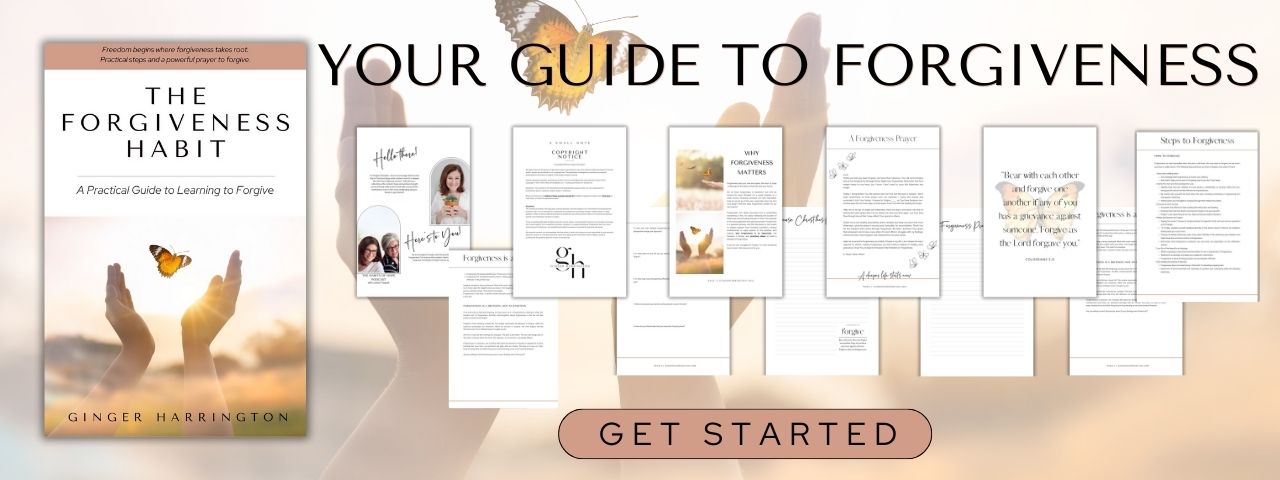
pages of a pdf on how forgiveness sets you free are displayed over an image of open hands releasing a butterfly.
What Forgiveness Is (and Isn’t)
Forgiving sets us free and opens the door to hope. Many people hesitate to forgive for many reasons. Let’s clear up some common misconceptions about what it means to forgive:
- Forgiveness is NOT excusing the offense. It does not mean what happened was okay.
- Forgiveness is NOT forgetting, discounting the offense, or pretending everything’s fine. Some wounds leave lasting scars, but healing means they no longer control us.
- Forgiveness is NOT about who deserves it; it’s about trusting God with justice and releasing yourself from the weight of anger.
- Forgiveness is NOT reconciliation. While forgiveness is a personal choice, reconciliation requires effort from both parties. Reconciliation may come, but it is important to understand the distinction between the two.
- Forgiveness IS releasing bitterness. It frees you from carrying the weight of resentment.
- Forgiveness IS trusting God with justice. Letting go means allowing God to deal with the offender in His perfect way.
Imagine carrying a heavy backpack filled with rocks—each one representing a grudge or past hurt. Every day, the weight slows you down. The longer you carry it, the heavier it feels. Now picture setting it down. The relief is immediate.
Forgiveness is like that. It doesn’t erase the pain, but it frees you from carrying the burden every day.
Forgiveness is a Decision, Not an Emotion
If we wait until we feel like forgiving, we may never do it— Processing our feelings is often the hardest part of forgiveness. Another misconception about forgiveness is that we will feel better as soon as we forgive.
Imagine a train climbing a steep hill. The engine represents the decision to forgive, while the caboose symbolizes our emotions. When we choose to forgive, the train begins moving forward, even if our feelings haven’t caught up yet.
At first, it may feel like nothing has changed. The pain is still there. The hurt still stings. But as the train continues down the track, the caboose—our emotions—eventually follows.
Forgiveness is a decision, not a feeling. We make the decision to forgive in obedience to God, trusting that over time, our emotions will align with our choice. The key is to stay on track, keep trusting God, and allow His grace to bring healing as we move toward freedom.
Are you willing to start the journey, even if your feelings aren’t there yet?
How to Forgive: Steps to Freedom Through Forgiveness
Forgiveness can feel impossible when the pain is still fresh. We may want to forgive, but we aren’t sure how to really mean it. The following steps will show you how to forgive, even when it’s hard.
- Start with a Willing Heart
- Acknowledge that forgiveness is a choice, not a feeling.
- Ask God to help you be open to forgiving, even if you don’t feel ready.
- Name the Hurt and Acknowledge the Loss
- Identify what was lost—whether it’s trust, peace, a relationship, or security. Name the hurt, being specific about how the offense has impacted you.
- Be honest with yourself and God about the pain. Avoiding, minimizing or suppressing hurt only keeps it festering.
- Writing down your thoughts or praying through them helps bring clarity.
- Entrust the Hurt to God
- Surrender the offense to God, trusting Him with justice and healing.
- Embrace the truth that God’s command to forgive is for your benefit.
- Prayer: “Lord, I give this pain to You. Help me heal and walk in freedom.”
- Make the Decision to Forgive
- Saying the words “I choose to forgive [name] for [specific hurt]” out loud can be a powerful act of release.
- If it helps, visualize yourself speaking directly to the person (even if they’re not present), letting them go in your heart.
- Choose to release bitterness, even if you don’t feel like it.This reinforces your decision and helps break the emotional hold of unforgiveness.
- Remember that forgiveness is between you and God, not dependent on the offender’s actions.
- Let Go of the Need for an Apology
- While an apology is important and meaningful, it is not a requirement of forgiveness.
- Waiting for an apology only keeps you trapped in resentment.
- Forgiveness is about freeing yourself, not excusing the offender.
- Set Healthy Boundaries if Needed
- Forgiveness does not mean being a “doormat” or tolerating ongoing harm.
- Determine if some kind limits are necessary to protect your well-being while still releasing bitterness.
- Pray for the Person Who Hurt You
- This step may feel impossible at first, but prayer shifts your heart from bitterness to peace.
- Jesus said in Luke 6:27-28: “Love your enemies, do good to those who hate you, bless those who curse you, pray for those who mistreat you.”
- Prayer doesn’t justify their actions—it softens your heart and places them in God’s hands.
- Commit to the Process of Forgiveness
- Embrace the Freedom That Forgiveness Brings
- By faith, receive the blessings of forgiveness, trusting God to make it a reality in your experience in His timing.
- Recognize the peace, healing, and emotional freedom that come with forgiveness.
- Walk forward in hope, knowing that forgiveness is a reflection of God’s grace in your life.
- Seek support if needed.
- Deep wounds can be difficult to navigate alone. When needed, seek wise counsel from a trusted friend, mentor, or therapist.
- Pray and ask God to lead you to the right person who can offer wisdom and support.
When we don’t forgive or deal with our pain, bitterness can become part of our identity. We can begin to see ourselves as victims, allowing the pain to control or define our lives. Truly, this is no way to live. It is not God’s desire for you to be a prisoner to the pain of the past. This is why it’s so important to understand the meaning of forgiveness and how to do it!

Podcast Quotes on Forgiving
- “Forgiveness is a gift that sets us free and opens the door to hope.”
- “Forgiveness isn’t about excusing the hurt or pretending everything’s fine.”
- “When you feel the weight of hurt, choose to forgive as Christ forgave you.”
- “Forgiveness requires patience, humility, and a willingness to let go of grievances.”
- “We forgive not because the hurt was okay, but because Christ forgave us first.”
- “Forgiveness isn’t about who deserves it; it’s about reflecting God’s grace.”
- “Forgiveness isn’t just for the other person—it’s for you.”
- “Letting go doesn’t change the past, but it frees your future.”
Practical Ways to Practice the Forgiveness Habit
Make forgiveness a natural part of your life with these simple daily practices.
✔ Keep short accounts. Address issues quickly before resentment builds up.
✔ Reflect each night. Before bed, reaffirm your choice to forgive and release any lingering bitterness.
✔ Remind yourself of God’s grace. Just as Christ forgave you, you are called to extend that grace to others.
✔ Use Scripture as a guide. Meditate on Colossians 3:13 and Matthew 18:21-22.
By making forgiveness a habit, you’ll not only experience greater peace and healing but also reflect Christ’s love in your daily life.
What Happens When You Forgive?
When you choose forgiveness, you step into freedom from bitterness and the taxing weight of carrying old wounds. Holding grudges may feel like self-protection, but in reality, it only keeps you bound.
Forgiveness, on the other hand, opens the door to healing and peace. It strengthens your faith, deepens your dependence on God, and helps you grow spiritually in ways you never imagined.
As you let go, you’ll begin to notice a shift—your heart softens, your relationships strengthen, and peace replaces the turmoil that once lived inside you. And here’s the beautiful part: when you forgive, you reflect the love of Christ in a powerful way. The world is watching how we respond to hurt, and when we choose grace over grievance, we become a living testimony of God’s grace.
This week, take action by choosing one of the following:
- Identify a person or situation where you need to forgive.
- Write down what you need to release and pray through it.
- Ask God to help you forgive, even if you’re not ready.
- Pray for someone who has hurt you.
Even though forgiveness is a decision, it is also a journey of trust, faith, and growth. Every step you take brings you closer to the freedom God desires for you.

The Forgiveness Habit Prayer
Lord,
Thank you that you have forgiven me more than I deserve. You call me to forgive just as You forgave me through Christ. Right now, forgiveness feels hard. This hurt weighs heavy on my heart, but I know I don’t want to carry this bitterness any longer.
Today, I bring before You the person who hurt me and the pain it caused. I don’t want resentment to have power over me anymore. I name this wound and surrender it into Your hands. I choose to forgive _____ as You have forgiven me—not because the hurt was okay, but because I trust You with the healing and hope.
Help me to let go of anger and bitterness. Heal my heart, and teach me how to extend the same grace that You’ve shown me time and time again. Let Your love flow through me so that I may reflect Your grace to others.
Guide me to set healthy boundaries where needed, but keep my heart free from bitterness. I pray for peace in my soul and, if possible, for reconciliation. Thank You for the freedom that comes through forgiveness. By faith, I embrace Your grace that empowers me to love, even when it’s hard. When I struggle with my feelings, remind me that I have forgiven and released all of this into your hands.
Help me to practice forgiveness as a habit of hope in my life. Let it shape the way I respond to others, making forgiveness my first instinct instead of holding onto grievance. I trust You to lead me forward in the freedom of forgiveness.
In Jesus’ name, Amen.
Ready to Break Free from Bitterness and Walk in Forgiveness?
Want to go deeper? Listen to the full episode of the Habits of Hope Podcast where we unpack forgiveness in real-life struggles, share personal stories, and walk through practical steps.
Download “The Forgiveness Habit: A Practical Guid to Learning to Forgive“—a free resource based on this post that’s filled with biblical truths, practical steps, and reflection prompts to help you release resentment, set healthy boundaries, and experience the freedom God desires for you. Included the Forgiveness Habit Prayer.
📥 Get Your Free Guide Now! 👉 Click here or the image below.
Let’s choose forgiveness and walk in freedom together!
Recent Podcasts
21.Habit Stacking for Christians: Build Faith and Hope One Step at a Time What if even the smallest moments of your day could transform your faith and hope? In this insightful episode, Ginger and Larissa dive into the power of tiny, intentional habits to create spiritual growth and lasting hope.
22.How to Love Others Like Jesus: Actionable Steps for Everyday Life In this powerful episode, we explore what it truly means to love one another as Christ commanded in John 13:34-35. From practical steps like pausing to pray before reacting, to cultivating kindness and service, we uncover how to let Christ’s love flow through us in tangible ways.
23. Five Loving Ways to Strengthen Your Relationships with Grace Over Grievance Discover five biblical habits to strengthen relationships through humility, patience, and gentleness. Learn practical steps to build unity, extend grace, and reflect Christ’s love in your daily interactions. This episode is packed with relatable stories and actionable insights to cultivate thriving relationships.

Stronger Relationships: 5 Powerful Ways to Respond Rather than React
Discover five biblical habits for stronger relationships with practical ways to respond rather than react. Learn to choose grace over grievance, diffuse frustration and conflict with humility, patience, gentleness, grace, and unity. These scripture-based habits help you cultivate peace, resolve conflict, and reflect Christ’s love.
Relationships Are Hard—but Hope Is Stronger
Have you ever found yourself stuck in a cycle of conflict, wondering why healthy relationships can feel so difficult? Misunderstandings, emotional reactions, and unmet expectations can strain even the strongest connections. Maybe it’s with your spouse, a friend, or a coworker—someone you deeply care about, yet the frustrations keep building.
Love isn’t just a feeling—it’s a set of habits we cultivate through daily choices to build stronger relationships. This can be really hard when conflict arises or we struggle with challenging personalities. When we react instead of responding, we get stuck in the same arguments over and over. Choosing gentleness and patience can break that crazy cycle.

Here’s the truth: relationships take intentional effort. God’s Word gives us hope for building good relationships that reflect the love of Christ. The key is in the daily choices we make to respond rather than react—habits that motivate us to choose grace over grievance.
In this post, we’ll explore five choices that can transform your relationships and help you handle conflict with grace. These practices are part of an ongoing series on building loving relationships that reflect Jesus. Be sure to check out Episode 22 on loving like Jesus and stick around for our upcoming episode on forgiveness.

Biblical Ways to Strengthen Your Relationships
“Always be humble and gentle. Be patient with each other, making allowance for each other’s faults because of your love. Make every effort to keep yourselves united in the Spirit, binding yourselves together with peace.” – Ephesians 4:2-3
This verse is a powerful foundation for building Jesus-centered relationships. It reminds us that peace and unity don’t happen by accident—they require intentional habits. Humility, gentleness, patience, and grace are the qualities that strengthen relationships and help us reflect God’s love. But these traits aren’t always easy. They require us to set aside pride, impatience, and the need to be right.
When we adopt these spiritual qualities as habits, our relationships begin to thrive in ways that feel life-giving and peaceful.
Habit of Hope: Choose Grace Over Grievance
How often do we let frustration take over when someone irritates us? Maybe someone interrupted your plans or said something hurtful. Our natural reaction is often defensive, critical, or angry. But instead of letting that frustration fester, practice choosing grace over grievance.
This habit is about pausing, praying, and extending grace when someone disappoints or upsets you. It doesn’t mean ignoring hurt, but it does mean stepping back to respond thoughtfully instead of emotionally. Grace keeps conflict from escalating and opens the door for communication, understanding, and peace.
5 Habits for Responding Rather than Reacting in Relationships
Building healthy relationships isn’t just about reacting better in the moment; it’s about developing consistent, Christ-like habits that guide your thoughts, words, and actions daily. These five spiritual habits—humility, gentleness, patience, grace, and unity—are the foundation for relationships that thrive on trust, peace, and mutual growth.
When we actively practice these habits, they reshape how we handle conflict, disappointment, and misunderstandings, allowing us to reflect God’s love more fully. Let’s take a closer look at each habit and how you can apply it in your relationships today.
1. Walk in Humility
Humility is the foundation of strong relationships. It’s about valuing others above yourself. As Rick Warren wrote in The Purpose-Driven Life, “Humility is not thinking less of yourself but by thinking of yourself less.” (Affiliate link)
A humble heart listens without interrupting and releases the desire to have the last word. Practicing humility means valuing others by listening, learning, and being willing to apologize quickly when we’re wrong.
Key Action Steps:
- Listen to understand, not just to make your point.
- Be willing to admit when you’re wrong and apologize quickly.
- Be careful with assumptions—ask questions instead of assuming you know what others are thinking.
- Practice the art of not having to have the last word.
One way I struggle with this is the temptation to think I know what my husband is going to say. Sometimes I interrupt and finish his sentence, which can be really frustrating for him. Humility gives space for others to express themselves without interruption. I don’t do this on purpose, it is a reaction that I have to watch out for.
2. Choose Gentleness Over Harshness
In tense moments, it’s easy to raise your voice, snap back, or respond with sarcasm. But Proverbs 15:1 teaches us that a gentle answer turns away wrath, while a harsh word stirs up anger. Gentleness is strength under control. It helps de-escalate tension and protect the dignity of others.
Practical Steps:
- Pause before you speak and ask, “Will my words build up or tear down?”
- Use a calm tone to de-escalate tension.
- Be mindful of how your words come across: Do you sound angry, frustrated, critical, or disrespectful?
- Practice active listening to make others feel heard.
On the podcast, Larissa shared how learning to lower her voice during arguments with her husband, prevented conflicts from escalating. Responding rather than reacting enabled her to foster better communication and less conflict. Thats a win any day!
3. Cultivate Patience
Patience means giving people room to grow, make mistakes, and change without harsh judgment. In a fast-paced world, we often want things to happen immediately, but relationships thrive on grace-filled patience.
How many times have you heard someone say, “Don’t pray for patience unless you want to be tested”? What does this say about what we believe about God? Patience isn’t developed overnight. It’s a process of learning to pause, endure discomfort, and trust in God’s timing. Don’t be afraid to pray for patience, but even better is to ask Christ to express His patience in and through you.
Practical Steps:
- When frustrated, take a deep breath and pray for patience.
- Shift your perspective by asking, “What might this person be going through?”
- Avoid rushing to fix things—give space for others to work through their struggles.
- Give yourself margin so you aren’t in a rush.
In many ways, patience is an act of surrender and trust. Is it easy? This one is really challenging-especially when people frustrate you!
4. Bear with One Another’s Faults
No one is perfect—not you, not your loved ones. Relationships become strained when we expect others to meet our standards. Sometimes we even hold others to a higher standard than we hold ourselves. But when we expect perfection, we open the door to frustration and resentment.
Instead of holding onto frustration, we can respond with grace.
- Are your expectations of others realistic, or are you placing burdens on them that only Christ can fulfill?
- Gratitude can help shift your focus from criticism to appreciation.
- If we want others to bear with our faults, we need to practice the same response.

5. Pursue Unity and Peace
Unity doesn’t mean everyone has to be the same. It’s about choosing love over division and working together as a team. Conflict is like a knot—when both sides pull harder, the knot tightens. But when you come together to untangle the knot, peace becomes possible.
Practical Steps:
- Pray for wisdom and peace before having difficult conversations.
- View the other person as your teammate, not your opponent.
- Choose to prioritize reconciliation instead of winning the argument.
Best Quotes from the Podcast for Stronger Relationships
- “Love isn’t just a feeling—it’s a set of habits we cultivate through daily choices.”–Ginger
- “Our natural reaction is often defensive, sarcastic, and impatient. But responding with gentleness can de-escalate conflict and protect the other person’s dignity.”–Larissa
- “Sometimes less is more. Not every comment needs to be addressed, and certainly, a snarky comment never helps.”–Larissa
- “We are confident in Christ when we are grounded in our identity in Him. That confidence allows us to be humble, admit mistakes, and apologize without shame.”–Ginger
- “When we are content, we aren’t as focused on wanting more or insisting on our way. Cultivating gratitude helps teach us that.”–Larissa
- “Quick reactions and a hot temper are often signs of unresolved patterns of the flesh. We must lean on the Holy Spirit to help us grow in patience and gentleness.”–Ginger
- “Gratitude shifts our focus from entitlement to appreciation. When we recognize blessings, it transforms both our perspective and our relationships.”–Larissa
- “Conflict is like a knot. If you keep pulling, it tightens. But if you work together as a team, you can slowly untangle it.”–Larissa
- “Being quick to listen, slow to speak, and slow to anger is a game-changing habit for cultivating peace and unity.”–Ginger
More on Loving Relationships Coming Next Week
This is part of a series on loving relationships this month. Next week, we’ll be diving into one of the hardest yet most powerful habits: forgiveness. How do we forgive those who have deeply hurt us? How does forgiveness set us free and strengthen relationships? Stay tuned for practical wisdom and biblical truth in our upcoming episode.
Build Habits That Reflect Christ’s Love in Your Relationships
Healthy, Christ-centered relationships are built on daily habits of humility, gentleness, patience, grace, and unity. These habits may not come naturally, but with God’s help, we can grow in love and peace. When we choose to give people grace instead of grievance, we reflect the heart of Christ and create space for healing and growth.
What relationship in your life could use more grace this week? Take a moment to pray and reflect on which habit you can intentionally practice today.
For more insights, listen to the full podcast episode and join us on social media to share your thoughts and breakthroughs! 💬 We’d love to hear how you are building habits of hope in your relationships.
Be Inspired with the Share the Love Quote Pack
A great way to share love with a thoughtful quote card. Print them out for Valentine’s Day, birthdays, anniversaries, or to celebrate a friend!

Recent Podcasts
20.How to Break Free from Sugar Addiction for Holistic Health with Christine Trimpe What if breaking free from sugar addiction could unlock a life filled with joy, health, and hope? In this powerful episode, author, speaker, and health coach Christine Trimpe joins us to share her incredible journey from sugar shackles to sugar freedom. With over 100 pounds lost and a new life gained, Christine’s story is one of faith, perseverance, and holistic healing. Discover how small habits, fueled by God’s strength, can lead to lasting transformation in your physical, emotional, and spiritual health.
21.Habit Stacking for Christians: Build Faith and Hope One Step at a Time What if even the smallest moments of your day could transform your faith and hope? In this insightful episode, Ginger and Larissa dive into the power of tiny, intentional habits to create spiritual growth and lasting hope. From habit stacking to celebrating small wins, they explore how being faithful in the little things can make a big difference. Inspired by Matthew 25:21, this episode offers practical tips, relatable stories, and encouraging truths to help you live with intention and deepen your walk with God.
22.How to Love Others Like Jesus: Actionable Steps for Everyday Life Love in Action: How Christ’s Love Transforms Our Relationships – In this powerful episode, we explore what it truly means to love one another as Christ commanded in John 13:34-35. From practical steps like pausing to pray before reacting, to cultivating kindness and service, we uncover how to let Christ’s love flow through us in tangible ways. If you’ve ever struggled to show love when faced with conflict or hard relationships, this conversation is for you. Learn how small, intentional acts of care can bring hope and healing to those around you.
Holy Moments for Stronger Relationships
Holy in the Moment: Simple Ways to Love God and Enjoy Your Life invites you to embrace daily habits that strengthen relationships and reflect Christ’s love. Through practical insights on humility, patience, gentleness, and grace, you’ll discover how small, Spirit-led choices can transform your heart and interactions. If today’s episode resonated with you, this book offers even more ways to cultivate peace, unity, and joy in your everyday moments. Make love a habit—start today!

*This is an affiliate link at no cost to you.
Related Blog Content for Stronger Relationships

10 Meaningful Ways to Love Others with the Love of Christ
Discover meaningful ways to love others with the love of Christ with practical, biblical wisdom to strengthen your relationships.
The original blog post, 10 Biblical Ways to Love, served as the inspiration for this podcast series on love and forgiveness. As we reflected on my top blog post on this website, Larissa and I realized there was so much more to explore—how to apply these truths in real-life relationships, how to let Christ’s love flow through us, and how to build habits that reflect His unconditional love.
Throughout this month, we will be diving deeper into Scripture, sharing personal stories, and offering fresh insights to help you live out God’s command to love others with grace and intentionality.

Loving Others Well Takes More than a Good Intention
We all know the importance of love. It’s written about, preached on, and celebrated in countless ways. But knowing something and living it are two different things. What happens when the person we’re supposed to love gets on our last nerve? Or when someone’s actions hurt us deeply? In moments like these, love can feel more like an impossible ideal than a practical reality.
Yet, this is precisely when love’s transformative power makes the biggest impact. Jesus didn’t call us to love others only when it’s convenient. Instead, He commanded us to love with the same sacrificial, unconditional love He demonstrated. It’s a love that goes beyond fleeting emotions—a love grounded in humility, patience, and grace.
The truth is, we can’t muster this kind of love on our own. It flows through us as we abide in Christ, letting His Spirit work within us. When we align our hearts with His, even small acts of kindness and care can create ripples of hope and healing. In this post, we’ll explore biblical principles and meaningful ways to love others with the love of Christ.
Loving like Jesus requires more than our human effort. It’s about letting Christ’s love flow through us. Let’s explore practical steps to live out this habit of hope with purpose and grace.

A Command to Love: John 13:34-35
“A new command I give you: Love one another. As I have loved you, so you must love one another. By this, everyone will know that you are my disciples if you love one another.”
This isn’t a polite suggestion. Jesus gives a direct command: love one another as He loved us. But this isn’t just any love—it’s agape love. It’s the kind of love that sacrifices, forgives, and keeps showing up even when it’s inconvenient. And that’s where the challenge begins. It’s easy to love when others behave, but what about when they don’t? When others don’t agree with me or when they don’t do what I want them to do, it takes more intention and effort to show love.
Loving others with Christ’s love means relying on the Holy Spirit, not on our own strength and effort. True love flows from receiving and abiding in the love of Christ. When we live this out, it sets us apart. Jesus said that love would be the distinguishing mark of His disciples. When we love well, people take notice and see a reflection of Christ. It can become a powerful way of sharing the gospel that reaches deeper than words.
Learning to Let Christ’s Love Flow Through You
“Live loved.” When you are secure in God’s love for you, it becomes more natural to extend that same love to others. However, this habit requires intentionality. One of the most practical ways to live it out is to start your day abiding in Christ. Spend time in prayer and Scripture, asking God to fill your heart with His love.
When frustrations inevitably arise, pause and pray before reacting. Even a one-second pause to pray, “Lord, express your love through me,” can prevent unnecessary hurt. This is a more powerful prayer than asking the Lord to “help” us love others better. This small shift in perspective makes a big difference. Spend time with the Lord, receiving His love, reflecting on what He has done for us, how He has forgiven us so unconditionally. Ask Him to fill us with His love and let it overflow to those around us.
Love is often expressed in simple, everyday actions. Serving others by offering a meal, helping with a task, or sharing a kind word can have a profound ripple effect. Words are powerful too. Scripture calls us to speak words that build others up. Eliminating sarcasm and replacing criticism with encouragement demonstrates love in action.
Biblical Insights on Loving Others
The Bible offers clear and practical ways to cultivate love for others through humility, encouragement, and care. Let’s break down these truths and how we can apply them:
- Philippians 2:3-5: “Do nothing from selfishness or empty conceit, but with humility of mind regard one another as more important than yourselves.”
- This verse leaves no wiggle room for selfish motives. “Do nothing,” as in not one thing, rules out our tendency to make allowances or excuses for ourselves.
- Putting others first challenges us to overcome self-centered habits. It’s easy to see life through the lens of “What about me?” Think how easy it is to want the biggest brownie, a reflection of how ingrained our selfish nature can be. The Lord often reminds me to practice giving others the first choice or the best option as a practical way to give preference to others.
- In The Purpose-Driven Life, Rick Warren explains, “Humility doesn’t mean thinking less of yourself; it means thinking of yourself less.” The simplicity of this quote helps me understand humility better.
- Romans 12:10: “Be devoted to one another in love. Honor one another above yourselves.”
- Devotion involves commitment, loyalty, and intentional care. This type of devotion isn’t contingent on convenience but is a lifestyle of putting others’ needs before your own. Honor in relationships strengthens trust and reflects the heart of Christ.
- Consider what it means to be devoted: it’s showing up for people, especially in their times of need. It’s choosing to be present, even when you’re busy or tired. This kind of consistent love builds lasting relationships.
- Romans 14:19: “Let us therefore make every effort to do what leads to peace and to mutual edification.”
- Encouraging others builds them up and brings peace. Words have the power to make others feel seen and valued in their struggles. We live in a world saturated with criticism, and encouragement can be a rare gift.
- Mutual edification means lifting each other up. It’s not a one-sided effort. We’re called to create environments where everyone can thrive through encouragement and support.
- Ephesians 4:29: “Do not let any unwholesome talk come out of your mouths, but only what is helpful for building others up according to their needs.”
- Our speech should reflect God’s love. Replacing sarcasm and negativity with life-giving words is a countercultural act of grace. Words can heal or hurt, and we’re instructed to choose them wisely.
- One practical approach to this verse is to perform a self-check before speaking: Are my words helpful? Are they necessary? Am I speaking life or draining hope from someone?
- 1 Corinthians 12:25: “So that there should be no division in the body, but that its parts should have equal concern for each other.”
- True care extends beyond words. Offering practical help, emotional support, and presence is essential to showing love. Think about times when you’ve been cared for—whether through a meal delivery, a thoughtful text, or a friend showing up unannounced to help with a task. These gestures, though seemingly small, have profound effects.
- Unity in the body of Christ grows when we make efforts to genuinely care for others without expecting anything in return. Equal concern fosters a spirit of compassion and empathy.
Each of these scriptures reinforces that love is not merely an emotion; it’s a series of choices and habits that reflect the heart of Christ.

How to Practice Love Through Daily Actions
Consider a variety of practical ways to show the love of Christ to others. It can mean so much to people when they experience the love of Jesus flowing through us.
- Receive Christ’s Love Daily
- Begin each day with prayer and Scripture, asking God to fill your heart with His unconditional love.
- Reflect on God’s forgiveness and grace to increase your capacity to love others.
- Pause and Pray Before Reacting
- When conflicts arise, take a moment to pause and pray for patience and understanding.
- A simple prayer like “Lord, help me respond in love” can save you from hurtful reactions.
- See Others Through God’s Eyes
- Shift your perspective by viewing others as God’s beloved creation.
- Pray for those who challenge you and ask God to soften your heart toward them.
- Serve Others in Small Ways
- Offer tangible acts of kindness such as bringing a meal, helping with a task, or sending a thoughtful message.
- Remember, small acts can create a ripple effect of care and encouragement.
- Speak Words that Build Up
- Be mindful of your words, replacing sarcasm and criticism with encouragement.
- Make it a habit to speak life and hope into others’ lives.
- Cultivate Gratitude
- Focus on God’s faithfulness to cultivate a heart of gratitude.
- Gratitude can reduce criticism and improve your interactions with others.
- Practice Humility
- Put others’ needs ahead of your own by giving them preference in small situations.
- Practice letting go of self-centered thinking by choosing humility daily.
- Care for Others Actively
- Reach out to someone in need by offering emotional support, physical help, or prayer.
- Small gestures like a text message or phone call can make someone feel seen and valued.
- Be Intentional
- Spend five minutes each day encouraging someone with a kind word, note, or small act of service.
- Set reminders to help you develop this new habit consistently.
- Ask God to Help You Notice Others’ Needs
-
- Pray for greater awareness of the needs around you and ask God to guide your responses.
- Stay open to “on-the-go” care opportunities in your daily routine.
Love that Makes a Difference
Imagine what could happen if we all made a habit of depending on Christ to love others through us. Our focus would shift from ourselves to those around us, and we’d begin to see the world through God’s eyes. One small act of love can remind someone that they are deeply cherished by their Creator.
Real love—Christ’s love—has the power to change lives, including your own. By choosing to love others with intention, you become part of God’s plan to bring hope and healing into the world. Step out in faith this week and see how small acts of love can spark something extraordinary.
Moments to Love One Another in Ginger’s Book
Dive deeper into the power of love by reading Holy in the Moment. You’ll find inspiration and practical ideas to love God and to love others with simple daily choices. (This is an affiliate link which means I earn a small commission on purchases at no cost to you.)
Share Printable Quotes on Love
Enjoy one of my popular quote bundles with this printable pack of cards featuring quotes on love. Perfect to tuck into a card or share with a friend, these cards will give you a tangible way to express love. Perfect to add a creative touch to Valentine’s Day, birthdays, anniversaries, or just because!
Recent Episodes
19. Important Truths to Anchor Your Heart in Hope this Year
In this episode of the Habits of Hope Podcast, we’re diving into 8 powerful biblical truths that will anchor your heart in hope this year. From God’s unshakable love to His perfect timing and eternal promises, these truths provide the foundation you need to navigate life’s storms with confidence and peace. Whether you’re battling anxiety, waiting on answers, or simply longing for a fresh perspective, this episode is filled with practical encouragement and Scriptural wisdom to remind you that hope is always within reach.
20.How to Break Free from Sugar Addiction for Holistic Health with Christine Trimpe
What if breaking free from sugar addiction could unlock a life filled with joy, health, and hope? In this powerful episode, author, speaker, and health coach Christine Trimpe joins us to share her incredible journey from sugar shackles to sugar freedom. With over 100 pounds lost and a new life gained, Christine’s story is one of faith, perseverance, and holistic healing. Discover how small habits, fueled by God’s strength, can lead to lasting transformation in your physical, emotional, and spiritual health.
21.Habit Stacking for Christians: Build Faith and Hope One Step at a Time
What if even the smallest moments of your day could transform your faith and hope? In this insightful episode, Ginger and Larissa dive into the power of tiny, intentional habits to create spiritual growth and lasting hope. From habit stacking to celebrating small wins, they explore how being faithful in the little things can make a big difference. Inspired by Matthew 25:21, this episode offers practical tips, relatable stories, and encouraging truths to help you live with intention and deepen your walk with God.
Related Content on Love
-
- 10 Biblical Ways to Show Love
- Six Powerful Lessons on Love and Humility from the Last Supper
- 20 Powerful Blessings and Scriptures to Pray for Marriage
- Who Is My Neighbor?
- Will I Love My Neighbor?
- 26 Short Quotes on Love + Free Printable Pack
- To the One Who’s Forgotten She Matters: 10 Ways to Love Yourself
- How to Love God with Your Life

How to Harness the Power of Tiny Habits for Spiritual Growth
Learn the power of tiny habits for spiritual growth. Discover practical ways live out the “faithful in the little things” Bible verse, guided by biblical truths and simple ways to build spiritual habits. Habit stacking can transform your daily routines into opportunities for deeper faith.
What If Spiritual Growth Was Simpler Than You Thought?
Do you feel like life’s busy routines get in the way of building your faith? You want to pray more, but you’re not sure how to add something else to your day.
What if the very habits you already do every day—like brushing your teeth or drinking coffee—could become moments to grow closer to God?
Habit stacking offers a simple, practical way to integrate faith-building practices into your daily life without adding overwhelm. By pairing new spiritual habits with existing routines, you can cultivate hope and deepen your relationship with God.
If you’re not a fan of the word ‘habit,’ don’t worry—it doesn’t really matter what you call it. Whether you think of it as a routine, a practice, or a spiritual rhythm, the key is finding practical ways to be faithful and grow closer to God in your everyday life.
Keep reading to discover how to start habit stacking, reflect on biblical truths about faithfulness in small things, and take small steps to build hope and trust in God. Watch or listen to the podcast for the full content.
Faithful in the Little Things Bible Verse
The words of Jesus in this Scripture verse shows us the importance of training ourselves to be faithful even in the small things.
Matthew 25:21 – “Well done, good and faithful servant. You have been faithful over little; I will set you over much. Enter into the joy of your master.”
I really want to hear Jesus say this, don’t you?
What does it mean to be faithful in the little things?
Faithfulness doesn’t just happen-it is built one day at a time. The word “faithful” in this verse comes from the Greek word pistos, which means trustworthy and reliable.
To be faithful in the little things is to demonstrate consistency, dependability, and honesty in our daily actions—no matter how small or unseen they may seem. It’s about stewarding the time, opportunities and resources God has entrusted to us.
God values consistency. Just as the servant in the parable was faithful with what God gave him to do, we are called to honor God through steady, reliable actions in our everyday lives.
Faithfulness leads to joy. When we honor God through small acts of obedience, we enter into the joy and blessing that comes from living in alignment with His will.
It’s about stewardship. Being faithful means treating every gift, responsibility, and moment as a divine opportunity to glorify God and bless others.
Faithfulness in the little things reflects our trust in God and prepares us for greater responsibilities, blessings and opportunities. It reminds us that spiritual growth is not about monumental achievements but about consistent, steady progress.
Whether it’s committing to a daily prayer, reading scripture, or serving others with humility, God sees and values each step of obedience.
What Is Habit Stacking?
Habit stacking is a concept popularized by BJ Fogg in his book Tiny Habits: The Small Changes That Change Everything. It involves attaching a new, desired action to something you already do consistently, making it easier to remember and integrate into your routine. (Affiliate link)
Fogg’s research highlights how small, simple actions are often the most effective way to create lasting change. They build on existing momentum rather than requiring a complete overhaul of your life. By linking a new habit to something already ingrained, you increase the likelihood of sticking with it over time.
Why Habit Stacking Works:
Fogg explains that habits succeed when they’re anchored to something familiar. This process leverages your brain’s natural tendency to connect related activities, making the new habit feel almost automatic. Each time you practice a habit, the pathway in your brain becomes more efficient, much like a trail becoming clearer with frequent use.
Here’s why habit stacking is particularly effective for Christians who want to cultivate spiritual growth:
It builds on routines. Adding faith-based habits to your current routines ensures they feel natural and seamless.
It simplifies growth. Small, manageable actions feel achievable, removing the pressure of drastic changes.
It creates intentionality. Turning ordinary moments into spiritual opportunities brings focus and purpose to your day.
Larissa put it beautifully in our podcast episode: “Stack your habits, grow your faith.” By tying a new habit to something you already do, you create a reliable rhythm that makes spiritual practices part of your daily life.
From Autopilot to Intentionality:
Harnessing the Power of Small Habits
Have you ever driven somewhere on autopilot, only to realize you weren’t even thinking about where you were going? Habits can be like that—working in the background, shaping our actions without us even realizing it.
My husband jokingly calls me his “auto-pilot woman” because I sometimes operate so automatically I don’t even notice it.
The truth is, being faithful in the little things doesn’t happen by accident.
It takes intentionality. If habits are going to form anyway, why not make them purposeful? Imagine how much spiritual growth could happen if we transformed these autopilot moments into opportunities to connect with God. This is the power of tiny, intentional habits.
.
How to Build Spiritual Habits with Habit Stacking
Habit stacking doesn’t have to be complicated. Think of habit stacking like building a train. Each new habit you attach to an existing routine is like adding another car to the engine. Once the train gets moving, the momentum builds naturally.
5 Steps to Build a Habit Stacking Routine
Here’s a step-by-step guide to get started building faithful habits and routines:
Identify a daily routine. Look for activities you already do consistently, like brushing your teeth, commuting, or making dinner.
Choose one spiritual habit. Pick a small action you want to integrate, such as praying, meditating on a verse, or practicing gratitude.
Pair them together. Attach the new habit to the existing routine (e.g., pray while brushing your teeth).
Start small. Begin with 1-2 minutes to make it manageable and build confidence.
Celebrate progress. Acknowledge each time you complete the habit, even with a simple “thank you, God.”
Adjust When Needed: If a habit doesn’t feel natural, tweak it or attach it to a different routine. Experiment until you find a rhythm that feels natural and easy to keep up with.
Examples of Habit Stacking for Christians
Transform your routines into rhythms of hope and faith. Here are practical ways to integrate faith-building habits into your day:
Pray while brushing your teeth.
Express gratitude during your morning coffee.
Meditate on a verse while commuting.
Recite a short prayer of trust while washing dishes.
Listen to a spiritual podcast while folding the laundry.
Each of these small actions reflects the principle that “faithfulness in the small things” leads to spiritual growth. By consistently pairing new habits with your daily routines, you create opportunities for God to work in and through the ordinary moments of your life.
Benefits of Simple Routines for Spiritual Growth
Habit stacking can be a powerful way to be faithful in the little things, even on the busiest days.
Habit stacking anchors your faith in daily life by:
Turning daily routines into opportunities for spiritual growth.
Simplifying the process of building new habits.
Creating a natural rhythm for practicing faith.
Reducing overwhelm by focusing on small, consistent steps.
Building momentum for greater changes over time.
Habit stacking isn’t just a tool for productivity—it’s a way to anchor your faith in the everyday moments of life. By turning small, consistent actions into spiritual practices, you invite God into your daily routines and create space for growth and transformation.
Overcoming Challenges: Adjusting as Needed
Sometimes habits don’t stick, and that’s okay. Here are ways to adjust:
Start smaller: Feeling overwhelmed? Scale back the habit to its simplest form to make it more manageable.
Experiment with a new cue: Test out different anchors or triggers to remind you of the habit, like a specific action, time, or place.
Choose a different time of day: If the habit feels forced or inconvenient, move it to a time when it naturally fits better.
Commit to a short trial period: Start with a one-week commitment to see how the habit works for you before making adjustments.
Prioritize consistency over perfection: The goal isn’t to be perfect—it’s to stay consistent. Every small effort adds up over time.
Consistency matters more than perfection. Every small effort is a meaningful step in the right direction.
Podcast Quotes to Inspire Your Faith Journey
Sometimes a single phrase can spark encouragement and remind us of God’s faithfulness. Here’s a selection of quotables from the engaging conversation on the podcast:
“God values faithfulness in the little things—these small moments matter.”
“Adjusting your habits isn’t failure—it’s part of finding what works for you.”
“Our brains love shortcuts. Tiny habits make new patterns effortless over time.”
“Tiny habits pave the way for transformation—small steps create big change over time.”
“Consistency in one area builds the muscle to be consistent in other areas.”
Which of these resonates most with you today?
Action Steps to Take Today
Ready to get started with a tiny habit? By starting small and staying consistent, you can create habits that cultivate faithfulness in your life. Here are some practical action steps to help you get started on adding tiny habits to your day.
Identify one routine you already follow daily (e.g., coffee, teeth brushing).
Choose a spiritual habit to pair with it (e.g., prayer, scripture reflection).
Track your progress in a journal or app.
.
Each step, no matter how small, is a meaningful act of trust and worship. Remember, spiritual growth is a journey, not a race. Choose one action today, commit to it, and watch how God uses your faithfulness in the little things to transform your life in big ways.
A Word of Caution About Habits
While habits are valuable, they’re the pathway, not the goal. Oswald Chambers offers this wise reminder: “Your god may be your little Christian habit—the habit of prayer or Bible reading at certain times of your day. Watch how your Father will upset your schedule if you begin to worship your habit instead of what the habit symbolizes.’
So as you cultivate habits of faithfulness, remember to hold them with open hands. Be intentional, but flexible. Ask God to guide and bless your efforts as you cultivate faithfulness in the little, but oh-so-important things that honor Him.
Start Small, Stay Faithful
Habit stacking is more than just a productivity tool—it’s a way to deepen your relationship with God and infuse your daily life with hope. As Matthew 25:21 reminds us, God values faithfulness in the little things. By starting small and staying consistent, you can create spiritual habits that transform your life.
Ready to build habits of faith and hope? Listen to or watch the full episode of the Habits of Hope Podcast for more practical tips and inspiring insights. Don’t forget to subscribe and share this post with someone who needs encouragement today!
*This post contains affiliate links at no cost to you.
Related Podcasts for Spiritual Growth Habits
Episode 5:What We’re Doing in Our Quiet Time Right Now.
Episode 8: Practical Steps to Trust God in the Moment to Increase Hope
18.Start the Year with Hope: Simple Steps to a Balanced Life in 2025.
Related Blog Posts for Spiritual Growth Habits
15 Simple Ways to Overcome Distraction to Focus Your Attention on God (with printable)
How to Stay Focused in Prayer
Do You Have Spiritual ADD?
10 Benefits of Reviewing What We Learn from God
15 Habits of Rest that Will Improve Your Life
Strategies and Scriptures to Combat Negative Thinking: With Free E-book

How to Break Free from Sugar Addiction for Holistic Health with Christine Trimpe
Learn how to break free from sugar addition with faith-based tips for holistic health. Christine Trimpe share’s her story of hope in her 100 pound weight-loss journey. Ready to quit sugar and embrace a healthier lifestyle? What if...