
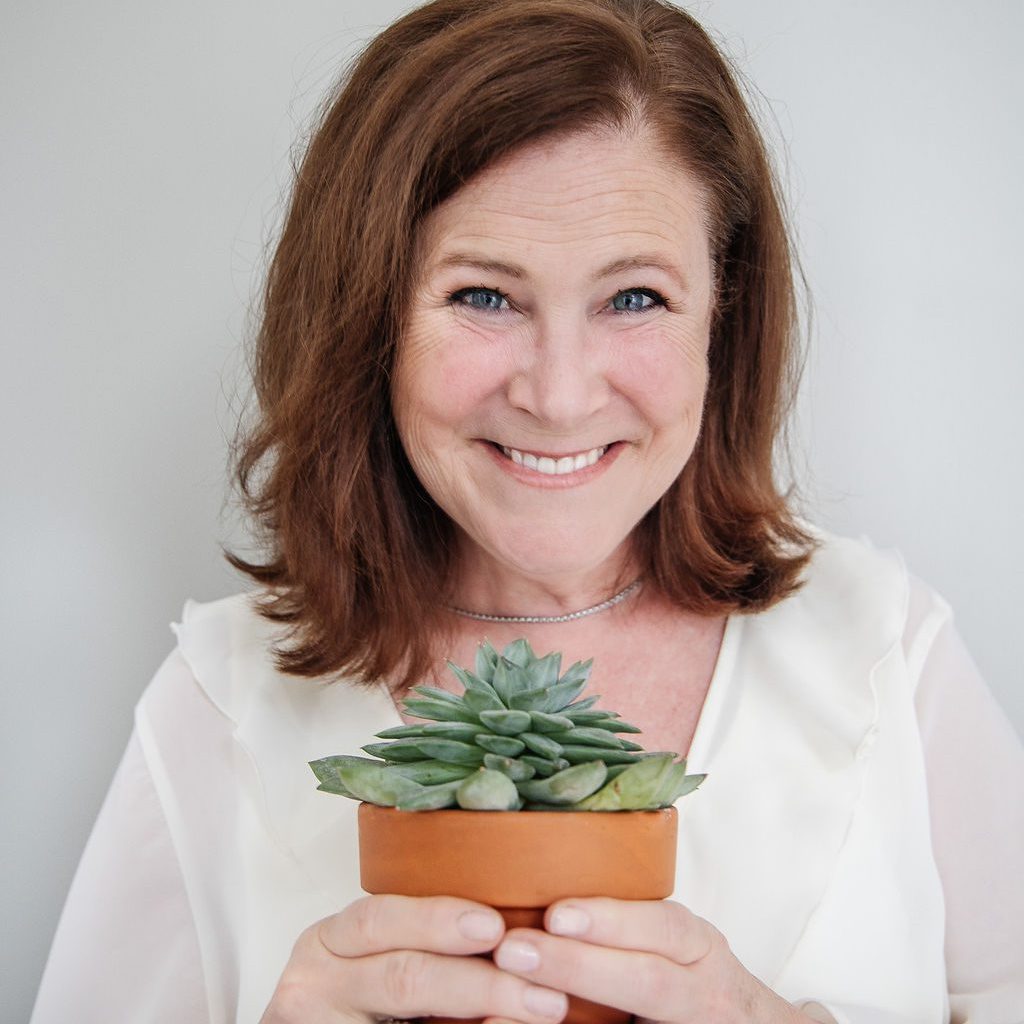
Ginger Harrington
Hi there! I’m Ginger. Ready to live fully with deeper faith and healthy living so you can thrive in the beautiful purpose God has for you? Let’s do it together!
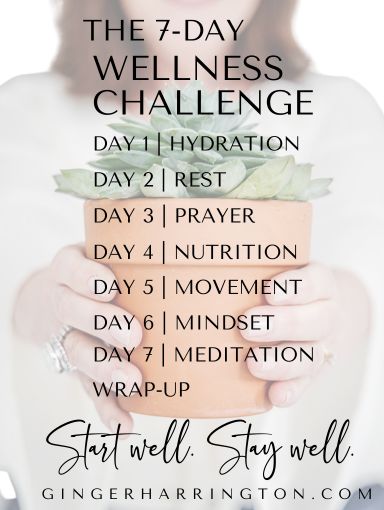
take the challenge!
Get motivated with the 7-day Wellness Challenge to jump-start health and wellness for your best year ever. Seven days to focus on foundational practices to nurture your healthy body, soul & spirit. Set do-able goals to take care of all of you as we start a healthy 2024 together!
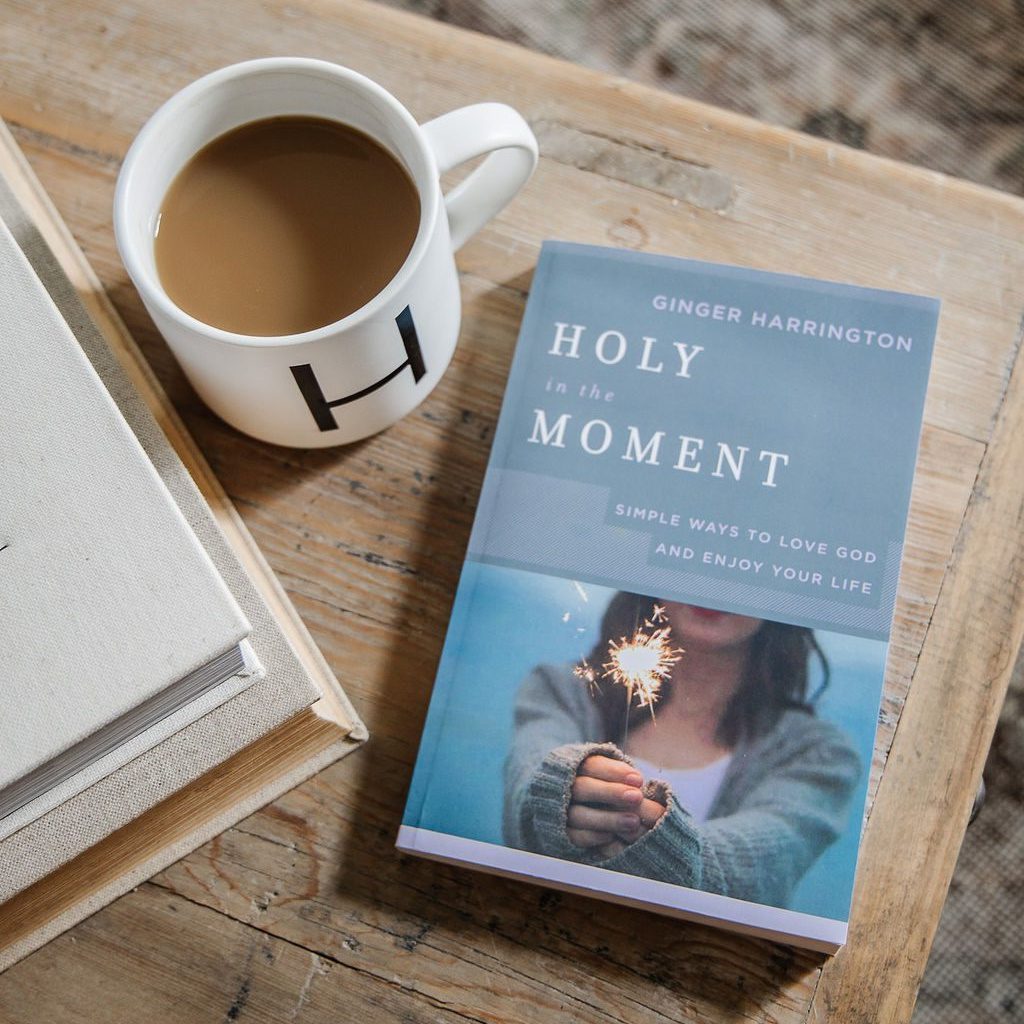
HOLY IN THE MOMENT
Simple Ways to Love God And Enjoy Your Life
My award-winning book will give you actionable ways to strengthen your faith and overcome the struggles that roadblock spiritual growth. Discover the transforming power of choosing to rely on Christ in this holy moment.
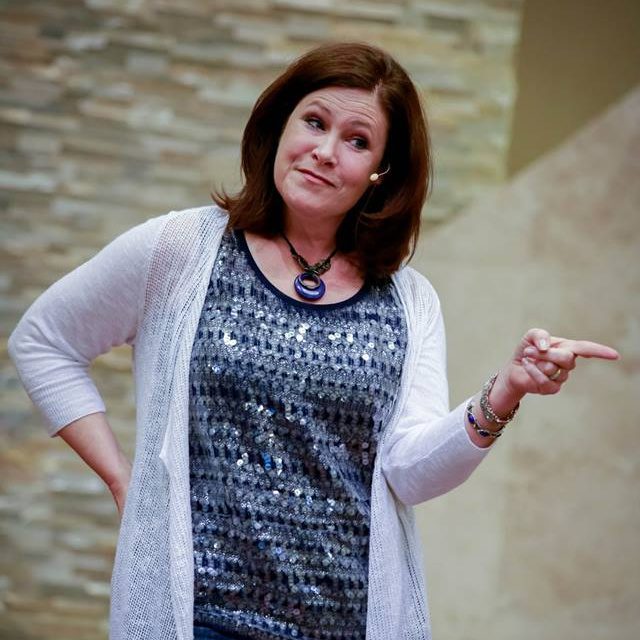
SPEAKING
Cultivate a deeper life with biblical wisdom and practical steps to strengthen faith, inspire hope, and transform daily living with healthy choices for body, soul, and spirit. Ginger will help you live fully in your identity in Christ so you can thrive in your beautiful purpose. Learn how to be your best so you can give your best: holy, healthy, and whole.
THE LATEST
from the blog
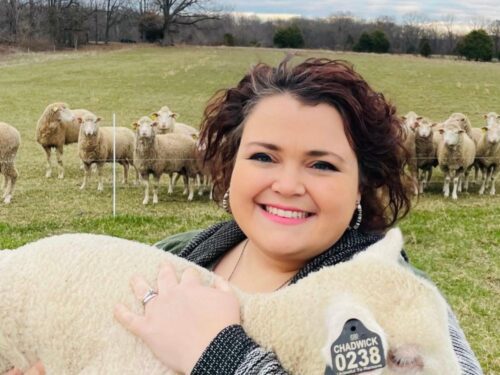
Trusting God Through Doubt: The Story Behind Kelsey Chadwick’s Where Else Could I Go?
Kelsey Chadwick wrote her entire book about trusting God through doubt in five days. It was at the publisher when she died. Her mother, Lesa Watson, shares the story behind Where Else Could I Go? — and the hope that is still speaking.
Kelsey Chadwick did. She was a follower of Jesus, a lover of his Word, a wife and mother and writer and researcher — a woman who had walked with God her entire life. And then came a year of medical uncertainty, a cancer diagnosis with no clear treatment, and nine months of waiting that brought her face to face with doubt she hadn’t expected.
She didn’t run from it. She wrestled with her faith by bringing her questions to the source of her hope.
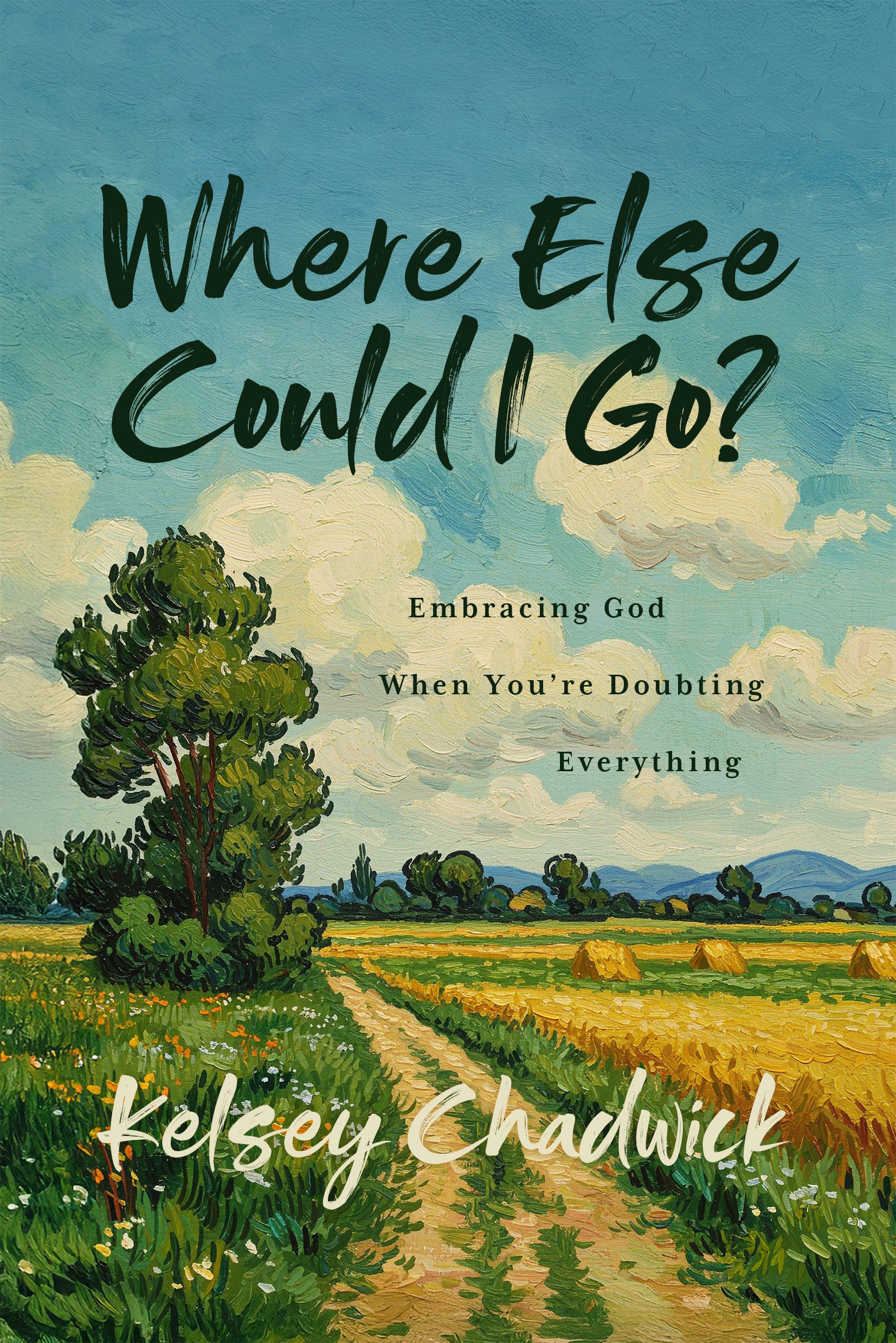
What came out of that year was a book: Where Else Could I Go? Embracing God When You’re Doubting Everything. Kelsey wrote the entire manuscript in five days during a surprise anniversary retreat her husband arranged so she could have uninterrupted space to write. It was at the publisher when she passed away unexpectedly in August, at thirty-five years old.
Her mother, Lesa Watson, joined us on the Habits of Hope podcast for her very first interview to share Kelsey’s story, her own journey through grief, and the hope that has held their entire family since.
This post is an invitation to meet both of them.
The Story Behind the Book
Kelsey first noticed something was wrong during a family vacation in Florida. She was putting on lotion after a day in the sun when she felt a growth on her neck. She knew immediately that something wasn’t right, but she said nothing. She kept it to herself for the rest of that week to protect the time her family had together.
What followed was nine months of indeterminate biopsies, specialist visits at the University of Kentucky Research Center, and a waiting game that offered no clear answers. Eventually her thyroid was removed. That’s when testing revealed what the biopsies couldn’t: a rare, essentially untreatable form of cancer. Even after the surgery there were still questions, more testing, more uncertainty.
That journey of trusting God with her doubt started nine months before Kelsey’s passing and was still ongoing when she died from a completely separate cause. She died suddenly of an abdominal aortic aneurysm, while presenting at a work conference far from home.
Her last recorded words, spoken to the medical team around her before she lost consciousness for the final time: “Jesus loves you too.”
She had already told them, when she first came to, that Jesus loved her. Her last words were a gift to the strangers in the room.
The book she left behind carries that same spirit.

How Doubt Became a Doorway to Deeper Faith
Lesa described her daughter as someone who had always been a student of the Word, a researcher and thinker who, when the questions came, went straight to the source.
“She found her answers, her strength, her trust,” Lesa said. “Her beliefs were even strengthened more through that journey of doubt.”
She returned again and again to John 15:5, the simple grounding truth that apart from Christ, we can do nothing. Not as a rebuke, but as a relief. She couldn’t understand God’s purposes. She couldn’t manufacture peace. But she could know that she was not meant to do any of it alone.
Her husband, sensing she needed time and space to write without distraction, arranged a five-day anniversary retreat. He packed her bags, booked a hotel suite with a dedicated writing area, and told her almost nothing until they were leaving. In those five days, the entire book poured out of her.
After she passed, her husband found something else on her phone: voice memos. Audio recordings of Kelsey talking through her emotions, describing what God was showing her in scripture, working out her faith out loud in real time. Those recordings were never meant to be heard by anyone else. They are, as Lesa said, such a gift and a blessing — her daughter’s voice, still speaking.
The Hope She Left Behind
Lesa shared that Where Else Could I Go? is a handbook for Christian living, not just a book about doubt but a guide for anyone trying to hold on to faith when the answers won’t come easily.
In reading the book, what strikes me most is Kelsey’s voice. It is honest without being raw, tender without being fragile. She writes the way someone writes when they have genuinely worked something out, not performed peace, but found it, imperfectly, on the way. The prose is clear and the faith is real, and you feel both of those things from the first page.
Here is some of what you’ll find inside:
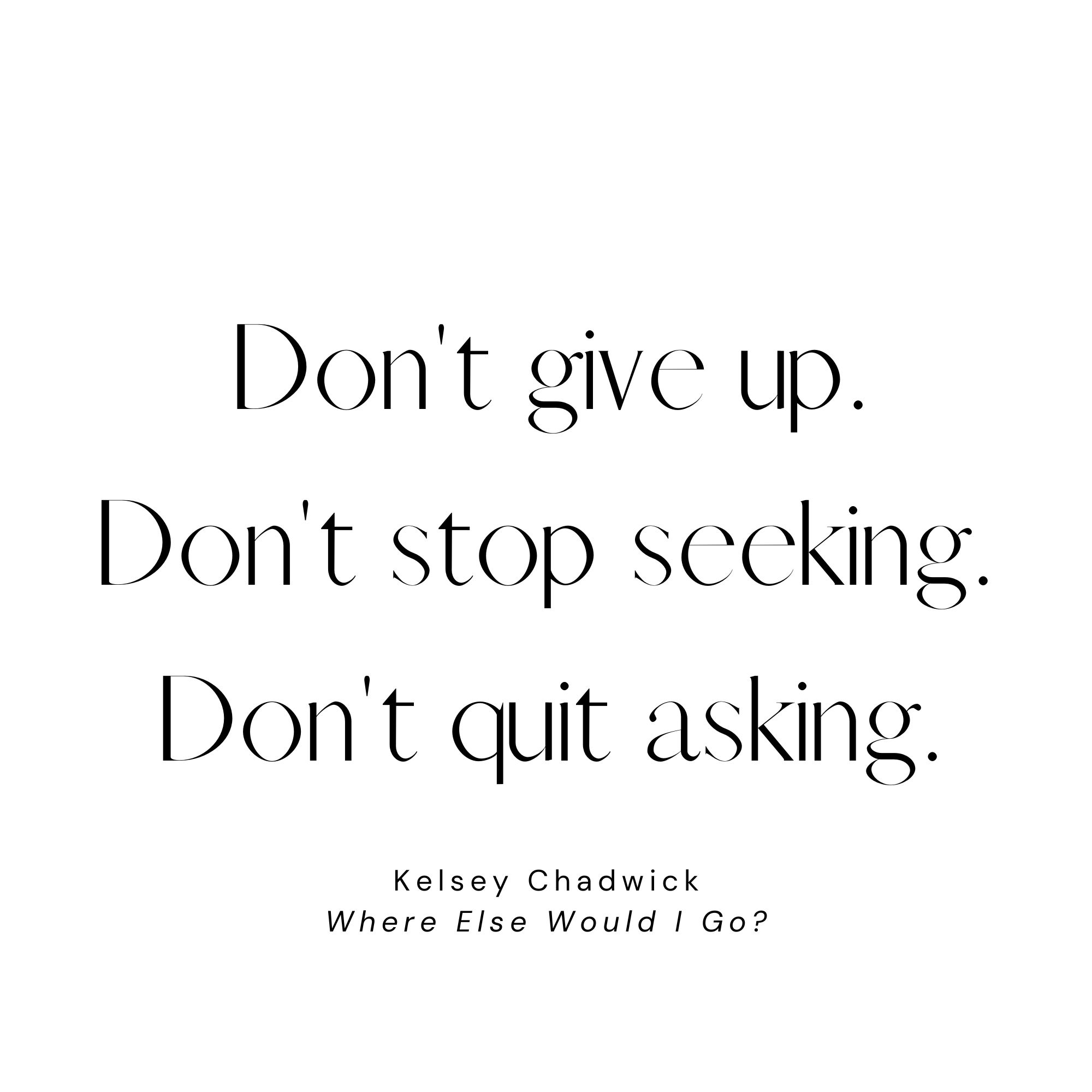
“Don’t give up. Don’t stop seeking. Don’t quit asking. God wants to answer your questions in his way and in his time. But the first step is to agree with him that he is God and we are not.” — Page 34
“Rest assured, God knows your doubts. You don’t have to ignore them, set them aside, or pretend they don’t exist. But you do have to bring them to the only one who truly has the answers if you want to have lasting peace. The act of simply giving your questions over to the Lord says to him, ‘I trust you over what I can feel or experience on my own,’ and that is faith he can work with. That is where the road home begins.” — Page 50
“Christ is the author and finisher of a faith that hinged on his own crucifixion to bring about a better plan for you and for me. He knows all about creating beauty from ashes, transforming unimaginable suffering into eternal redemption. Settle on the fact that he alone, both completely devoted to our welfare and totally in control of our circumstances, is the answer to every question that feels so unfair.” — Page 82
“You cannot defeat doubt without the Word. God has given us the gift of himself within the pages of this book. It’s alive. It changes us. We cannot leave it closed and claim he is not speaking.” — Page 94
“We must make every effort to cling to what we believe, even when the flesh begs us to do otherwise. How will we know which way to go? How will we be sure what to believe? Only by remaining connected to the Spirit, who can bring clarity to each and every question in our hearts if we earnestly seek him.” — Page 108
“Like Peter, we ask, ‘Where else could I go?’ If you have truly experienced the Messiah, you know there is only one answer. Like the disciples then, we are disciples now, and we know who has the words of eternal life. We can embrace God even when we are doubting everything. We can trust him to always lead us back home.” — Page 172
How a Mother Holds Grief and Hope at the Same Time
Grief is not a problem Lesa has solved. She was clear about that.
“I live every day with the loss of her,” she said. “Which is very difficult.”
But she also carries something that shapes the way she grieves. Her husband leads an Experiencing God Bible study at their church, and one of its central premises has become a cornerstone for their family: the kingdom of God is eternal, and it begins not at death but the moment you say yes to Christ.
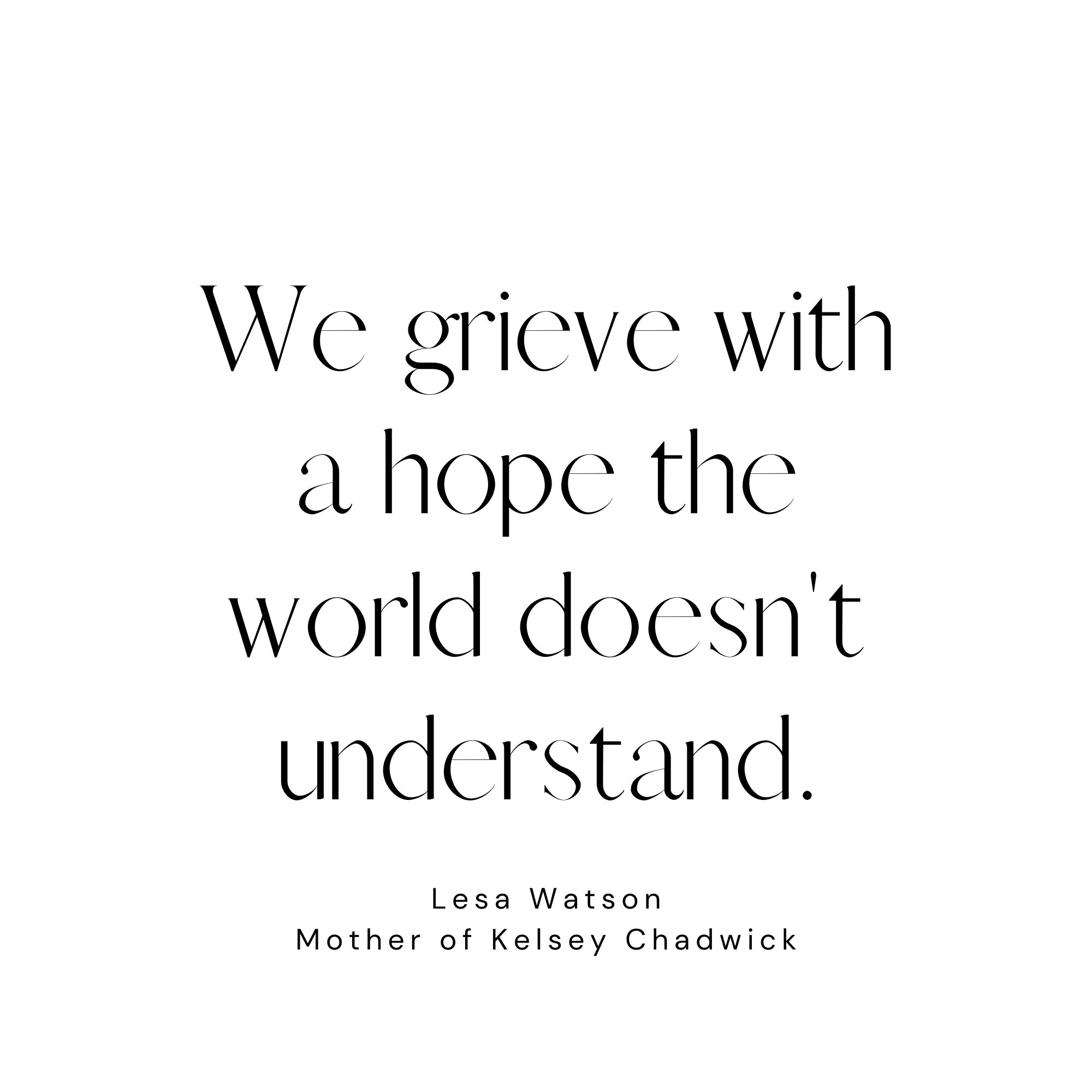
“We grieve,” Lesa said, “as the Bible says, with a hope that the world doesn’t understand.”
She has also leaned on something she built long before the hard days arrived: years of studying the character of God. In the early days of grief, sometimes she would open her Bible and the words just wouldn’t sink in. But she knew who God was. She knew he was faithful, sovereign, holy, good, merciful, full of grace, full of justice. That knowledge held her when specific verses couldn’t reach her.
Romans 8:28 and Psalm 31:14 are verses that deeply comfort Lesa. “My times are in your hands,” and other verses are written out and posted in her home where she will see them in the ordinary moments of every day.
She wants the same for anyone reading this: not a formula, but a foundation. Not easy answers, but a God who is genuinely trustworthy and the deep-rooted knowledge of who he is before the hard season arrives.
A Habit of Hope to Carry This Week
One of the most practical things Lesa shared was her practice of studying the character of God, something she developed long before losing Kelsey and held on to after.
Not a verse to memorize under pressure. Not a prayer in crisis. Just a steady, ordinary habit of returning to who he is.
This week’s Habit of Hope: Spend five minutes writing down three attributes of God’s character. Not a prayer request, not a passage you’re trying to remember, just who he is. Put it somewhere you’ll see it. Let the knowledge of his character be what holds you before the hard day arrives.
Kelsey Wrote This for You
Kelsey wrote this book in the middle of her own unanswered questions. She didn’t wait until she had it all figured out. She brought what she had, her doubt, her faith, her Word, her pen, and she wrote toward the light.
The result is a book that will meet you honestly wherever you are.
Where Else Could I Go? Embracing God When You’re Doubting Everything is available wherever books are sold. [Link to purchase.]
If this story moved you, share it with someone who is carrying quiet questions of their own.
A woman who spent her last year wrestling with doubt used her last breath to tell strangers that Jesus loved them. That is not the faith of someone who lost. That is the faith of someone who had questions and found exactly what she was looking for. She left the map behind for the rest of us.
Her name was Kelsey.
And her hope is still speaking.
Listen to or watch the full conversation with Lesa Watson on the Habits of Hope podcast, Episode 80.
A Summer Announcement
As I listened to Kelsey’s story, I was reminded once again that life is rarely simple. In a single season, we may find ourselves carrying grief and gratitude, sorrow and joy, loss and blessing.
One of the gifts of faith is learning to trust God with all of it—the hard places and the beautiful ones, the prayers we still carry and the blessings we hold in our hands today.
With that in mind, I wanted to share a brief personal update.
Habits of Hope will be taking a short summer break.
We’ve already welcomed one precious grandbaby into our family this week, and another is expected soon. I’ll be spending the next several weeks supporting my daughters and soaking up this special season as Gigi.
Thank you for being part of the Habits of Hope community. While we’re away, I hope you’ll explore the podcast archive, revisit a favorite episode, or catch up on one you’ve missed. At the end of this post you’ll find related content and a list of favorite content from my archives to enjoy.
I’ll stay in touch through email from time to time and look forward to reconnecting with you later this summer.
Until then, may God renew your strength and fill your heart with hope.
Related Content
- Finding Strength in God When You Feel Weak (Isaiah 40:29-31)
- How to Find Hope After Trauma | Jennifer Hand on Faith, Healing, and Survival Mode
- How the Holy Spirit Comforts You in Hard Times (What the Bible Says)
- How to Find God’s Peace that Guards Your Heart (A Study of Philippians 4:7)
- Overcome Doubt with the Decision to Turn to God for Hope (Podcast Episode 4)
Reader/Listener Favorites
- Podcast: How to Ignite Hope by Noticing God’s Faithfulness Every Day
- Podcast: What We’re Doing in Our Quiet Time Right Now: Daily Devotion Tips
- Making Big Decisions with Faith: How to Seek God’s Guidance Daily
- How to Love Others Like Jesus: Actionable Steps for Everyday Life
- How to Hear God’s Voice: Simple Habits to Deepen Your Faith and Restore Your Hope

How to Wait on the Lord and Receive New Strength — Even When Hope Feels Gone
Feeling weary and wondering where strength comes from? Discover what Isaiah 40:29–31 really means and how to wait on the Lord to receive new strength.
Have you ever found yourself in a moment where you don’t have the strength you need?
Not the kind you can push through with determination or fix with a better plan. But the kind where your soul feels tired. Grief lingers, disappoint hangs heavy, or exhaustion stops you in your tracks.
When the next step feels harder than it should, one question rises. Where does strength come from when mine is gone?
That’s not a small question. And it deserves more than a small answer.

God’s Promise Was Written for Weary People
Isaiah 40 was written to people who had been through years of hardship, uncertainty, and long seasons of waiting. God didn’t offer a checklist or a correction. He offered a promise:
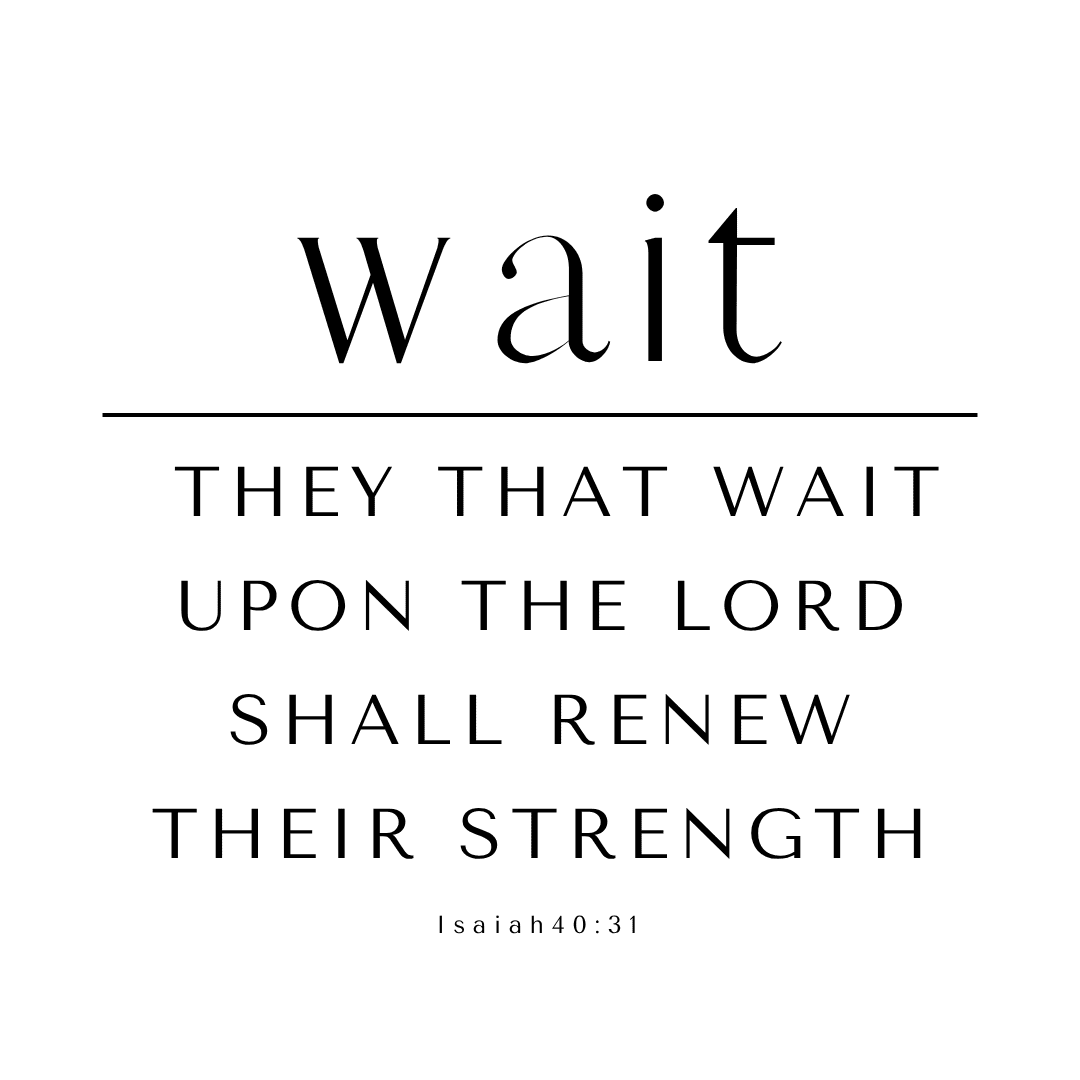
“He gives strength to the weary and increases the power of the weak. Even youths grow tired and weary, and young men stumble and fall; but those who wait on the Lord will renew their strength. They will soar on wings like eagles; they will run and not grow weary, they will walk and not be faint.” — Isaiah 40:29–31
Notice who this promise is for. Not the strong. Not the self-sufficient. Not the ones who have already figured it out. It’s for the ones who know they don’t have what it takes. The ones who are struggling.
Which means this promise isn’t for when you have it all together.
It’s for exactly the moments when you don’t.
What Does It Really Mean to Wait on the Lord?
This is where everything in the passage turns and where we often get it wrong.
Waiting doesn’t mean doing nothing. In the original Hebrew, the word for wait carries the meaning to hope, to expect, to look for, to eagerly anticipate — even to bind yourself to something.
We’re all waiting for something. We wait for answers, healing, direction, relief, restoration. The question isn’t, are you waiting? The real question is what are you attaching your hope to while you wait?
Waiting whispers, I don’t have the answer.
Hope declares, but I trust the One who does.
Waiting complains, this is taking longer than I want.
Hope remembers, God is still at work in ways I can’t see.
Waiting groans, I’m too weak for this.
Hope believes, God promises strength to the weak.
When we separate waiting from hope, waiting feels empty.
We don’t like being in the waiting rooms of life. We want progress now and yesterday would be even better. When waiting is rooted in hope, it becomes a place of expectation.
Jackie Banas-Shank called hope the habit of permanent expectancy. This reminds me to trust God, rather than trying to fix and solve my way through challenges.
When we wait with this kind of hope, we’re not asking if God will answer. We’re asking when.
This is a very different kind of waiting.
Strength Is Renewed, Not Manufactured
Our culture convinces us we should be able to make ourselves strong.
We know how physical strength works — you put in the reps, you train the muscle, you build capacity over time. But Isaiah isn’t talking about that kind of strength.
The word renew here carries the idea of putting on fresh strength again and again. It is not about pulling yourself up by the bootstraps but receiving something new from God.
Fresh strength. Strength that doesn’t originate in you but is a provision of God.
Larissa came to this conversation carrying fresh grief. Just days earlier she had said goodbye to her faithful dog — the companion who had been with her through her hardest seasons, including the years since losing her husband.
And what she said hit home: “Not every season is soaring. Sometimes strength looks like running forward with endurance. And sometimes strength simply looks like walking one step at a time and not giving up. That’s kind of where I’m at.”
Not every season is an eagle moment of soaring.
Sometimes faithfulness looks like walking and not giving up. And that, Isaiah says, is what renewed strength looks like too. God meets us in the walking and in the soaring.
Why We Miss the Strength God Is Offering
If God promises strength to those who wait on Him, why do we so often still feel depleted?
It’s not because He is withholding or reneging on His promise. More often, it’s we’ve turned our attention to other things. Here are the places I see this happen — and I recognize every single one of them in my own life.
- We rush ahead instead of wait. We want relief now, clarity before the next step. Instead of waiting on God, we move ahead of Him fixing, figuring out, forcing what only He can provide. Before long we’re exhausted. Not because we’ve done too little, but because we’ve been carrying what was never ours to carry.
- We strive instead of trust. This one is subtle. Striving can look like planning, preparing, staying ahead of every possible problem. The anxious heart tries to live in tomorrow instead of today. We want a plan for every outcome, to think of everything that could go wrong. This is a form of striving that drains us. Then we wonder why we’re so tired when we’ve been working so hard.
- We disconnect instead of draw near. When we’re tired, grieving, or discouraged, the natural impulse isn’t always to move toward God. Sometimes we withdraw. We numb out. We binge something. We distract ourselves until the feeling passes. Intimacy with God comes when we bring it all to Him, not when we bring our best self to Him. He can handle the whole mess of us.
- We resist surrender. Waiting on God requires letting go of our timelines, our expectations, our it must be this way thoughts. It means releasing our need to understand, as well as our desire to control the outcome.
- We lose sight of hope while we wait. We’re still waiting, but we’ve stopped hoping. Nothing is ever going to change. This will always feel this way. God must not be working. Our waiting becomes empty rather than expectant. And an empty wait is exhausting in a way that an expectant wait never is.
The problem isn’t that God isn’t giving strength. It’s that we’re often looking somewhere else for it. We think things like, if I just try harder, if I stay strong, if I hold it all together, I’ll get through.
But scripture is clear here. God gives strength to the weak. If we’re determined to be self-sufficient, we might just miss the strength that he is offering. But the moment we turn back to Him; we begin to receive what He’s been offering all along.
How to Receive God’s Strength
Picture this. Your hands are full. Someone offers you a gift. You can’t receive it. Not easily. Not without setting something down first.
But if you set it down and open your hands — then you’re ready. Your hands are empty, open, and ready to receive what’s being offered.
Waiting on God often looks like that. Setting something down. Opening your hands. Releasing the has to be this way so your hands are free to receive what He’s giving.
So much of what we pray about, the Lord does answer. But sometimes He waits on us to loosen our grip first.
Open hands receive what clenched fists cannot.
What Waiting on the Lord Actually Looks Like in Real Life
Waiting on the Lord isn’t one single action. It’s a posture, a mindset, a way of thinking and believing and trusting that we return. Here are some of the shapes it takes in real life. As you read, notice which one meets you where you are today.
Waiting can look like prayer. Sometimes a full sentence, sometimes a whisper, sometimes just a groan your soul offers when words won’t come. God, I need Your strength. I need what only You can provide. Waiting begins when we turn toward Him.
Waiting can look like a posture. Bowing your head. Sitting still for a moment. Opening your hands. These small physical and spiritual postures help refocus our attention on God.
Waiting can look like letting go. Releasing an expectation. Setting down a timeline. Choosing to trust Him with the outcome instead of carrying it yourself. Releasing the need to have everything figured out, gives God the space to work in ways you can’t yet see. This is where waiting is hardest — and where it does its deepest work.
Waiting can look like simple willingness. Waiting can look like simple willingness. Not dramatic. Not heroic. Just a quiet yes. Yes, to waiting longer than feels fair. Yes, to a different answer than you hoped for. Yes, to something new. Yes, to trusting God even when you don’t understand. Sometimes that simple willingness is the most faithful thing we can offer.
Waiting can look like activity. Showing up. Staying faithful. Doing the next right thing, and then the next. Active waiting is still waiting. The everyday faithfulness of small things — that’s not the absence of strength. That’s strength at work.
None of these require that you feel strong first. They simply position your heart to receive strength from the Lord. And that is exactly what makes this a habit of hope.
This Week’s Habit of Hope
Choose one simple way to turn toward God today and trust Him to renew your strength, one step at a time.
It might be a quiet prayer when you feel overwhelmed. A moment of stillness before you reach for your phone. Releasing one expectation you’ve been holding too tightly. Choosing to trust God with something you don’t understand. Simply doing the next right thing in front of you.
Not all six. Just one. And then tomorrow, one more.
For the Weary and the Waiting
Friend, if you are in a season where your strength feels low and your hope feels thin, I want you to hear this.
God is not asking you to be strong enough for what you’re facing. He is asking something simpler. And harder. Trust Him to give what you need.
Not strength for the whole road, but strength for the next step.
Whether you’re soaring right now, running hard, or just barely walking — you are not alone. God is with you, and He is your strength.
Stay close to the One who gives strength to the weary. Return to Him again and again — in the soaring seasons and the walking ones, in the wrestling and the waiting. One small step, one quiet decision of faith at a time. Because hope is always our best habit.
https://youtu.be/SMtLtZZonDY
FAQ About How to Wait on the Lord
What does it mean to wait on the Lord? Waiting on the Lord is not passive delay. In the original Hebrew, the word for wait carries the meaning to hope, to expect, to eagerly anticipate, even to bind yourself to something. It is active, anchored hope — choosing to trust God’s faithfulness while you are still in the middle of not knowing.
What does Isaiah 40:29-31 mean? Isaiah 40:29-31 is a promise written to weary people — not the strong or self-sufficient, but those who know they don’t have what it takes. The progression in the passage — soar, run, walk — reminds us that renewed strength doesn’t always look like an eagle moment. Sometimes it looks like walking one faithful step at a time. God meets us there too.
How do I find strength in God when I feel weak? Start by turning toward God rather than away from Him. Waiting can look like prayer, letting go of what you’re gripping too tightly, simple willingness, or doing the next right thing in front of you. None of these require that you feel strong first. They simply position your heart to receive what God has already promised to give.
What is the difference between waiting and hoping in the Bible? In Hebrew, the words are deeply connected. Waiting without hope feels empty and frustrating. But waiting rooted in hope becomes a posture of expectation — we stop asking if God will show up and start trusting when. Hope is what transforms waiting from something we endure into the place where strength begins to grow.
This post is based on Episode 79 of the Habits of Hope Podcast. Listen to the full conversation with Ginger Harrington and Larissa Traquair — including Larissa’s moving reflection on grief, loss, and what it looks like to wait on God in real time.
Author Bio
Ginger Harrington is the host of the Habits of Hope Podcast and author of Holy in the Moment. Through biblical encouragement and practical spiritual rhythms, she helps women cultivate deeper faith and resilient hope for everyday life
Related Content
- Why Small Habits Matter More than You Think (Faithfulness in Everyday Life)
- How to Stand on the Armor of God Right Now
- Armor of God Prayer (Free Printable and Daily Prayer Guide)
- Hope Beneath the Rubble:Finding Healing After Trauma with Jenn Hand
- What to Do When You Long for God to Speak to You
- Can Waiting for God Be a Good Thing?
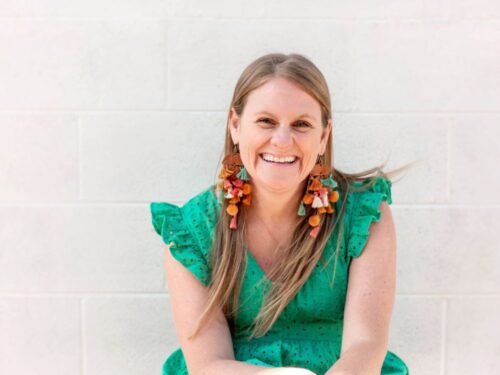
Hope Beneath the Rubble: Finding Healing After Trauma with Jenn Hand
Delightfully joyful, Jennifer Hand loves coffee, play, and all things fun. She is the last person you might expect to find weeping in an earthquake zone. And yet.
She was on her knees in a village that no longer looked like a village.
Jenn had lived there before — had walked the streets in Nepal. She knew these people. Now there was only rubble where homes had stood.
A crowd of hurting people gathered, desperate for hope. Undone by what she saw, she knelt in the wreckage of what had been a church, weeping: Lord, where is the hope here?
And then she saw it.
Bent. Broken. Half-buried.
A cross from the top of that church, lying among the debris.
The Lord’s answer came quietly but with clarity that gave strength: There is always hope beneath any rubble — and that hope is the cross.
That moment in Nepal didn’t just shape a book title that Jenn would later write. It birthed a mission, a message, and a way of walking with people in their worst moments. God has sent Jennifer Hand to 58 countries and disaster zones around the world.
Jenn opened and closed our conversation with Psalm 139: I am fearfully and wonderfully made. It’s the scripture she returns to again and again, the reminder that God has numbered our days, knows us entirely, and has not been surprised by a single thing we have walked through.
The hope in this truth keeps her grounded.
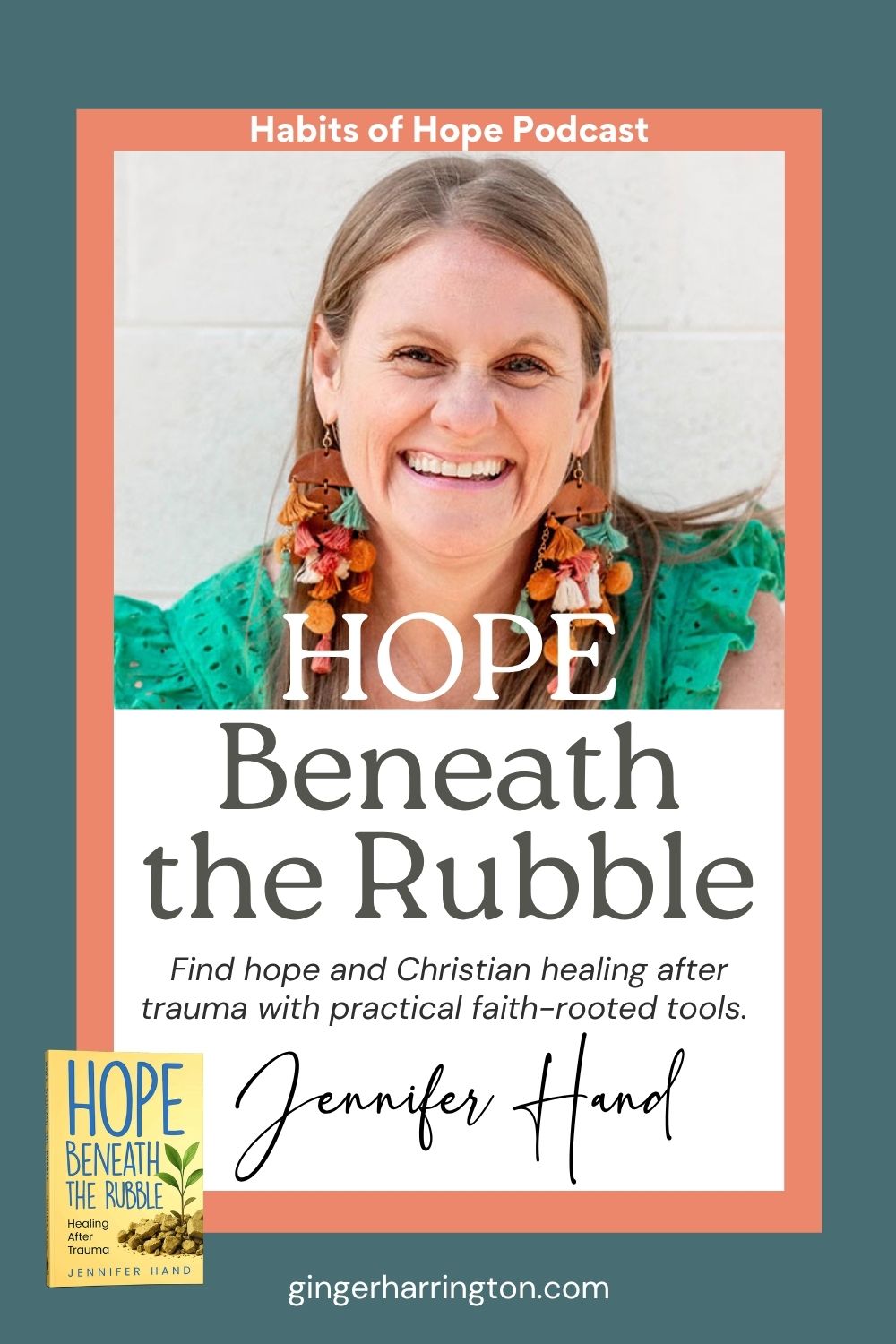
When You Need Christian Healing After Trauma
Most of us will never stand in the literal rubble of an earthquake. But many of us have stood in something that changes our world — a diagnosis, a betrayal, a sudden loss, a season that rearranged everything we thought was solid.
Jennifer has spent years walking into holy grounds of suffering, as she calls them. She went to Nepal as a missionary, felt God calling her unexpectedly into a master’s degree in counseling, and then watched as a massive earthquake struck the country she loved. She spoke Nepalese. She went to help.
“When you’re in trauma,” she told us, “you feel alone. You feel isolated. You feel like you’re asking, will I ever be normal again?”
That question — will I ever be normal again? — is the one she hears most consistently, whether she’s sitting with a survivor in a third-world disaster zone or talking with a woman in a comfortable American church who has never told anyone how stuck she actually feels.
The geography and the situation may change, but the question doesn’t.
Why Can’t I Just Move On? Hope After Trauma
If you’ve ever wondered why you can’t simply release trauma and get back to normal, you will be encouraged by this conversation.
When your body still braces, still reacts, still carries what your mind has tried to let go, it’s important to understand that your body isn’t broken. It’s doing exactly what God designed it to do.
Jennifer explains that trauma doesn’t just affect your thoughts. It takes up residence in your body. When we sense danger of any kind — physical, emotional, or relational — our nervous system shifts from what she calls the thinking brain into pure survival mode.
The body does what it needs to do to survive. And it does that through one of four automatic responses: fight, flight, freeze, or fawn.
Here’s the plain-language version:
- fight means you move toward the threat aggressively
- flight means you run from it
- freeze means you go completely still, unable to move
- fawn means you appease, people-please, or accommodate whoever feels threatening in order to stay safe
Four very different responses, all wired into us for survival. What we don’t always realize is how physiologically real these responses are. They can quietly run our lives long after the original threat has passed.
Jennifer describes it this way: imagine the pickup line at an elementary school. It is chaotic with every car for itself. A traffic cop stands in the middle trying to direct the flow. When trauma hits, your brain’s internal traffic cop goes into override. Your thinking brain steps back and the survival brain floods your body with one signal: survive, survive, survive. Your heart races if you’re a fighter. You go completely still if you’re a freezer. You feel, as Jenn puts it, like your legs are blocks of cement.
“Those are supposed to be our survival moments,” she said, “but not our thrive-in-life-all-the-time moments.”
Jenn reminded us that the number one thing a person needs reestablished after trauma is a sense of safety. Whether it’s physical safety, emotional safety, or relational safety, the ground beneath you has shifted, and nothing feels steady.
Scripture speaks directly into this need. Psalm 121 — from where does my help come? — and Psalm 91 — under the shadow of His wings, I can rest — are passages she returns to again and again.
“The reminder that we can rest under the shadow of the Almighty wings, His power, His protection,” she said, “I often have to go back to that again and again.”
The problem comes when the response gets stuck. When you’re still living in fight mode years after the original danger has passed. When a small thing triggers a large reaction and you don’t know why. When you’ve told yourself that’s just how I am for so long that you’ve stopped asking whether it has to be.
Jennifer encourages people to start noticing when a small thing creates a big response. “Pay attention to that,” she said. “It usually means you’ve been triggered, and you’ve gone into fight, flight, freeze, or fawn.” She knows this pattern intimately. She’s a freezer herself — calm and capable in a crisis, and only later, once things settle, does she feel the weight of what she just walked through.
I recognized this in my own story. Many of us have learned to ignore our triggers and keep marching forward. We often believe “that’s just how I am” and keep going. It gets us through life. But it doesn’t make us healthy emotionally, spiritually, or relationally.
Why trauma gets stuck — and what to do about it: Trauma triggers automatic survival responses in the nervous system — fight, flight, freeze, or fawn — that are meant to protect us in dangerous moments, not define us permanently. When those responses get stuck, the body keeps living in survival mode long after the original threat has passed. Recognizing this pattern, without shame, is where healing begins.
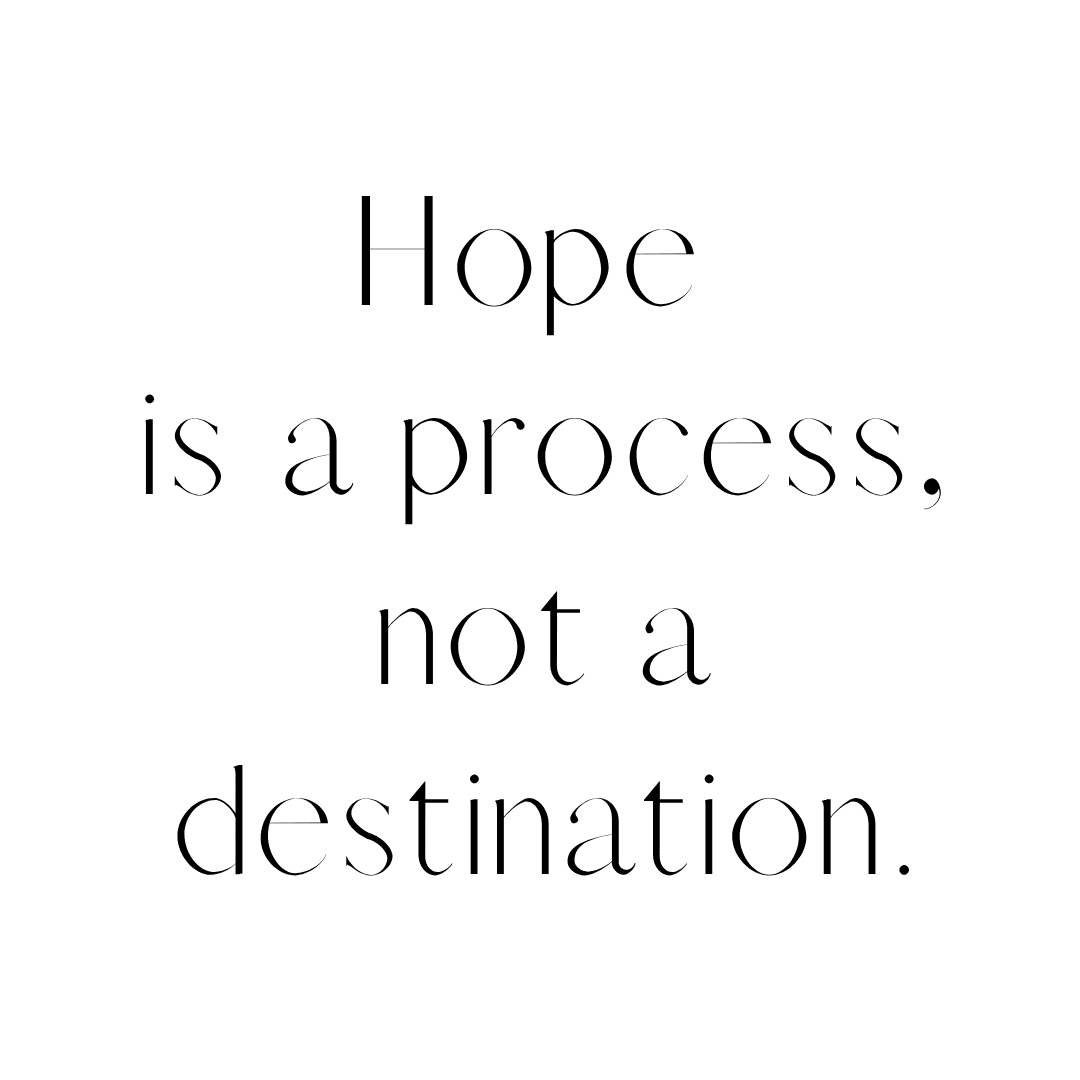
Hope Is a Process, Not a Destination
Here is where Jennifer Hand gently disrupts the way most of us think about hope.
We want hope to be a switch we can flip and have it stay on. We want the stages of grief and healing to be linear. We prefer to check the boxes, to be done.
Wouldn’t that be something, Jennifer said, laughing quietly. “Linear. That’s hard to even say.”
“Hope is a process,” she told Larissa. “Just like grief.”
Sometimes the hope you have for today is something basic and small like taking the next breath. Even when that is the bit of hope available in this moment, it counts.
This matters enormously if you have gone through a season of trauma and felt the absence of hope like a physical weight.
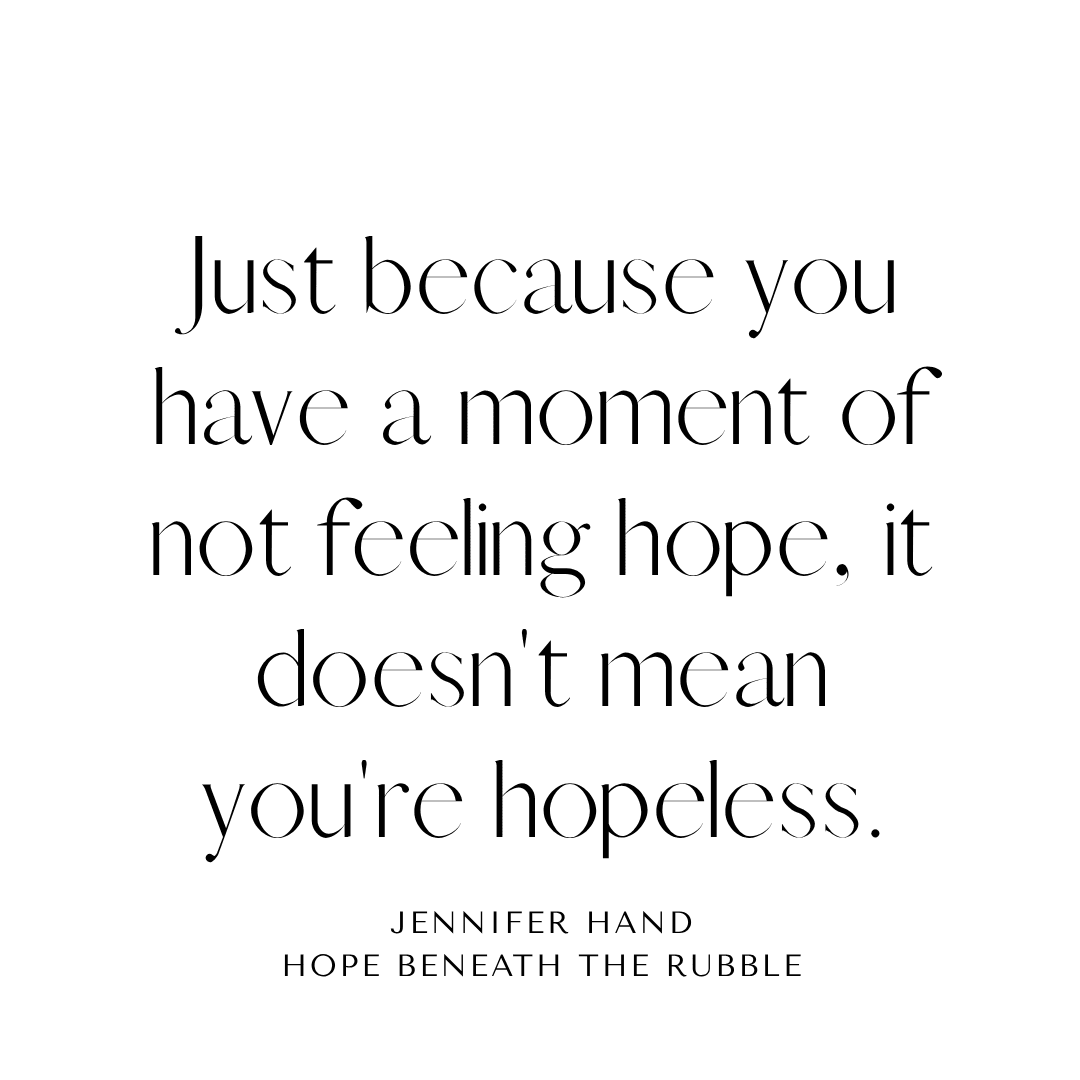
Just because hope feels gone doesn’t mean it is gone.
It means it’s buried. Uncovering even the tiniest fragment — is where healing begins.
Larissa knew this firsthand. She has spent time in therapy following her husband’s death. Grief opened layers of trauma she hadn’t known were there. “It’s been painful,” she said quietly, “but also so healing.” This isn’t theoretical for anyone in the room.
When You’re Triggered: Practical Tools That Actually Help
Most of us don’t need more information about trauma. What we need is something we can actually do in the middle of a hard moment to heal and restore faith after trauma. We need something accessible, something free, something that works even when we have nothing left.
This is why Jennifer Hand wrote Hope Beneath the Rubble.
She has sat with people who have no access to therapy, no money for resources, no time for complicated routines. Here are some of what she shared with our listeners — things you can use today, right now, wherever you are:
1. Ground yourself in the present. When a trauma response is triggered, your brain gets pulled out of the present moment. One of the most effective ways to bring it back is through your senses. Jennifer walks through what she calls the 5-4-3-2-1 technique: five things you can see, four things you can touch, three things you can hear, two things you can smell, one thing you can taste. The practice is simpler than it sounds — you pause, look around, and notice and name each one. The act of naming pulls your brain back to the present moment and begins to lower the flood of stress hormones.
2. Breathe. It is free and you can do it anywhere. Square breathing signals to your nervous system that you are safe. Simply inhale for a count of four, hold for four, exhale for four. “It gets you out of fight-flight mode,” Jennifer said, “where you’re really not using your thinking brain.”
3. Move your body. Walking, specifically, does something powerful for a traumatized nervous system because of what Jennifer calls bilateral movement. The movement of left-right, left-right helps trauma stop getting stuck in the body. She explained, “Trauma often gets stuck in your body, and movement is one of the ways out.”
4. Taste something strong. Jennifer mentioned eating sour candy as a grounding technique, and Larissa claimed it immediately as her personal favorite. The strong sensation pulls you into the present moment when a flashback or triggered response has pulled you out of it. The physical sensation interrupts the loop.
5. Ask yourself what makes you come alive. This one Jennifer said isn’t even in the book. She offered it as a gift to our listeners specifically. In her counseling practice, before she ever asks a client about their trauma, she starts with this question. When someone is so exhausted that even breathing feels like too big a step, what they need isn’t a task. They need a spark.
“Life is here,” she said simply. “And that spark — whatever it is, even buying a new coffee mug — will begin to give you that.”
Can Scripture Hurt as Well as Heal?
Before we leave the practical tools, there’s something Jenn said that I don’t want to rush past. She is careful about how scripture is used with people in acute suffering. She said something I think many of us in the church need to hear.
She told a story about being in Nepal, riding on the back of a motorcycle. When a wreck left her with a gaping wound on her knee, her instinct was to put a bandaid on it. She didn’t want to bear the pain of cleaning the wound.
The wound, in her telling, is the unprocessed pain of grief, fear, anger, and confusion that trauma brings. The bandaid is the scripture quoted too quickly, before the person has been given space to acknowledge what they’re actually carrying. “And sometimes we can do that with scripture,” she said. “We don’t want to acknowledge and wrestle with the depths of what’s underneath — so we just quote Romans 8:28 and move on.”
Romans 8:28 — He will work all things together for good — is truth. She was clear about that. But it can also feel like “a weapon” for someone who doesn’t feel that yet. Someone in the middle of the wreckage doesn’t always need the promise of future good.
They need to know they’re not alone right now.
Instead, Jennifer shares another part of Romans 8: Nothing can separate you from the love of God in Christ Jesus. Not life, not death, not the present, not things to come. Nothing. “That is a key reminder,” she said, “that nothing will separate you from His love. Not your trauma. Not your survival mode. Not the feelings you’re afraid to name.”
She continued the illustration, “The streets of Nepal are dirty. If I hadn’t cleaned that wound out, infection would have come — and eventually it would have shown itself.”
Unprocessed trauma works the same way. The goal is never to avoid the hard thing. The goal is to clean the wound well enough that healing can actually happen.
How to use scripture with someone in trauma: Not every scripture fits every moment. Rushing to Romans 8:28 — He will work all things together for good — before someone has had space to grieve can feel dismissive rather than comforting. Jennifer Hand suggests reaching first for the scriptures that offer presence rather than resolution: Nothing can separate you from the love of God.
Does Caregiving Count as Trauma?
If you are caring for someone right now — or if you have, and you’re still carrying the weight of it — this is the section I most want you to read. Not because caregiving is the same as surviving an earthquake. But because Jennifer Hand says it can be just as traumatic.
I know this firsthand. I cared for my sister through her battle with ALS. I have dear friends in caretaking situations right now — including the particularly hard ones. Sometimes the person being cared for is not easy, not appreciative, not kind. That layer of hard deserves its own conversation.
Jennifer answered from the inside that experience. She walked through a caregiving season recently that was, in her words, horrific. She carries it. She also carries the faces of everyone she’s ever served in that role, and she wanted to speak directly to them.
She talked about Hagar (Genesis 16 and 21). The story of how God responded to a woman cast into the wilderness, alone, trying to care for a child with no idea what to do next. “God shows up as the God who sees,” Jenn said.
That’s the first thing you need to know if you’re a caregiver. You are not invisible. The behind-the-scenes work, the invisible labor, the exhaustion nobody thinks to ask about — God sees it. You are not forgotten.
“Shame is too heavy of a weight to carry while carrying someone else.”
The feelings that come with caregiving can range from heartbreak, anger, resentment, guilt, and overwhelm. Feelings are not evidence that something is wrong with you. They show that you are human and you are carrying something heavy.
“Take your feelings to God first”, Jennifer urged. “Then find one safe person and say, without asking for answers or platitudes or fix-it solutions: ‘I need someone to hold this with me.’ Sometimes what you really need,” she said, “is someone to just hold your suffering with you.”
How to Hold Someone’s Suffering Without Carrying It Yourself
If you love someone who is hurting — a friend, a family member, someone in your ministry or small group — you know this feeling. You sit with their pain, you listen, you pray. And then you carry it home with you. It settles into your chest and stays there.
You are not meant to carry what you receive. You are meant to be a conduit.
Jenn is intentional about this in her own life. When she returns from disaster zones where she has seen the worst of human suffering, she has a plan, a personal list of what brings her back to herself.
These are simple things that help her release and reset. Top of her list is journaling. She calls this praying with a pen in her hand. She also makes time for items on her own “coming alive” list. These are the things that remind her life is here, in this moment, in her specific body.
“Have a plan,” she said. “Very specifically, when you know you’re in the middle of walking with a friend through a tough time, know what you’re going to do to release.”
She also offered something unexpected at the close of the conversation, speaking to the listeners who are more visual, more creative, more alive when they have something to make with their hands. Coloring. Vision boards. Painting a scene that feels safe. Building a grounding box filled with things that calm you. “God can heal parts of your brain as you color and meditate and pray,” she said. The body and the spirit are not separate projects.
The Cross in the Rubble
We began here, and we have to end here, because everything Jennifer Hand teaches flows from that moment on her knees in Nepal.
The hope she is pointing toward is not a feeling to be manufactured or a process to complete or a destination to arrive at. It is something that was placed beneath the rubble long before we started digging. It is a cross. It is a God who sees, who knows, who loves, who has not forgotten. It is Emmanuel — with us — which is the name of God Jennifer returns to again and again when she walks into suffering, because it is the truest thing she knows to say.
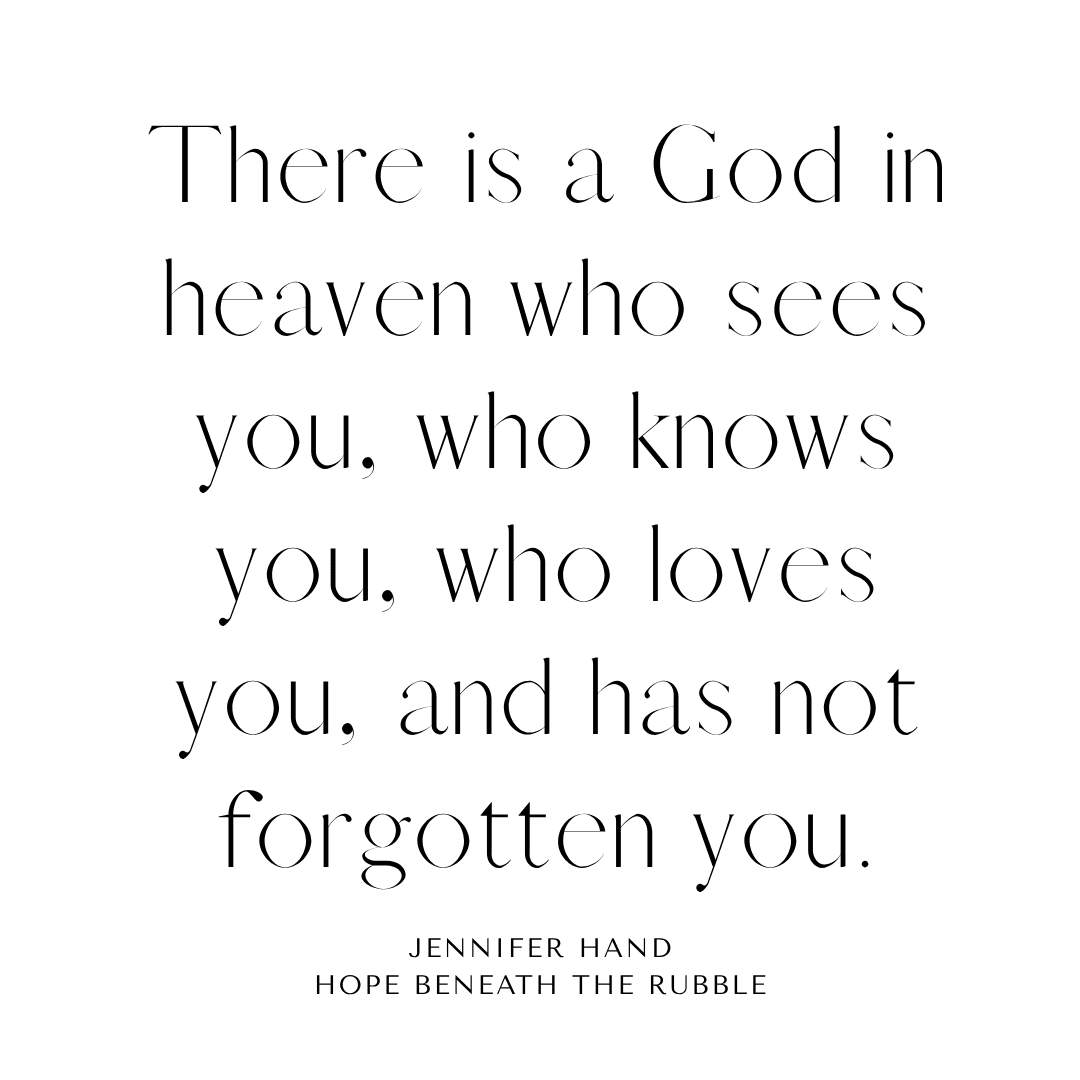
“There is a God in heaven who sees you,” she said quietly, in the voice she uses when she’s standing on holy ground. “Who knows you. Who loves you. And has not forgotten you.”
Just because you don’t feel hope doesn’t mean you are hopeless. It means hope is buried. And one gentle step at a time, it can be uncovered again.
If this conversation has spoken to you, I hope you’ll listen to the full episode — and consider sharing it with someone who might need these words today.
Your Habit of Hope This Week
Choose one small thing this week — just one — that makes you come alive. It can be as simple as a cup of good coffee, a walk outside, or cutting pictures out of a magazine. Let that one thing be enough. Life is here.
Connect with Jennifer Hand: Find her book, Hope Beneath the Rubble: Healing After Trauma, linked in the show notes. Don’t miss the QR code inside the back cover — it unlocks free video teachings and companion resources developed to walk alongside the book’s practical tools.
Questions Our Listeners Are Asking
What is trauma, and how do I know if I’ve experienced it? One way to think about it: trauma is any experience in which you felt unsafe — physically, emotionally, or relationally. Jennifer Hand explains that trauma isn’t defined by the size of the event, but by the impact it had on your nervous system. She encourages people to start by noticing: do small things create big reactions in you? That noticing, without shame, is a place to begin.
What are fight, flight, freeze, and fawn responses? These are your body’s automatic survival responses to danger or perceived threat. Fight means you move toward the threat aggressively. Flight means you move away from it. Freeze means you become immobilized — like cement blocks around your feet. Fawn means you try to appease or people-please to avoid conflict. Jennifer Hand explains how the nervous system can get stuck in one of these modes long after the original danger has passed — and how to recognize when that’s happening in you.
What are some practical grounding tools for trauma and anxiety? Jennifer shares several in this episode: the 5-4-3-2-1 sensory grounding technique (pause and name five things you see, four you can touch, three you hear, two you smell, one you taste), square breathing (inhale, hold, and exhale for equal counts), walking for bilateral movement, and even sour candy or holding something warm to bring yourself back to the present moment. Most of these are free and can be done without anyone around you knowing.
Can faith and trauma healing work together? Yes — and this conversation explores exactly how. Jennifer integrates trauma-informed counseling with deep Christian faith, but she’s careful to distinguish between scripture that steadies people and platitudes that can actually hurt. Her framework: God is big enough for all your emotions, including the ones that feel dangerous to name. Healing sometimes requires wrestling with God, not just quoting Him.
What does it mean that hope is a process? Jennifer Hand is clear that hope is not a switch you flip on and leave on. Like grief, it’s nonlinear — it moves forward and backward, and some days the only hope available is a single steady breath. Just because you don’t feel hope doesn’t mean you are hopeless. It means hope is buried. And uncovering it, one small step at a time, is what healing actually looks like.
Does caregiving cause trauma? Yes. Vicarious trauma — the impact of walking alongside someone else’s suffering — is real and can be just as profound as direct trauma. Jennifer Hand specifically addresses caregivers, noting that the shame and invisible nature of their burden makes it even harder to process. Her word to caregivers: you are seen, you are not forgotten, and shame is too heavy a weight to carry while carrying someone else.
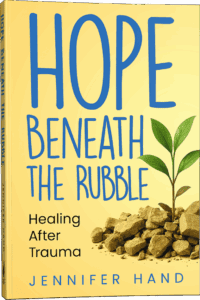
What is Jennifer Hand’s book about? Hope Beneath the Rubble: Healing After Trauma is a practical, faith-rooted guide for anyone who has experienced trauma, grief, or overwhelming loss. It includes journaling prompts in every chapter and a QR code that unlocks free companion video resources. Jennifer wrote it because she kept seeing the same faces — from earthquake survivors in Nepal to Sunday school classes in Tennessee — asking the same question: will I ever feel normal again?
Meet Our Guest
Jennifer Hand is the founder Coming Alive Ministries and loves the honor of traveling nationally and internationally, providing the invitation to come alive in Christ through conferences, retreats, written resources and counseling.
Jenn has had the joy of serving in over 54 countries and speaking at around 40 events a year. With her Master’s degree in trauma counseling, God has opened a unique door for Jenn to respond after natural disasters around the world, providing trauma counseling and the hope of Christ on the holy ground of suffering.
Jenn is the author of 5 books, including My Yes is on the Table, published by Moody Publishers. Her most recent book is Hope Beneath the Rubble: Healing After Trauma.
This post contains affiliate links. As an Amazon Associate I earn from qualifying purchases.
Resources Mentioned in this Episode
Hope Beneath the Rubble: Healing After Trauma by Jennifer Hand
Holy in the Moment: Simple Ways to Love God by Ginger Harrington
Related Content
Each link features the article, podcast, and video of the content.
- How to Scripture Journal (Episode 69)
- How Gratitude Can Anchor Your Heart in Grief and Trauma. Interview with Christian counselor, Heather Shealy-Mawhirter, LPC (Episode 61)
- How Rest and Solitude Restore Your Soul After Grief and Loss
- How to Find God’s Peace that Guards Your Heart | A Study of Philippians 4:7 (Episode 56)
- Finding Peace with Becky Keife | A Verse a Day for the Anxious Soul (Episode 58)