Struggling to find friendship when you feel lonely? Discover biblical encouragement and practical steps for making friends as an adult.
Have you ever tried to find friendship when you feel lonely—and wondered why it still feels so hard?
Surrounded by people, you still feel disconnected, unsure where you belong, or hesitant to reach out again. If you’ve wrestled with how to deal with loneliness as a Christian, you’re not alone. Many women struggle with loneliness and finding friends, especially in seasons of transition, loss, or change.
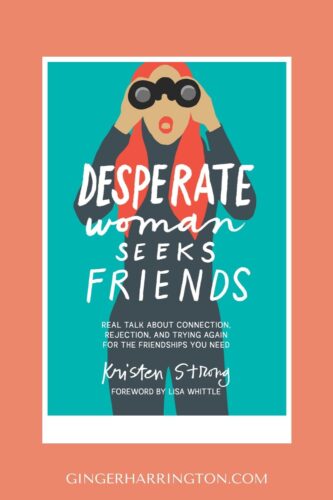
In this conversation, we’re talking with Kristen Strong, author of Desperate Woman Seeks Friends. Join us for an honest look at loneliness, belonging, and what it looks like to build meaningful connection in real life.
Why Is It So Hard to Find Friendship When You Feel Lonely?
Before we go deeper into this conversation, it’s worth naming something many of us experience: loneliness is far more common than we realize—and it’s exactly why this conversation matters so much.
Kristen, what prompted you to write Desperate Woman Seeks Friends?
Kristen Strong:
Honestly, friendship is something I’ve been fascinated with since I first started writing. My very first paid article was on friendship, and it’s always stayed with me.
But this book came from a deeper place. For much of my life, I didn’t feel like I had “my people” in a consistent way—especially locally. Whenever I wrote about friendship, people responded. They were wrestling with it too.
At the same time, research was confirming what many of us already felt—that we’re living in a loneliness epidemic. It really felt like the book I was always supposed to write—it just wasn’t the right time until now.
How Do You Deal with Loneliness as a Christian?
Before we talk about friendship on the outside, we need to look at what’s happening on the inside—because how we understand loneliness and the role our faith plays in it shapes how we respond.
Q: How has your faith shaped the way you think about loneliness and belonging?
Kristen Strong:
My faith has been everything in this. The Lord has taught me that loneliness itself isn’t always a bad thing.
Isolation for long periods isn’t healthy—but seasons of loneliness are part of life. Instead of being afraid of them, I’ve learned to become curious. What is God trying to teach me here?
There was a season when I couldn’t seem to make friends no matter how hard I tried. I even joked that I should stand in my yard holding a sign that said, “Desperate Woman Seeks Friends.”
During that time, the Lord showed me something I didn’t expect. I realized He removed the distraction of friendships so I could go deeper with Him.
And that changed everything.
Because even when friends weren’t there—Jesus was. He is the friend who never fails.
“Sometimes loneliness isn’t just something to fix—it’s a place where God is inviting us to a deeper connection with Him.”
Are We Expecting Too Much from Friendship?
As we move into the realities of friendship, this next part of the conversation brings gentle clarity to something many of us feel, but don’t always recognize. Sometimes the struggle isn’t just finding friends. It’s what we’re expecting those friendships to carry.
Q: Sometimes we depend on friendships for things the Lord wants us to depend on Him for. Can you speak to that?
Kristen Strong:
That’s been absolutely true in my life. I’m a doer, and I like to fix things. For a long time, I looked to friendships to fill emotional gaps that really needed to be filled by God.
I’d finally make one friend—and then expect her to be everything. That’s a lot of pressure for one person, whether we realize it or not.
Over time, I began to see what was happening. I skipped over God, depending on friends to meet my needs. While God works through friendships, He was teaching me to come to Him first.
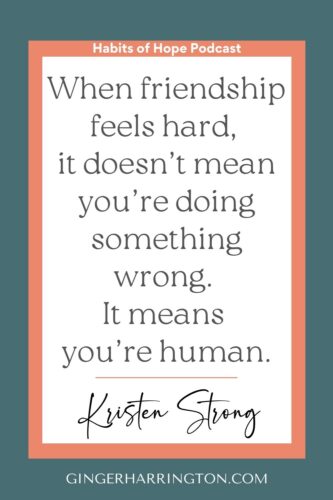
And I want to say this clearly, because it matters: if friendship feels hard, it doesn’t mean you’re doing something wrong. It’s hard simply because it’s hard.
God uses friendships in our lives—but He also wants to be our first place of connection, the One we return to again and again.
“If friendship feels hard, it doesn’t mean you’re doing something wrong. It means you’re human.”
Why Is Making Friends as an Adult More Difficult Than It Used to Be?
At some point, many of us notice a shift. Friendship doesn’t happen as easily as it once did. The built-in rhythms of school, shared environments, and everyday proximity change—and suddenly, connection requires more effort than it used to.
Q: Friendship seems to be a challenge across every season of life, but it does feel different now. What are you seeing today?
Kristen Strong:
It really is harder in many ways—especially now. We’re more connected digitally, but often less connected personally.
It’s not just about being busy. There are deeper shifts in how we live, communicate, and relate to one another that make friendship feel more complicated in this season of life.
We spend so much time interacting through screens that we’re losing some of the natural, interpersonal skills that used to help friendships form more easily.Starting conversation or reading social cues don’t come as naturally when most of our interaction happens online.
Younger generations especially have grown up this way. They’re often called “digital natives,” meaning they’ve had fewer opportunities to practice face-to-face communication. But honestly, it’s not just them—it’s affecting all of us to some degree.
And then you add in the realities of adult life. We’re no longer in environments where we’re surrounded by peers every day. We’re managing full schedules, responsibilities, families, work. All of that makes connection slower and more intentional.
So yes, it’s harder. But harder doesn’t mean impossible.
It just means we have to approach friendship differently. We have to be more intentional and more patient. We need to be more willing to take small steps toward connection than we may have needed to in earlier seasons of life.
What Are We Getting Wrong About Friendship?
Sometimes the hardest part of friendship isn’t what’s happening around us, but what we believe about it. The assumptions we carry shape how we show up, how we respond, and even whether we try at all.
Q: What are some common myths about friendship?
Kristen Strong:
I think one of the biggest myths is believing it’s harder for us than it is for everyone else.
We assume we should be able to walk into a room and instantly find our people. We think connections should be easy. It’s all too easy to believe something must be wrong with us if we struggle to make friends.
But the truth is, it’s hard for everyone.
Friendship is both an art and a skill that we can develop over time. Some people may have more of a natural ease with it, but no one is born knowing exactly how to build meaningful relationships. It takes practice.
For a long time, I fell into a victim mindset. I would tell myself things like, people already have their friends, or this just isn’t a friendly place, or it’s harder here than it is for other people. And while there may have been some truth in those circumstances, I was letting them become a roadblock.
Looking back, it just took more effort than I was used to. I didn’t always want to give it. Realizing this was a turning point for me.
While friendship may be harder in some seasons or environments, it’s not impossible for any of us. These hard seasons call for intention, persistence, and willingness to keep showing up. Even when it doesn’t come easily.
How Do You Start Building Friendship in a Lonely Season?
This is where the conversation turns toward both honesty and hope.
Q: What would you say to the woman who feels stuck or unseen?
Kristen Strong:
I would say—first, you’re not alone in that feeling. Truly. So many of us have been there, even if it doesn’t always look that way from the outside.
But I’d also gently ask a question I’ve had to ask myself: Am I going deep with anyone?
Because sometimes we can be surrounded by people and still feel lonely. We may have plenty of acquaintances, plenty of conversations, but everything stays at the surface. And often, that’s not because we don’t want deeper friendship—it’s because we’re hesitant to be vulnerable.
We don’t want to share the hard parts. We don’t want to seem like we have struggles. We want to appear put together. But when we stay in that place, it keeps our relationships from ever moving beyond the surface.
In researching this, I read a great book called Made for Friendship by Drew Hunter, and he uses an analogy that really stuck with me. He says we often treat friendship like a cruise ship, where we know a little about a lot of people. But real friendship is more like a submarine, where you go deep with a few.
And that depth requires vulnerability.
It means being willing to share not just what’s going well, but the good, the hard, and even the messy parts of life. And when you do that, it creates space for the other person to do the same. That’s where real connection begins.
So sometimes the shift isn’t finding more people—it’s letting yourself be more fully known by the people already around you.
What Small Steps Help You Make Friends as an Adult?
This is where the conversation turns practical. It’s also where we begin to see how small, intentional rhythms can shape the way we experience connection over time.
Q: Here on the podcast, we love talking about small, practical rhythms that help us live with more hope. Is there one practice the Lord has taught you that has become a habit of hope when it comes to cultivating friendships?
Kristen Strong:
Yes, and it’s so simple.
When I notice something I appreciate about someone, I say it.
It might be something small, like the way she interacts with her child, something she’s wearing, or just something kind I observe. And whether I know her or not, I name it.
That doesn’t mean I’ve become close friends with every person I talk with. Not at all. But those small moments create connection. They have a way of opening the door, even just a little.
They also help me practice being friendly. And that’s really the first step in building any kind of friendship.
Sometimes those small interactions lead to a second conversation. Sometimes they don’t. But either way, they matter. They can brighten someone’s day. Over time, it’s becoming easier to connect with people. Even in settings where I don’t know anyone, I’m more comfortable starting a conversation because I’ve practiced it in small ways.
Most friendships don’t begin with big moments. They begin with small, intentional ones that grow over time.
How Do You Quiet Insecurity and Fear in Friendship?
Even when we take small steps toward connection, there’s often another layer beneath the surface. Old wounds, insecurity, and internal narratives can quietly shape how we show up in relationships.
Ginger Harrington:
I think there are so many internal conversations we have as women when it comes to friendship—wondering if we’re accepted, if someone really likes us, or if we’re being left out. How do we keep those thoughts from taking over and allow each new friendship to be its own story?
For me, some of that goes all the way back to elementary school. I was the girl who got made fun of for being chubby. It planted a message in my heart: people don’t really like you.
It’s amazing how those early experiences can stay with you. Even years later, they can resurface in new situations. And suddenly that old message echoes in our minds.
How do we keep those thoughts from taking over and allow each new friendship to be its own story?
Kristen Strong:
That’s such a real struggle. And even as we get older, while we may care less about what people think than we did in our twenties, it doesn’t mean we stop caring altogether.
I remember being in middle school and having this moment where I suddenly thought, maybe this friend is only here because she has nothing better to do. That thought stayed with me. It made me question whether people really valued me or if I was just a convenient option.
And I think those kinds of messages can stick with us. They can pop up years later in new situations, even when they’re not actually true.
Most of the time, people are thinking about themselves.
We’re rarely analyze everything someone else says. If anything, we’re wondering, Did I say something weird? Did I come across okay?
So much of the pressure we feel is coming from our own internal dialogue rather than reality.
Also, there’s a spiritual component to this. The enemy loves to isolate us. One of the easiest ways to do that is in our thoughts. If he can make us believe we don’t belong or that people don’t really want us around, then we start to withdraw before anything even happens externally.
We walk into a space with a different mindset. When we focus on getting to know others instead of worrying about what we’re going to receive—it changes the experience.
We often leave having received more than we expected.
How Does God Meet You in Seasons of Loneliness?
At the heart of this conversation is a truth we all need to remember, especially in the moments when loneliness feels the heaviest. Kristen points back to Scripture to remind us that our longing for connection is not weakness or failure. It is part of how God made us.
Q: Are there any specific Scriptures or promises from God that have given you hope or wisdom or strength during seasons of loneliness that have been game changers for you?
Kristen Strong:
Yes. One of the passages that has been especially meaningful to me is in Genesis, where God says:
“Then the Lord God said, ‘It is not good for the man to be alone. I will make a helper who is just right for him.’” (Genesis 2:18, NLT)
What stands out to me about that is this happens before the fall, before sin enters the world. And yet God still says, it is not good for man to be alone.
So loneliness is not always a sign that you’re doing something wrong. It’s not simply the result of sin. It’s a reflection of how we were created. We were made for connection.
I also think about Ruth and Naomi and the way Ruth stayed with Naomi. Naomi gave her the chance to leave, but Ruth chose to remain. That story reminds me that friendship can be a place of real faithfulness and perseverance.
At the same time, friendship takes wisdom. It takes two yeses for a friendship to grow. If someone is not open to that relationship, then it’s important to turn toward the people who do see you, who do value you, and who do want to invest in that connection. But there are also times when perseverance matters, and the Lord gives wisdom for that too.
And through all of it, I come back to this: you are not alone in your loneliness.
That feeling does not mean something is wrong with you. It means you are human, and you were made for connection.
But even in the waiting, even when friendship does not look the way you hoped it would, God is present. He has not left you. He has not forgotten you. His presence with you is steady, and His character does not change.
Loneliness may be part of your story, but it is not the whole story. God is still at work, even here.
About Kristen Strong
Kristen Strong is an author, speaker, and encourager who helps women navigate friendship, belonging, and seasons of change with honesty and hope. As the author of Desperate Woman Seeks Friends, she offers a warm and practical perspective on the challenges of connection and the beauty of meaningful relationships.
A former military spouse, Kristen draws from years of transition and starting over to speak into the real-life struggles many women face when building community. Through her writing and speaking, she reminds women that they are not alone and that friendship, while sometimes hard, is always worth pursuing.
You can connect with Kristen at kristenstrong.com or follow her on Instagram @kristenstrong.
About Ginger Harrington
Ginger Harrington is an author, speaker, and host of the Habits of Hope Podcast, where she encourages women to build daily rhythms that help them stay rooted in God’s truth through every season of life. Her work focuses on spiritual formation, resilient hope, and finding God’s presence in the middle of real, everyday moments.
Resources & Links
As an Amazon Associate I earn from qualifying purchases.
- Desperate Woman Seeks Friends by Kristen Strong
- Made for Friendship by Drew Hunter
- Christian Hospitality and Loneliness: How One Invitation Can Restore Hope (Episode 62)
- How to Build Strong Community When You Feel Disconnected (Episode 38)
- How to Love Others Like Jesus: Actionable Steps for Everyday Life (Episode 22)
 So glad you're here. I help busy women—gals like you— build healthy habits for living well with biblical wisdom and practical steps to deepen your faith, increase your hope, and thrive in your purpose.